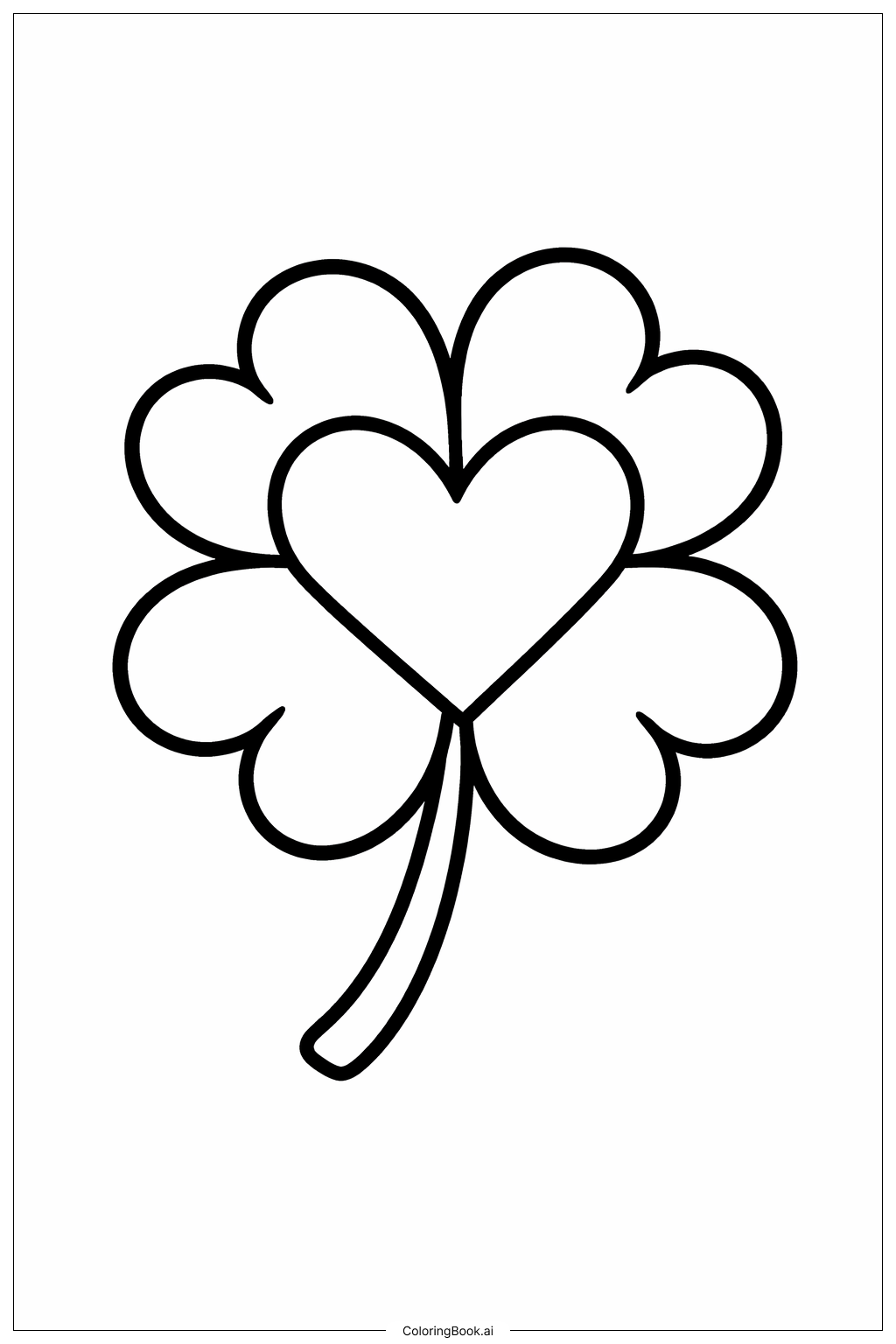
Coloring tips: How to color Four Leaf Clover Big Heart coloring page well?
Start by choosing your main clover color. Bright green is a classic choice, but you can also try lime green, teal, or even mint for a fresh look. Use a darker green for the stems and leaf veins to add depth. For the heart outline, try a bold red, pink, or deep purple to make it stand out. You can make each clover a slightly different shade of green to give the page a lively, layered feel. If you want a magical touch, add a little yellow or gold to some of the leaf tips. Light blues or soft purples work beautifully as a background color to make the green clovers pop. Use colored pencils for smooth blending on the small leaf details, and markers or crayons for filling in larger areas quickly. Take your time with the tiny veins — they make the whole image look more realistic and polished.
Coloring challenges: Which parts are difficult to color and need attention for Four Leaf Clover Big Heart coloring page?
• Overlapping Clover Leaves: The clovers are packed tightly together and overlap in many places. It can be tricky to figure out where one clover ends and another begins. Look closely at the outlines before you start coloring so you can plan which leaves belong together. Using slightly different shades of green for neighboring clovers helps separate them visually.\n\n• Tiny Leaf Veins: Each four-leaf clover has small vein lines inside the leaves. These details are very fine and easy to color over by accident. Use a sharp colored pencil or a fine-tip marker to carefully stay within the vein lines. This step takes patience but makes the final result look much more realistic.\n\n• Heart Outline Consistency: Keeping the heart's border clean and even is a challenge, especially where the clovers spill over the edges. Decide early on whether you want the heart outline to be a bold, solid color or a softer gradient. A steady hand and a medium-sized marker work well for tracing the outline without smearing.\n\n• Color Balance Between Clovers and Heart: Making sure the green clovers and the heart shape look balanced without one overpowering the other takes some planning. If the heart color is too similar to the greens, the shape can get lost. Choose a contrasting color for the heart, like red or pink, and apply it after finishing the clovers so you can adjust the intensity as needed.\n\n• Staying Inside Small Spaces: Some areas between the clover stems and leaf bases are very small and tight. Coloring inside these tiny spaces without going outside the lines requires a fine-pointed tool. Gel pens or sharp colored pencils are ideal for reaching into these narrow corners without making a mess.
Benefits of coloring books: Advantages of drawing Four Leaf Clover Big Heart coloring page
Coloring this Four Leaf Clover Big Heart page offers a wonderful range of benefits for kids and beginners alike. Working through the many small clover shapes helps improve hand control and fine motor skills, which are important for writing and other everyday tasks. Staying carefully within the detailed vein lines and tiny spaces trains focus and patience in a fun, low-pressure way. Choosing color combinations for the clovers and heart encourages creative thinking and helps develop a personal sense of style and color awareness. The repetitive motion of coloring leaf after leaf is also naturally calming and relaxing, making it a great activity for winding down after a busy day. Because the image combines two positive symbols — luck and love — it also sparks simple, joyful conversations about feelings, nature, and what these symbols mean. Completing a detailed page like this builds a real sense of achievement and boosts confidence. Kids can proudly display their finished artwork or give it as a heartfelt gift. Overall, this page makes coloring both a creative outlet and a meaningful, mindful experience that kids of all ages can enjoy.