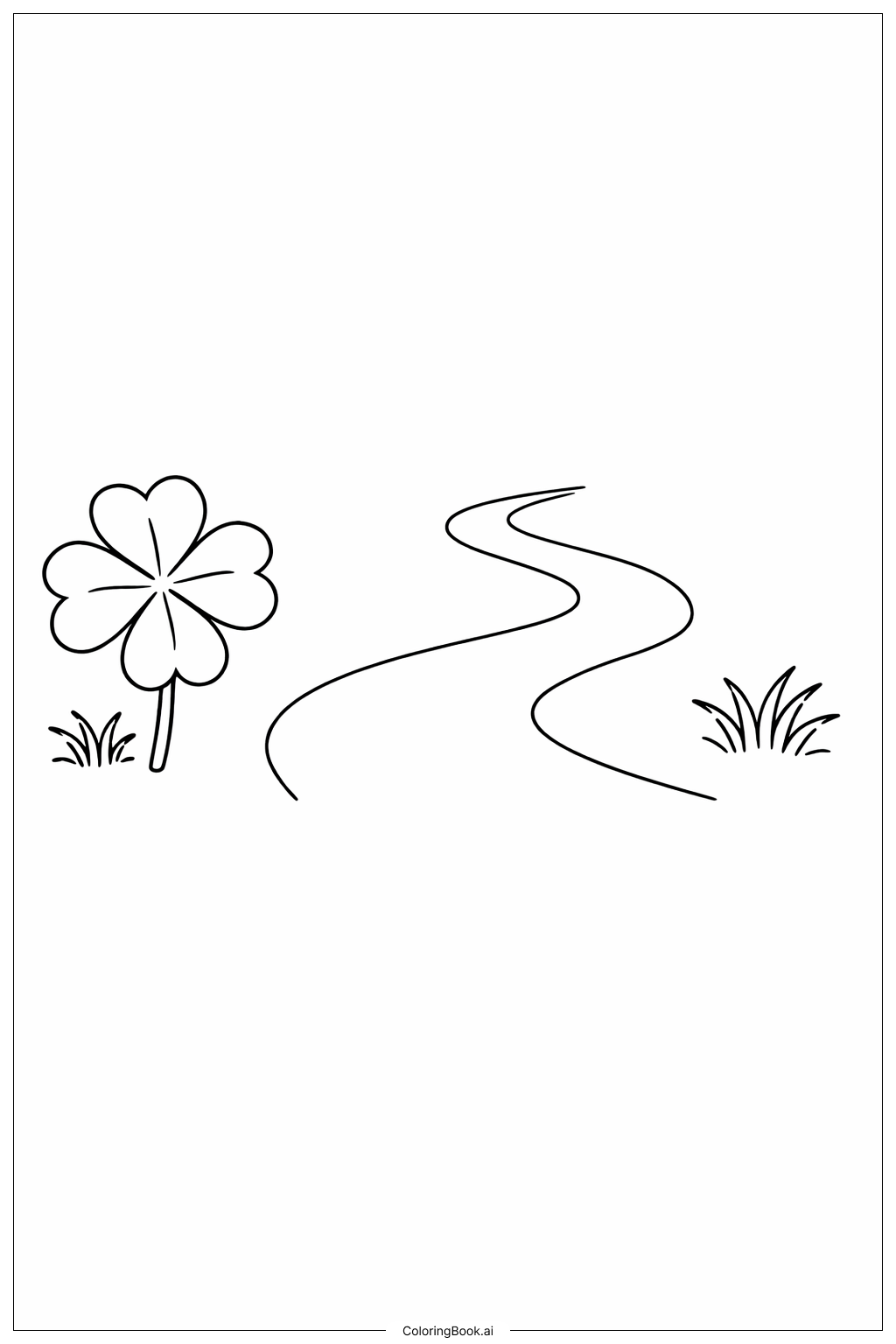
Coloring tips: How to color Four Leaf Clover And Path coloring page well?
For the four-leaf clover, try various shades of green from light lime to deep forest green. You can make each leaf a slightly different green tone to add depth and dimension. The path offers wonderful opportunities for earthy colors like browns, tans, grays, or even golden yellows to create a sunlit dirt road effect. Consider using lighter colors in the center of the path and darker shades along the edges to show dimension. The surrounding grass and small flowers can be colored with bright spring greens, cheerful yellows, pinks, or purples. You might add blue or lavender touches to create tiny wildflowers. Don't forget to leave some white highlights on the clover leaves to show sunshine reflecting off them, making your picture really pop with life and energy.
Coloring challenges: Which parts are difficult to color and need attention for Four Leaf Clover And Path coloring page?
• Clover Leaf Symmetry: The four heart-shaped leaves require consistent coloring to maintain visual balance. Children may find it challenging to apply the same pressure and color intensity across all four leaves, especially when working with crayons or markers that can create uneven coverage. Taking time to color slowly and methodically will help achieve uniform results.
• Vein Details: The delicate veining patterns within each clover leaf present fine-line work that requires precision and control. Younger colorists might struggle to stay within these tiny spaces or may accidentally color over the veins entirely. Using fine-tipped colored pencils and a light touch can help preserve these botanical details while adding realistic dimension.
• Path Texture and Depth: Creating a three-dimensional appearance for the winding path requires understanding of shading techniques. Showing the path receding into the distance means gradually lightening colors or changing tones. Children may find it difficult to blend colors smoothly or to remember to adjust their shading as the path curves away, which is essential for creating that realistic walkway effect.
• Background Elements Balance: The small flowers, grass blades, and decorative details surrounding the main clover need careful attention to avoid overwhelming the focal point. Deciding which elements to emphasize and which to keep subtle requires planning and restraint, skills that develop with coloring experience and patience.
Benefits of coloring books: Advantages of drawing Four Leaf Clover And Path coloring page
Coloring this Four Leaf Clover And Path page offers wonderful developmental benefits for children. The symmetrical clover design helps practice careful observation and pattern recognition skills, teaching young artists to notice how nature creates balanced shapes. Working on the curved path develops hand-eye coordination and fine motor control as children follow the winding lines. The variety of elements from large clover leaves to tiny surrounding details allows colorists to practice both broad strokes and precise coloring techniques. This page also encourages creative decision-making about color choices and combinations, building confidence in artistic expression. The lucky four-leaf clover theme provides a positive, cheerful subject that can spark conversations about nature, luck, and outdoor exploration, making coloring time both educational and emotionally uplifting for kids of all ages.