Coloring tips: How to color Soccer Player Warming Up Stretches coloring page well?
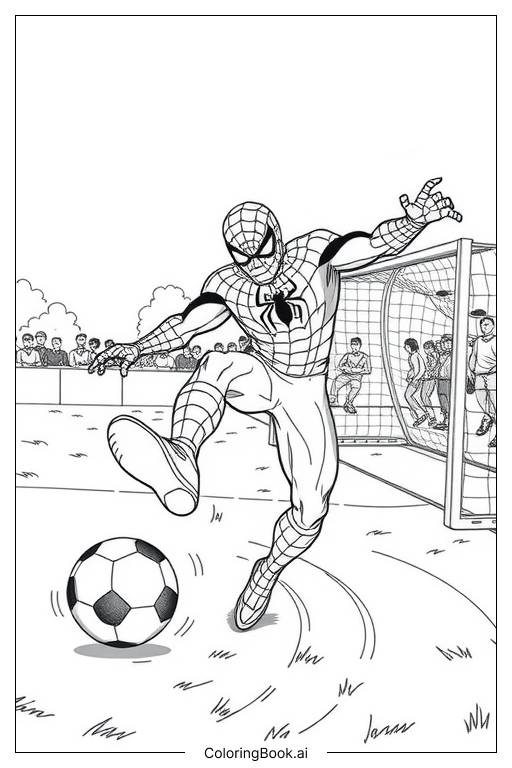
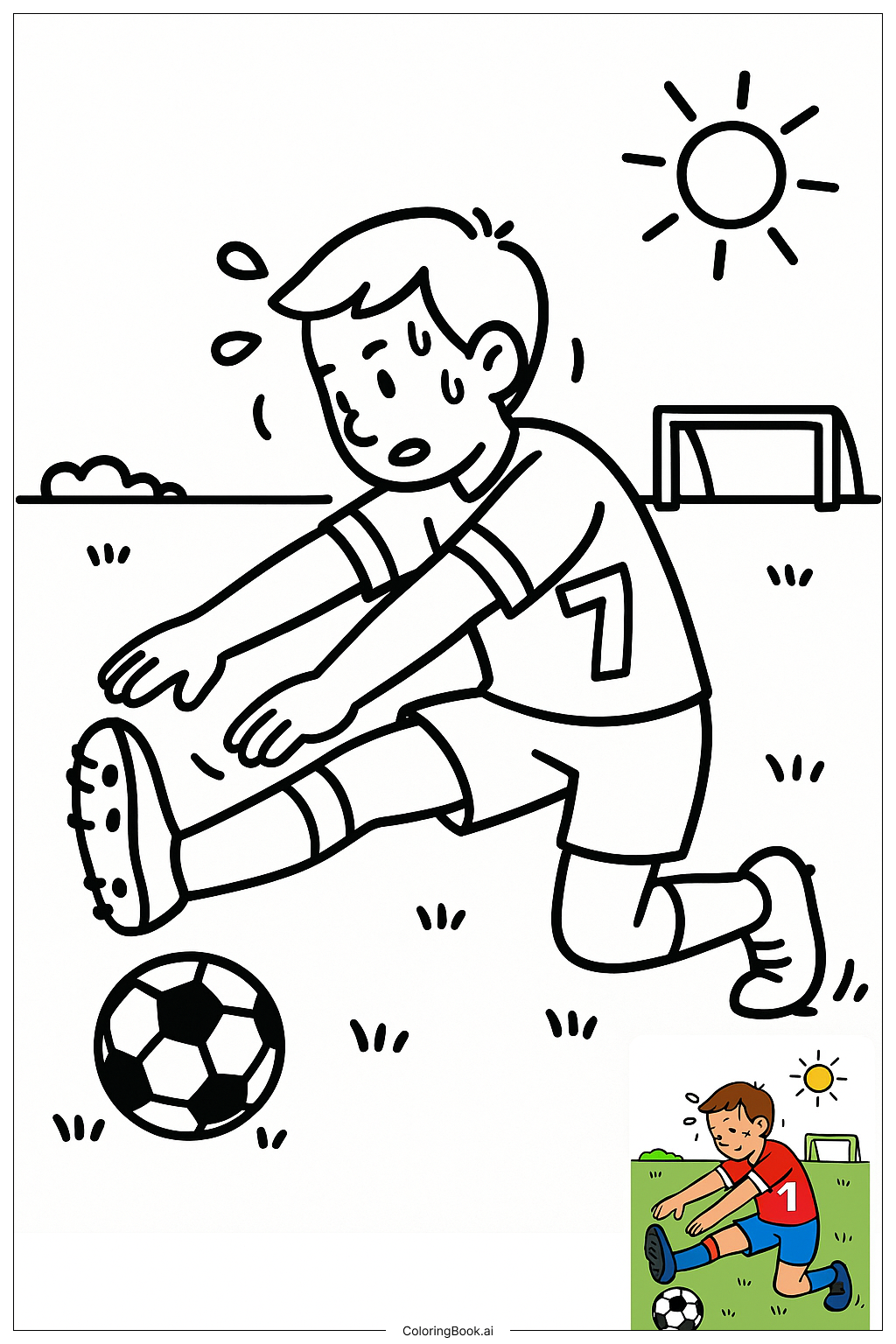
Start with the soccer jersey and shorts. Choose your favorite team colors or invent your own. Bright colors like red, blue, or yellow work great for the uniform. Use a darker shade of the same color for folds and shadows on the fabric to give it a 3D look. Color the cleats in black, white, or bold neon shades. The long socks can match the jersey or contrast with it. For the player's skin, pick a warm flesh tone and add a slightly deeper shade on the arms and legs to show muscle definition. Color the soccer ball with classic black and white patches, or go creative with your own design. Use green for the grassy field in the background. Keep the lines neat around the small details like the shoe laces and sock stripes. Take your time and have fun mixing colors to make the player look dynamic and full of energy.
Coloring challenges: Which parts are difficult to color and need attention for Soccer Player Warming Up Stretches coloring page?
• Uniform Folds and Fabric Shadows: The soccer jersey and shorts have many curved lines showing where the fabric folds during the stretch. Staying inside these lines while adding shading takes careful control of your coloring tool. Young colorists may find it tricky to switch between a base color and a darker shade in such small areas without going over the edges.
• Body Proportions and Muscle Definition: The stretching pose puts the player's limbs at angles that create narrow, elongated shapes. Coloring the arms and legs with gradual tonal shifts to show muscle definition requires patience. Using two or three shades of a skin tone and blending them smoothly is challenging, especially for beginners.
• Soccer Cleat Details: The cleats have small studs on the sole, lace patterns across the top, and stitching lines along the sides. These tiny details are packed close together, making precision essential. A fine-tipped colored pencil or thin marker works best here, but controlling the pressure to avoid dark blotches in such tight spaces can be difficult.
• Soccer Ball Patches: The classic hexagonal and pentagonal patches on the soccer ball must be colored consistently — typically alternating black and white — while keeping each patch clean and distinct. The curved surface of the ball means the patches taper at the edges, which can be confusing to follow accurately.
• Background Grass and Field Lines: The grassy field background may include blades of grass or field markings. Filling these in evenly with greens and whites without muddying the colors or bleeding into the player's outline requires a steady hand and good color control.
Benefits of coloring books: Advantages of drawing Soccer Player Warming Up Stretches coloring page
Coloring this soccer player warm-up page offers a wide range of benefits for kids of all ages. First, it builds fine motor skills. Carefully coloring inside the lines of the jersey, cleats, and stretched limbs trains hand-eye coordination and develops the small muscle control needed for writing and drawing.
Second, it encourages focus and patience. A detailed athletic pose like a stretch requires attention to multiple parts of the image at once, helping children practice concentration in a fun and low-pressure way.
Third, it sparks creativity. Choosing team colors, inventing a unique uniform design, or picking bold shades for the soccer ball lets kids express their personal style and imagination freely.
Fourth, it builds sports awareness. As children color the uniform, cleats, and soccer ball, they naturally learn about the gear and habits of real athletes, including the importance of warming up before a game. This can inspire an interest in healthy habits and physical activity.
Finally, it provides a calming, screen-free activity. Sitting down to color is a relaxing experience that reduces stress and gives kids a sense of pride and accomplishment when they finish their artwork. It is a simple, rewarding way to spend creative time.