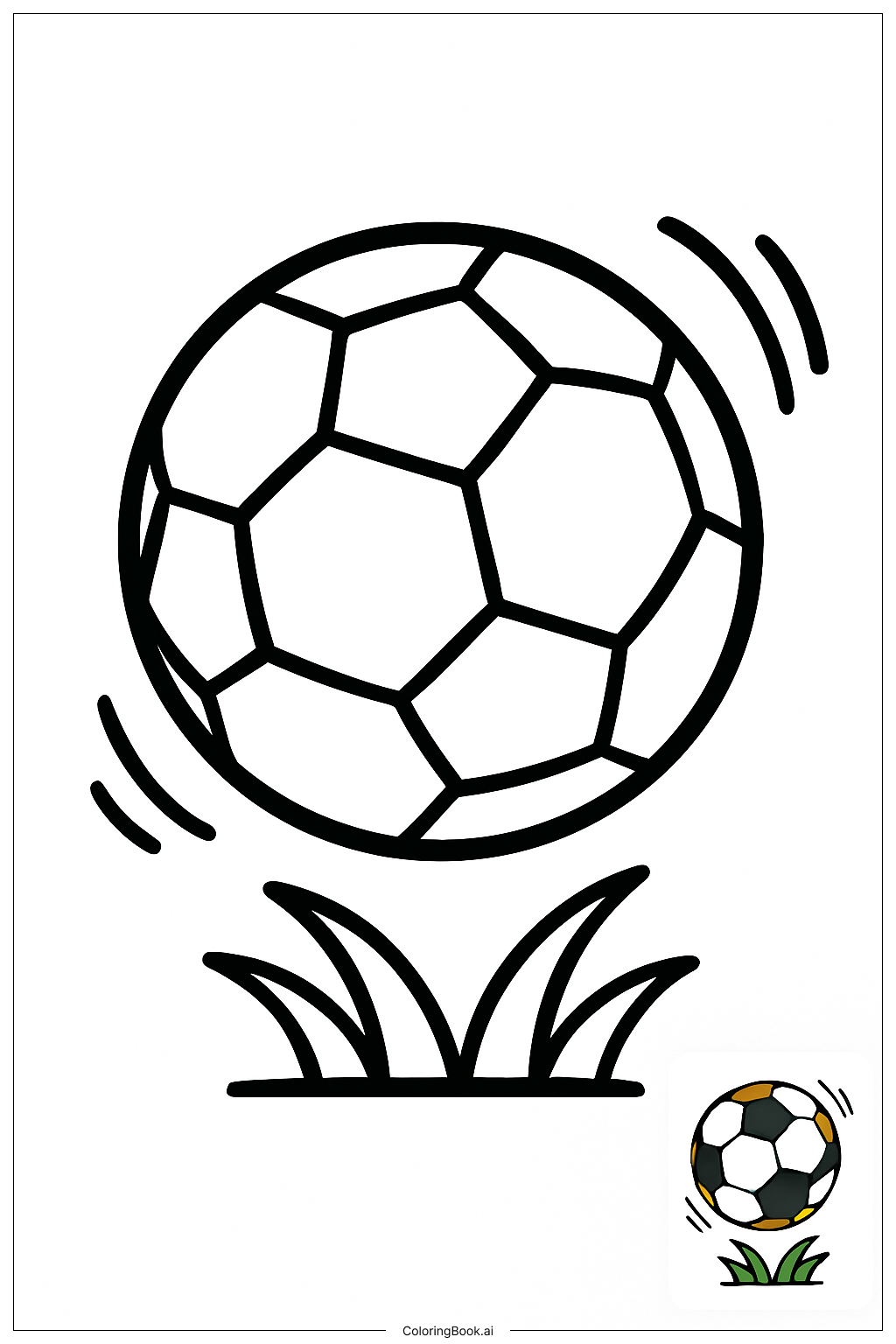
Coloring tips: How to color Soccer Ball Bouncing On Grass coloring page well?
Start with the soccer ball. Use white or a very light gray for the hexagon panels, and fill the pentagon panels with solid black or dark navy blue. This gives the ball its classic, recognizable look. Next, move to the grass. Use at least two or three shades of green — a bright lime green for the tips of the blades and a deeper forest green for the base — to make it look full and natural. You can add a light yellow-green highlight to some blades for extra depth. For the motion lines around the ball, try a light blue or pale yellow to suggest speed and energy without distracting from the main subject. If you want to add a background, a soft sky blue works beautifully to suggest a clear outdoor day. Keep the ground shading subtle so the bouncing ball remains the star of the image.
Coloring challenges: Which parts are difficult to color and need attention for Soccer Ball Bouncing On Grass coloring page?
• Ball Panel Precision: The soccer ball is made up of alternating pentagon and hexagon shapes that must each be colored carefully. Staying neatly within the small curved lines between panels can be tricky, especially near the edges of the ball where the shapes appear compressed due to the round surface perspective. Young or beginner colorists may need a fine-tipped tool for this area.
• Achieving a Round, Three-Dimensional Look: A flat circle of color will not capture the real feel of a soccer ball. To make it look truly round and bouncy, you need to apply lighter color at a highlight point (usually the upper left) and gradually deepen the tone toward the edges. This shading technique requires some practice and patience.
• Grass Texture and Depth: The grass is not a single flat shape. It is made of many individual blades at varying heights. Coloring each blade individually with slightly different shades of green takes time and a steady hand. Rushing this section can make the grass look flat and dull instead of lush and alive.
• Motion Lines Balance: The curved lines showing the ball's movement should feel light and airy, not heavy. Using too dark a color on these lines can make them look like solid objects rather than the suggestion of speed. Finding the right balance between visible and subtle is a genuine challenge for younger artists.
• Overall Color Harmony: Pulling all elements together so the ball, grass, and motion lines feel like one unified scene takes planning. Choosing colors that complement rather than compete with each other is an important creative skill this page helps develop.
Benefits of coloring books: Advantages of drawing Soccer Ball Bouncing On Grass coloring page
Coloring this soccer ball page is a fantastic activity for kids of all ages. It builds fine motor skills as children carefully navigate the small panel sections of the ball and the individual grass blades. Staying within detailed lines strengthens hand control, which supports better handwriting and drawing skills over time. The page also introduces basic color theory in a fun, low-pressure way. Deciding which shades of green to use for the grass, or how to shade the ball to look round, encourages creative thinking and problem-solving. For children who love soccer, this image is especially motivating. Connecting a favorite sport to an art activity makes coloring feel relevant and exciting rather than just a quiet pastime. The dynamic, action-filled composition also sparks imagination — kids may find themselves inventing stories about the game happening just off the page. Sharing and comparing finished pages with friends or classmates builds confidence and social connection. Overall, this page delivers a fun mix of artistic skill-building, sport enthusiasm, and imaginative play.