Coloring tips: How to color Shoeprint Marks On Soccer Field coloring page well?
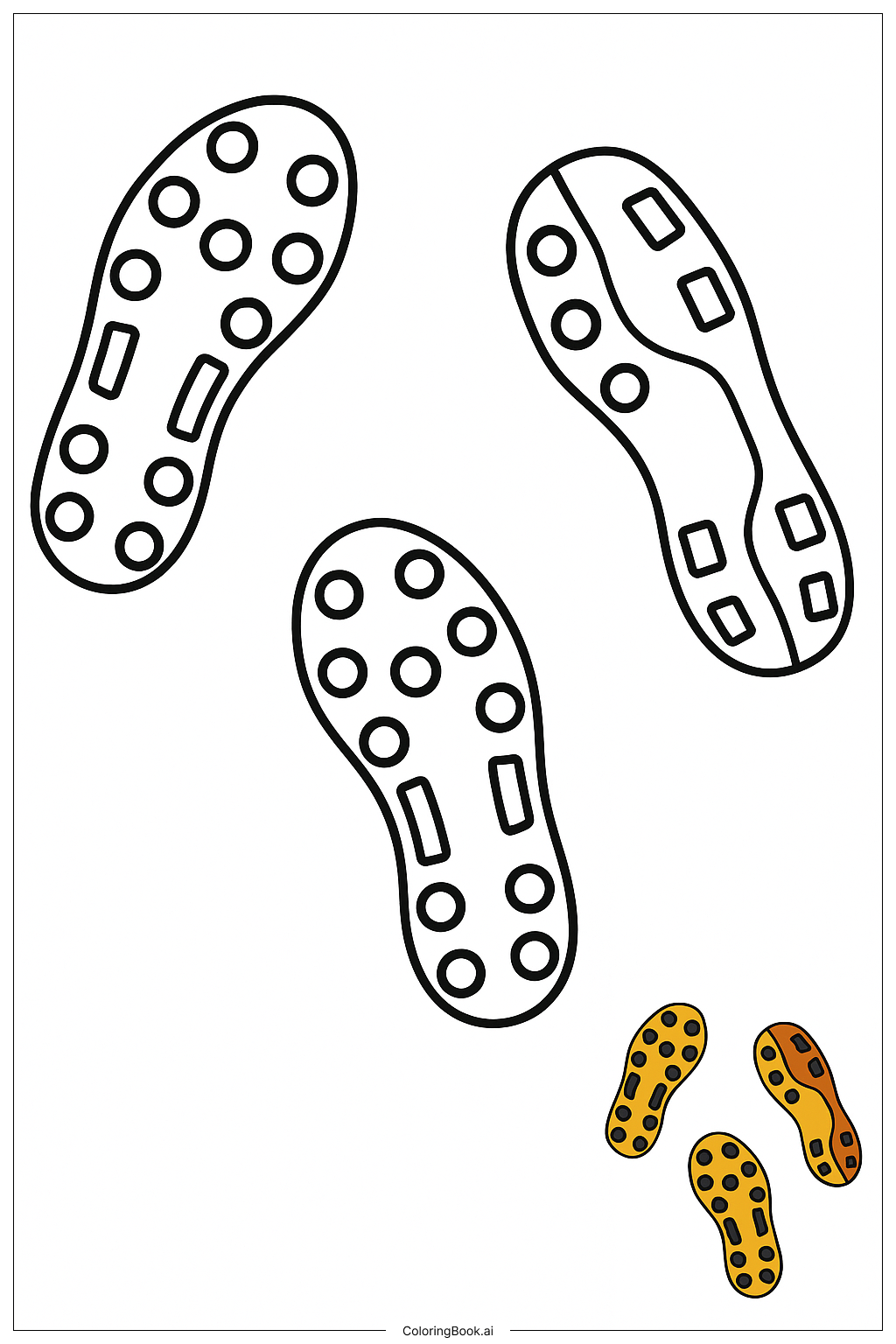
Start by coloring the grass in different shades of green. Use a lighter green for areas with less wear and a darker green for patches that look more pressed down. For the shoeprint outlines, try using dark brown or muddy tan to make them look like real dirt marks on the turf. The stud impressions inside each print can be filled with a deeper shade of brown or even gray to show depth. If some prints overlap, use slightly different tones to help them stand out from each other. You can add a little yellow-green to the grass to give it a sunny outdoor look. Keep your strokes smooth on the flat grass areas and add short textured lines to show where the turf is roughed up. There is no wrong way to color this — have fun making the field look like a real match just ended!
Coloring challenges: Which parts are difficult to color and need attention for Shoeprint Marks On Soccer Field coloring page?
• Overlapping Shoeprints: Many of the shoeprint marks cross over each other, making it tricky to tell where one print ends and another begins. Coloring each print as its own shape without blending them all into one muddy patch requires patience and careful attention to the outlines. Using slightly different shades for each overlapping print can help separate them visually.
• Stud Pattern Details: Inside each shoeprint, there are small circular or oval stud impressions. These tiny shapes are close together and easy to accidentally color over. Younger colorists may find it helpful to use a fine-tipped marker or a sharpened colored pencil to fill these small details without going outside the lines.
• Grass Texture Consistency: The grass surface surrounds and weaves between all the prints. Keeping the green tones consistent across the whole field while still showing variation — such as flattened grass versus upright grass — can be a real challenge. If the green looks the same everywhere, the field may appear flat and uninteresting.
• Depth and Shadow: Real shoeprints press into the ground, creating slight shadows and depth. Capturing this effect with color alone takes skill. Adding a slightly darker shade along one edge of each print and a lighter shade on the opposite side can create a simple but effective shadow that makes the prints look three-dimensional.
• Keeping Colors Clean: With so many prints packed closely together, it is easy for colors to bleed into neighboring areas, especially when using markers or watercolors. Working slowly and letting each section dry before moving to the next will help keep the image looking neat and well-defined.
Benefits of coloring books: Advantages of drawing Shoeprint Marks On Soccer Field coloring page
Coloring this soccer field shoeprint image offers a range of great benefits for kids and beginners alike. First, it builds fine motor skills. Carefully tracing and filling in the small stud details and print outlines trains the hand muscles and improves pencil control. Second, it encourages focus and patience. With so many overlapping shapes, colorists learn to slow down and pay attention to one section at a time — a skill that helps in school and everyday life. Third, it sparks creativity. Choosing which shades of green, brown, and gray to use lets each person make the image their own. No two finished pages will look exactly alike. Fourth, it connects coloring to the world of soccer, making it especially exciting for young sports fans. Thinking about the players who left those marks on the field turns a simple activity into a mini story. Finally, completing a detailed coloring page like this builds confidence. When kids finish a challenging image, they feel proud of what they made — and that sense of accomplishment encourages them to keep creating.