Coloring tips: How to color Spring Bouquet Wrap coloring page well?
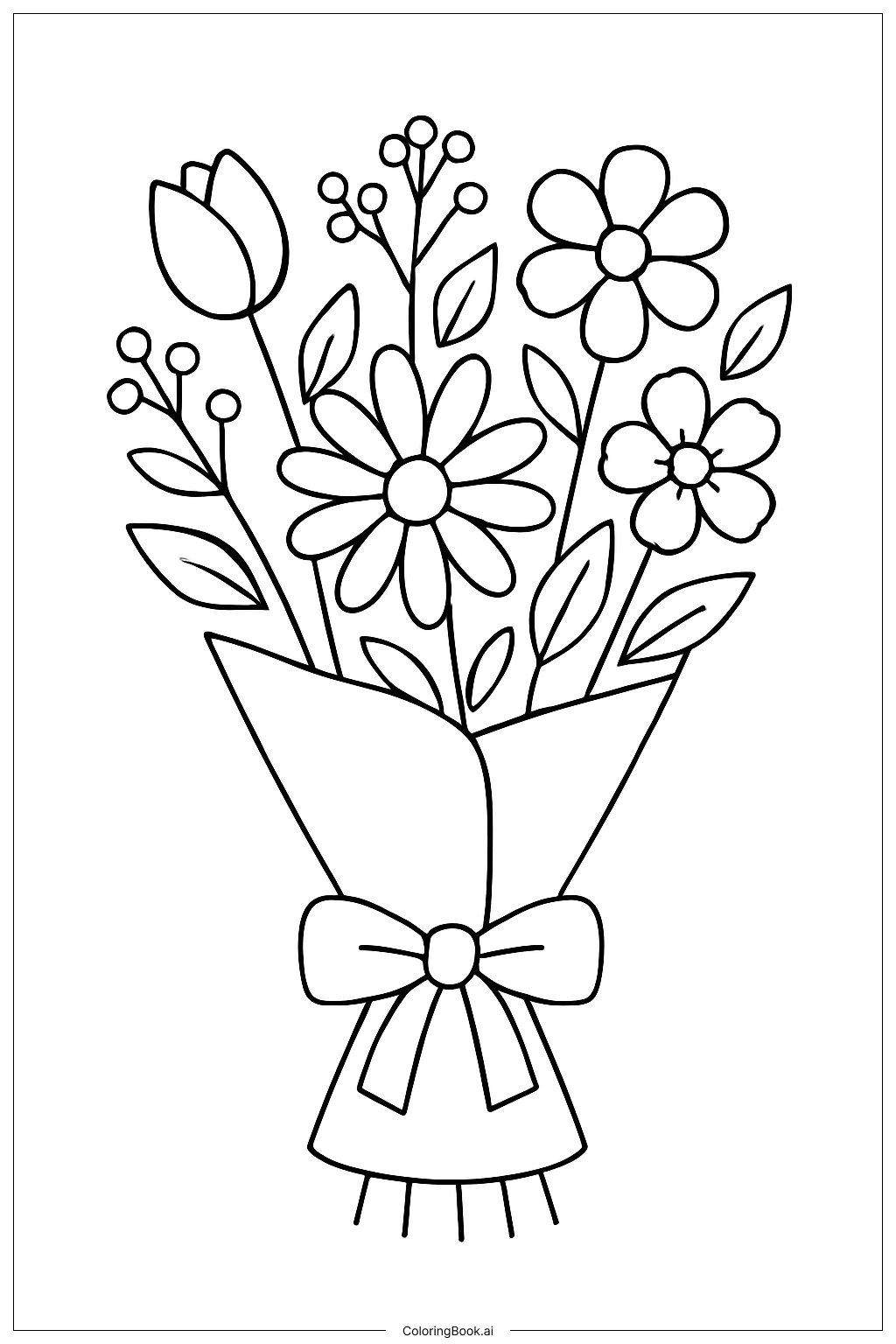
Start with the lightest colors first. Use soft pinks and whites for roses, bright yellows for daisies, and bold reds or purples for tulips. Add variety by giving each flower a different color so the bouquet looks lively and full. Use two or three shades of green for the leaves to create depth. Try light green for the top of the leaves and darker green along the edges. For the wrapping paper, pastel colors like lavender, soft peach, or sky blue work beautifully. Color the ribbon in a contrasting shade, like deep red or golden yellow, to make it stand out. Leave some areas very lightly shaded to suggest highlights on the petals and paper folds. Blending colors gently on the petals will make the flowers look soft and real. Take your time and enjoy the process!
Coloring challenges: Which parts are difficult to color and need attention for Spring Bouquet Wrap coloring page?
• Overlapping Flower Petals: The bouquet contains many flowers placed closely together, with petals overlapping each other. It can be tricky to decide where one flower ends and another begins. Take time to look at the outlines carefully before choosing colors, so each bloom stands out clearly from the ones around it.
• Small Details in Leaf Clusters: The leaves and stems woven throughout the bouquet include tiny veins and narrow shapes. Coloring these small areas neatly without going over the lines requires a sharp pencil or a fine-tipped coloring tool. Working slowly in these areas will give the best results.
• Wrapping Paper Folds and Texture: The paper wrap at the base of the bouquet has curved folds and layered sections. Showing the difference between the front folds and the shadowed areas underneath takes careful shading. Using lighter and darker tones of the same color can help create a realistic, three-dimensional look.
• Ribbon Details: The ribbon tied around the bouquet has its own curves, loops, and overlapping sections. Keeping the ribbon color consistent while still shading the folds naturally is a small but satisfying challenge. A slightly darker shade along the inner curves helps the ribbon look rounded and real.
• Color Harmony Across the Whole Bouquet: With so many different flowers and elements, keeping the overall color scheme balanced can be challenging. Choosing a color palette before starting and sticking to it will help the finished page look unified and visually pleasing rather than busy or scattered.
Benefits of coloring books: Advantages of drawing Spring Bouquet Wrap coloring page
Coloring this spring bouquet page offers a wonderful range of benefits for kids and adults alike. Working through the many flowers and details helps build focus and patience, as each small section requires careful attention. This kind of mindful activity is a great way to relax and unwind after a busy day.
For younger children, following the outlines and staying within the shapes improves fine motor skills and hand control, which are important for writing and other everyday tasks. Choosing colors and mixing shades also encourages creative thinking and helps develop an eye for color combinations.
Older children and teens can use this page to practice more advanced techniques like shading and blending, turning a simple coloring exercise into an artistic experience. The floral subject matter introduces them to the beauty of nature and botanical art in a fun and hands-on way.
For adults, this page offers a calming, screen-free creative outlet. The repetitive, focused nature of coloring is known to reduce stress and promote a sense of calm. Completing a detailed piece like this also brings a genuine sense of accomplishment. Overall, this bouquet page is a joyful and rewarding coloring experience for everyone.