Coloring tips: How to color Smiling Flower Crown coloring page well?
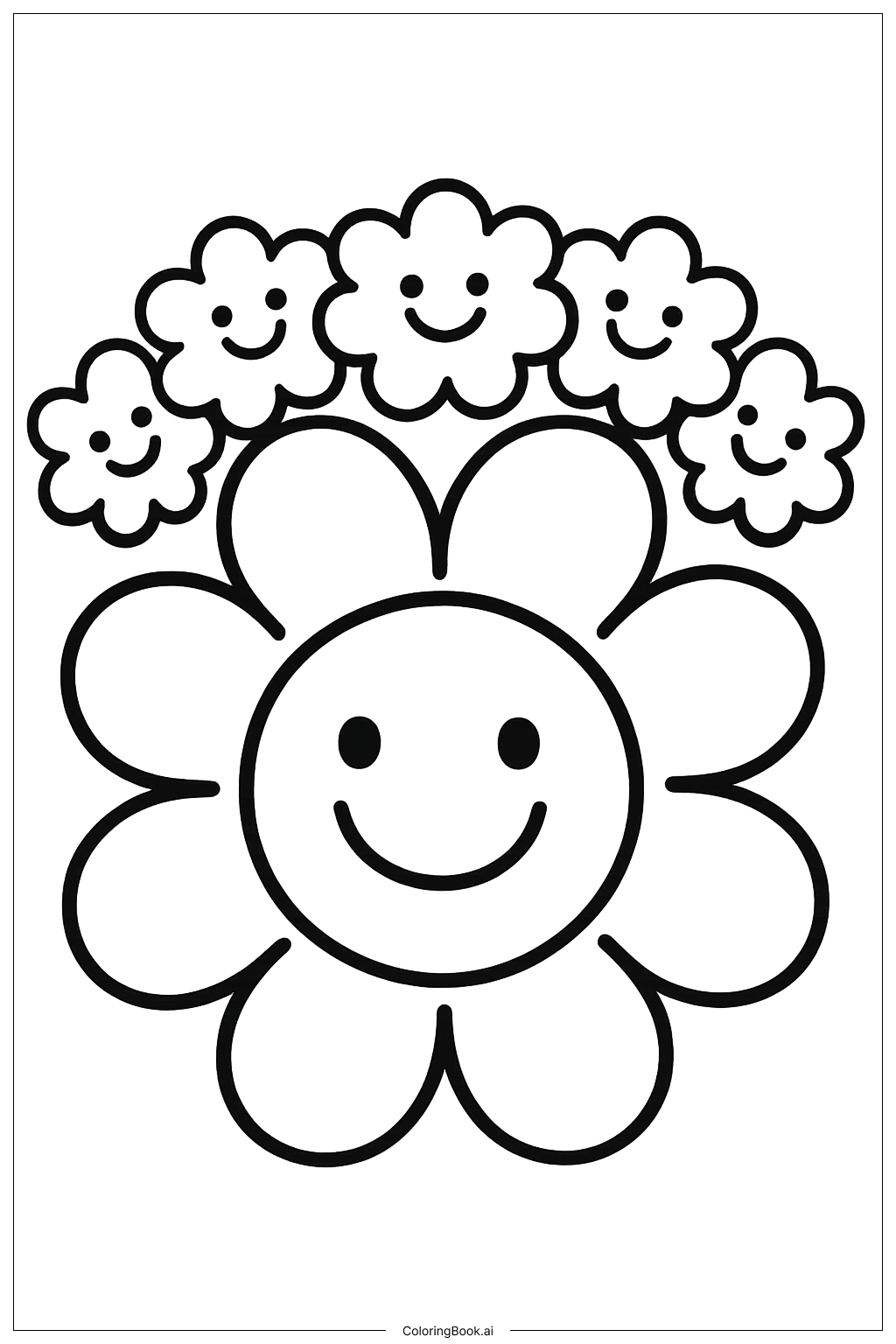
Start by coloring the flower faces first. Use warm skin tones like peach or light yellow for the round faces. Add rosy cheeks with soft pink. For the petals, go with bright, cheerful colors like yellow, orange, pink, purple, and red. Try making each flower a different color so the crown feels lively and festive. Use different shades of green for the leaves and stems — dark green for larger leaves and light green for smaller ones. This creates a natural, layered look. Fill in the background last if one is present. You can also blend two colors on the petals to add depth. Use light pressure first, then go darker to build up color. Colored pencils work great for small details like the eyes and smiles. Markers are perfect for bold, flat petal colors. Have fun mixing and matching — there is no wrong way to color a flower crown!
Coloring challenges: Which parts are difficult to color and need attention for Smiling Flower Crown coloring page?
• Facial Details on Each Flower: Every flower has its own smiling face with small eyes, cheeks, and a mouth. These features are tiny and very close together. Staying inside the lines requires a sharp pencil or a fine-tip marker. Young colorists may find it tricky to color the face without accidentally going over the outlines. Take your time and use tools with a small tip for the best results.
• Petal Layering and Variation: The crown has many flowers, and each one has multiple petals layered around the face. Deciding on colors that look good together without making the crown feel too busy can be challenging. If nearby flowers are too similar in color, they can blend together visually. Choosing a clear color plan before you start helps keep each flower looking separate and unique.
• Leaf and Stem Details: The small leaves and stems tucked between the flowers have thin, curved outlines. Coloring these without bleeding into the petals takes patience and a steady hand. Using a fine-tip green marker or a sharpened colored pencil works best for these narrow areas.
• Consistent Color Harmony Across the Crown: Because the crown is circular and has many repeating elements, keeping a consistent and balanced color scheme all the way around is a real challenge. If one side uses very different colors from the other, the crown can look uneven. Planning the color pattern ahead of time — such as alternating colors — helps the finished piece look polished and well-balanced.
• Smooth, Even Coverage on Round Petals: Petals have curved shapes that can be tricky to fill evenly. Streaks and uneven patches are common. Using small circular strokes instead of back-and-forth lines gives a smoother result, especially with colored pencils.
Benefits of coloring books: Advantages of drawing Smiling Flower Crown coloring page
Coloring this Smiling Flower Crown page offers a wonderful mix of fun and learning. The cheerful, smiling flowers make the experience feel positive and uplifting, which helps boost mood and reduce stress — even for young children. Focusing on the tiny facial features and delicate petals builds fine motor skills and improves hand-eye coordination. This is especially helpful for kids between the ages of 4 and 10 as their grip and pencil control are still developing. Choosing colors for each flower encourages creative thinking and decision-making. Kids learn how colors interact with each other and how to create a visually pleasing design. Adults can enjoy this page as a mindful activity, using it to unwind and focus on the present moment. The repetitive nature of coloring petals one by one has a calming, meditative effect. The wreath-like structure also teaches children about patterns, symmetry, and balance in a hands-on way. Completing the full crown gives a strong sense of accomplishment, which builds confidence and encourages kids to take on more detailed projects over time. This page is a great choice for all ages.