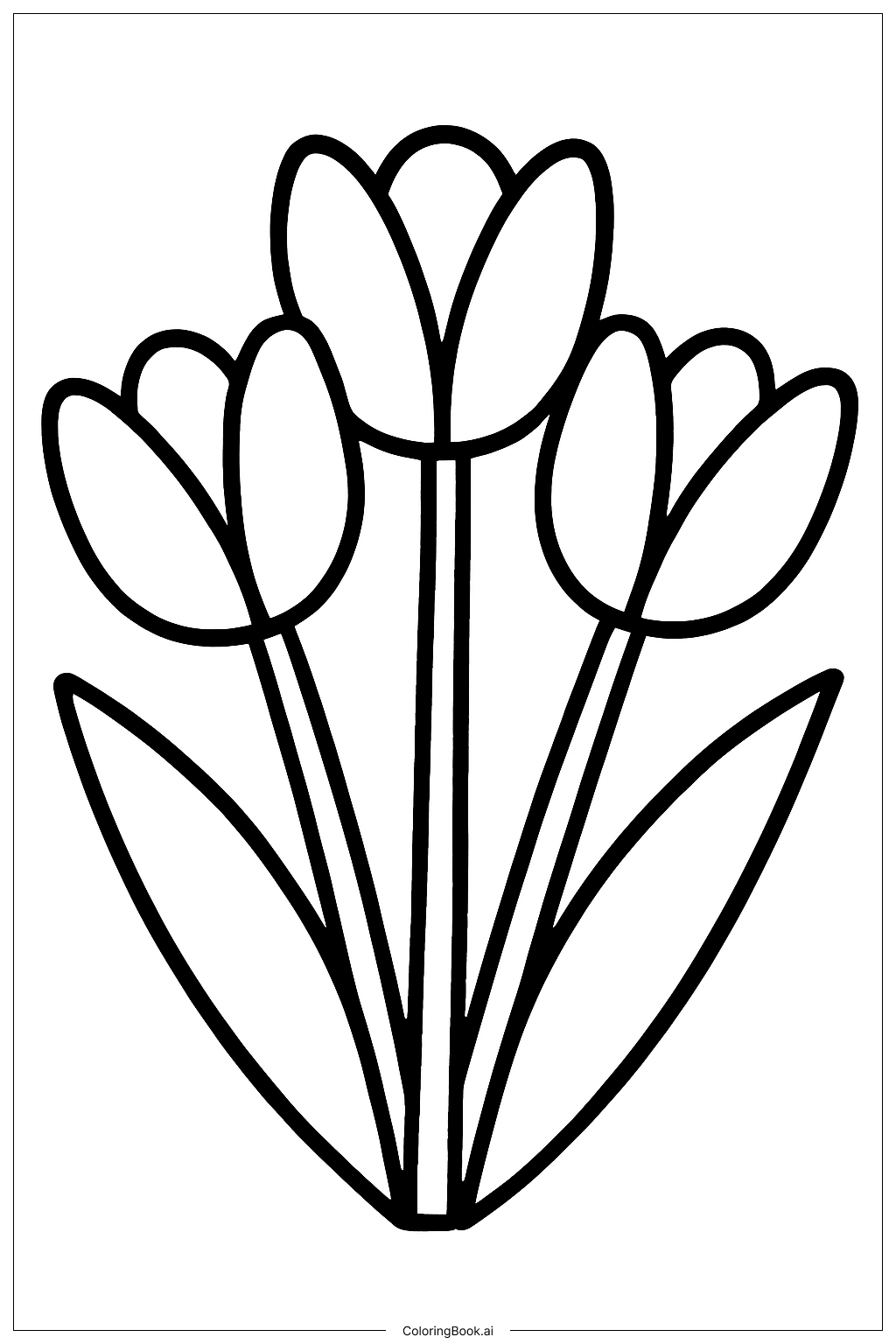
Coloring tips: How to color Simple Tulip Bunch coloring page well?
Use bright and cheerful colors for the tulip petals such as red, pink, yellow, orange, and purple. You can color each tulip a different shade to make the bunch look lively and diverse. For the stems and leaves, use different shades of green to add depth and variety. Try blending light green with darker green tones to show the natural look of leaves. For a creative touch, you can also add small details like light veins on the leaves or soft shading at the base of the petals. Use colored pencils or crayons for smooth coloring within the lines.
Coloring challenges: Which parts are difficult to color and need attention for Simple Tulip Bunch coloring page?
1. Staying Inside the Lines: The petals and leaves have large, curved spaces that may tempt children to color outside the lines. Concentration is needed. 2. Coloring the Stems: The thin, straight stems require careful attention to keep the colors even and inside the narrow outlines. 3. Choosing Colors: Picking different bright colors for each tulip helps make the image lively, but it can be hard for younger children to decide. 4. Adding Shading: Advanced color blending or shading to show depth might be challenging for beginners. 5. Coloring Small Spaces: Some parts near the bottom where stems and leaves meet can be narrow and small, requiring patience.
Benefits of coloring books: Advantages of drawing Simple Tulip Bunch coloring page
Coloring this tulip bunch helps children improve fine motor skills by practicing steady hand movements. It also encourages creativity when choosing colors and patterns for each flower. The simple shapes make it easier for younger kids to color, building their confidence. Coloring flowers like tulips connects children with nature and can be calming and fun. Additionally, it helps with focus and attention to detail, as children work carefully to stay inside the lines and make the picture look beautiful.