Coloring tips: How to color Rainy Day Poppies coloring page well?
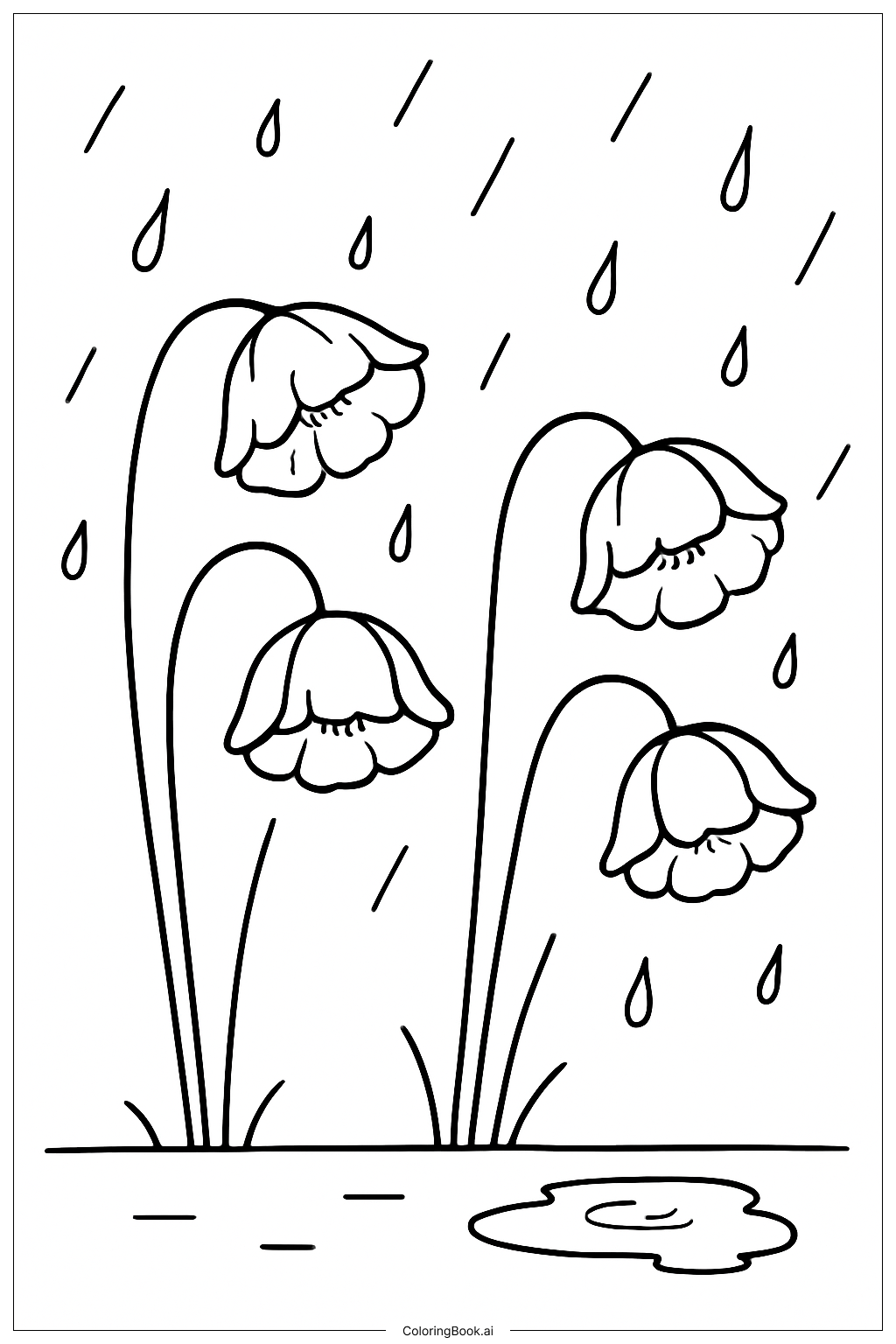
For coloring, you can choose bright reds or oranges for the poppy petals to make them stand out against the rainy setting. Use different shades of green for the stems and grass to add depth. The raindrops can be colored lightly blue or gray to represent water and rain. The puddle on the ground can be shaded with light blues and soft grays to show reflection. Try blending lighter and darker shades in the petals and leaves to create a realistic effect. You can also add subtle shadows under the flowers to give a sense of light and space.
Coloring challenges: Which parts are difficult to color and need attention for Rainy Day Poppies coloring page?
1. Coloring the curved petals to show their shape can be tricky because you need to follow the natural curves and folds. Be careful to color smoothly and evenly.
2. The raindrops are small and scattered, which may require attention to detail and patience to color neatly.
3. Creating realistic water effects in the puddle needs careful shading to reflect light and ripples.
4. Balancing bright colors of the flowers with the soft, rainy background requires thoughtful color choices to keep the picture harmonious.
5. Coloring the thin stems without going outside the lines can be challenging for younger children.
Benefits of coloring books: Advantages of drawing Rainy Day Poppies coloring page
Coloring this image helps improve fine motor skills and hand coordination because of the detailed areas like raindrops and petals. It encourages children to observe nature closely and understand different textures like wet petals and water puddles. This picture also inspires creativity by letting children choose colors that express a rainy day mood. Additionally, focusing on small details can enhance patience and concentration. Overall, it is a calming and educational coloring experience that combines nature and weather themes.