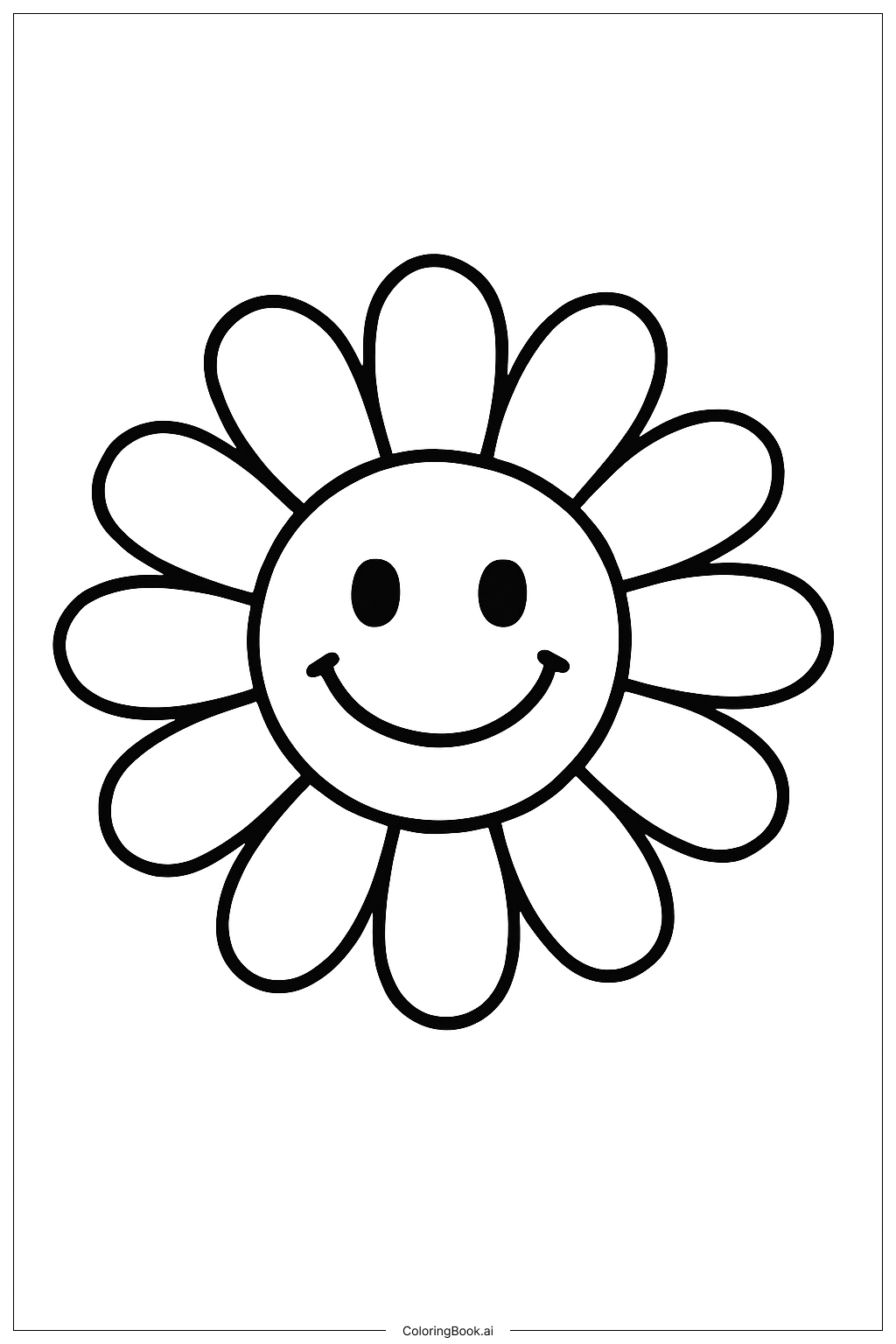
Coloring tips: How to color Happy Daisy Face coloring page well?
You can color the petals in bright and cheerful colors like yellow, pink, or orange to make the daisy look lively. The face could be a soft color such as light yellow or cream to keep it warm and friendly. The eyes can be colored black or dark brown to make them stand out. You may also add shading to some petals for depth or color each petal a different shade to create a rainbow effect. Using crayons or colored pencils will let you color carefully inside the lines. Feel free to add a colorful background like green grass or blue sky to make the picture more vibrant.
Coloring challenges: Which parts are difficult to color and need attention for Happy Daisy Face coloring page?
1. Keeping the colors inside the petal shapes can be tricky because the petals are close to each other and rounded.
2. Coloring the smiling face evenly without making it look blotchy or patchy may require careful coloring.
3. Balancing the colors of petals and face to create a lively but not overwhelming effect needs some planning.
4. Adding shading or gradient effects to give the petals more depth can be challenging for beginners.
5. Coloring the eyes to keep them solid and smooth requires attention to small details.
Benefits of coloring books: Advantages of drawing Happy Daisy Face coloring page
Coloring this happy daisy helps children practice fine motor skills like staying inside the lines and controlling hand movements. It encourages creativity by letting kids choose their own colors and experiment with color combinations. The simple and happy design is great for building confidence in young artists as they complete the picture with bright and cheerful colors. Coloring also supports focus and patience, as children take their time to fill each petal and the face carefully. Overall, this activity is fun and relaxing, helping kids express emotion through art.