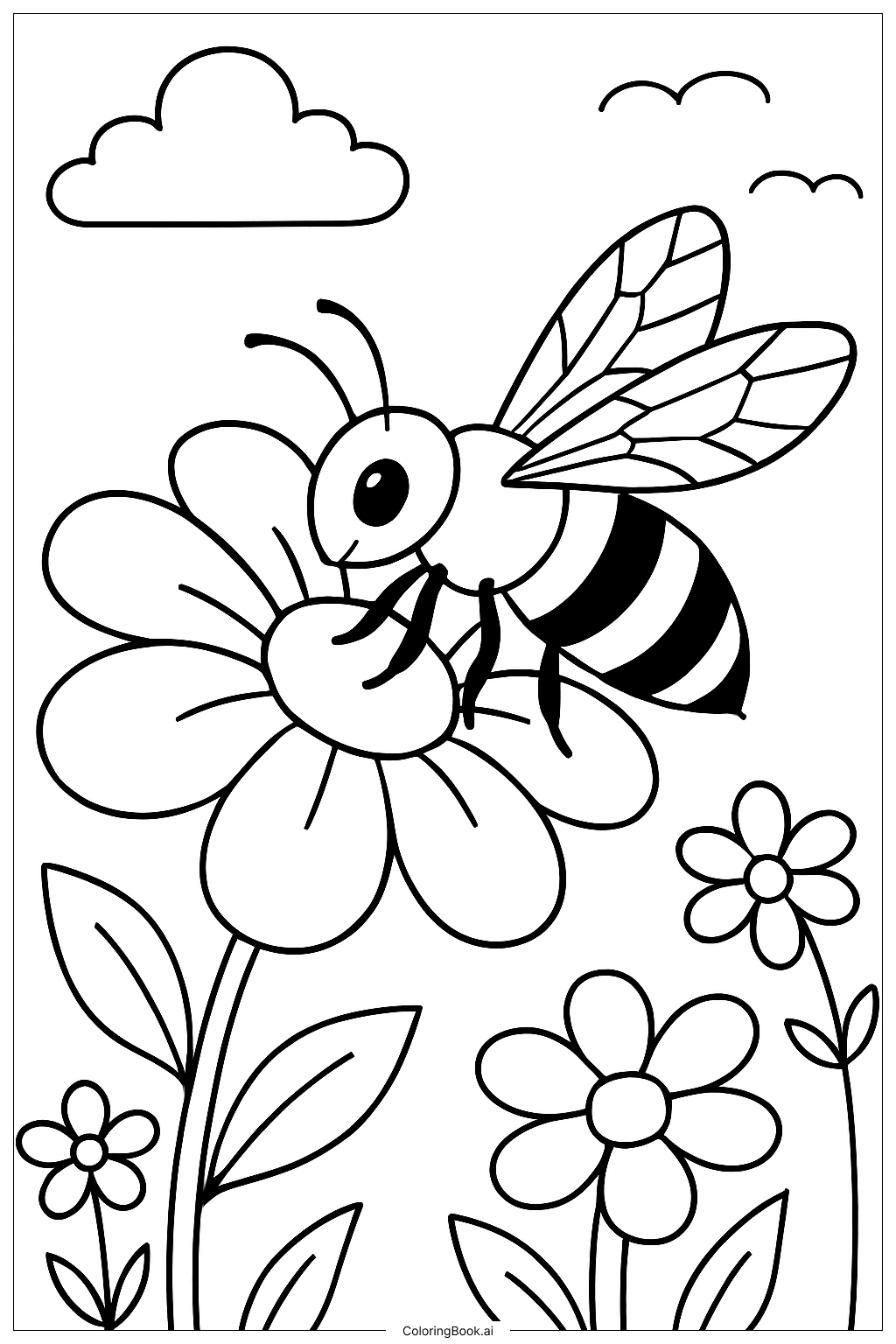
Coloring tips: How to color Bee Collecting Nectar coloring page well?
For this picture, try using bright and cheerful colors. Color the bee with yellow and black stripes, and you can add a little brown to the wings to show their thin, delicate texture. The flowers can be a mix of pink, purple, or blue to make the scene lively. For the center of the flowers, use orange or yellow to show the pollen. Use different shades of green for the leaves to add depth. You can even add a light blue background for the sky to make the colors stand out. Don’t be afraid to mix colors lightly to create soft petal effects. Remember to use gentle strokes to color the small details like the bee’s legs and antennae carefully so they remain visible.
Coloring challenges: Which parts are difficult to color and need attention for Bee Collecting Nectar coloring page?
• Small Details: The bee has many tiny parts such as hairs, legs, and antennae. Coloring these finely without blending them together can be tricky for younger children.
• Layered Petals: Some flowers have overlapping petals that require careful coloring to keep edges clear and to show depth.
• Wing Transparency: The bee’s wings look delicate and slightly see-through, which can be hard to represent using solid colors.
• Color Blending: Achieving the right shade on flower petals often means blending colors gently, which takes practice.
• Maintaining Contrast: Balancing the dark stripes of the bee with the lighter flower colors can be difficult but is important for making the image lively and easy to see.
Benefits of coloring books: Advantages of drawing Bee Collecting Nectar coloring page
Coloring this image helps develop focus and attention to detail as children work on small parts like the bee’s wings and the flower petals. It encourages creativity in choosing colors for nature scenes and gives practice in shading and blending. Working on this picture teaches about the role of bees in nature, sparking curiosity about pollination. The repetitive coloring of patterns on the bee’s body can improve hand-eye coordination and fine motor skills. Overall, it supports relaxation and concentration while celebrating the beauty of flowers and insects.