Coloring tips: How to color Withering Flower Regrowing New Bud coloring page well?
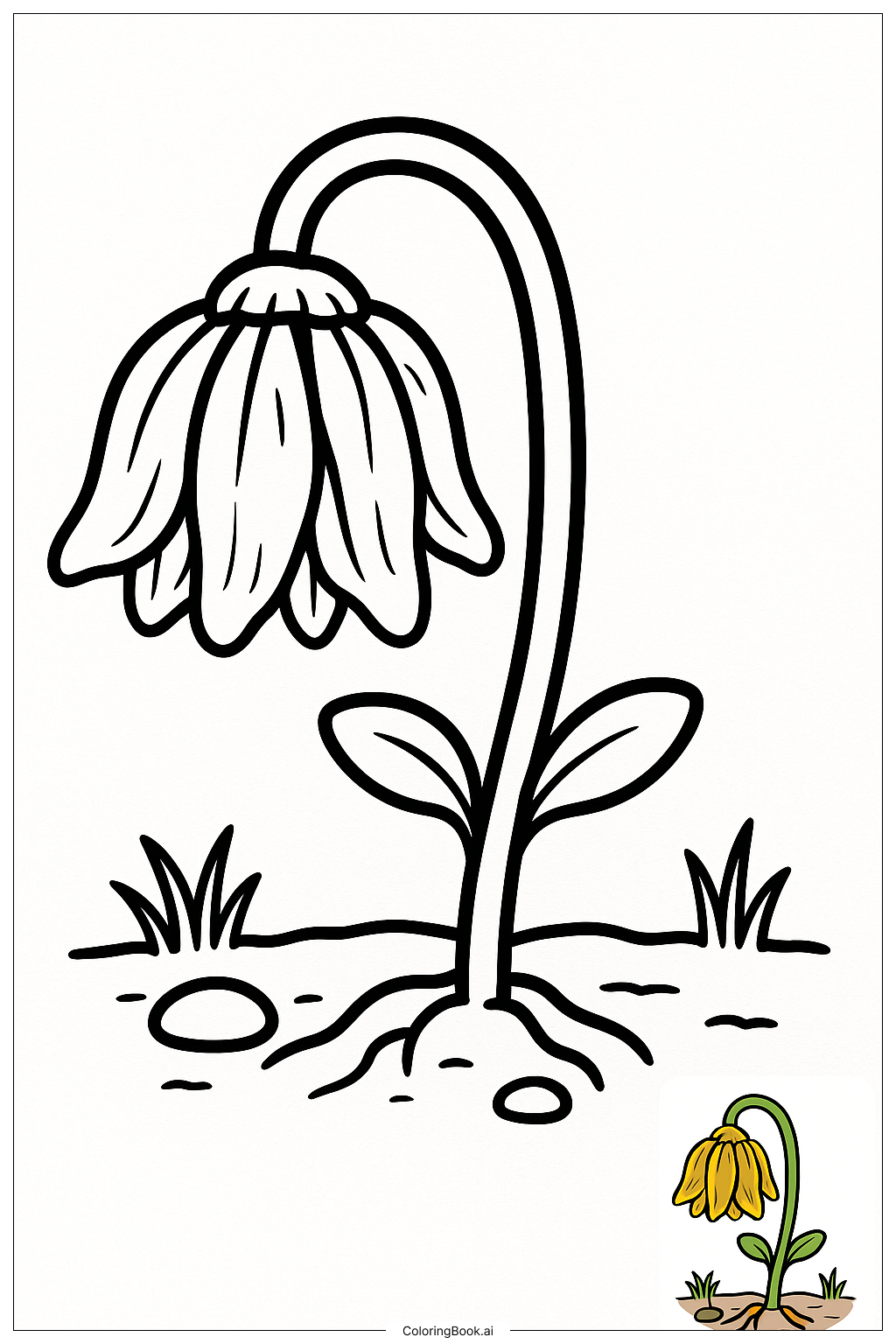
Start by coloring the wilting petals in muted, tired tones. Use pale yellows, dusty pinks, or light browns to show that they are fading. Add a little gray or tan near the curling edges to give them a dried-out look. For the new bud, choose bright and fresh colors like soft green, light pink, or gentle lavender. These colors show new life and hope. Use a medium green for the main stem and darker green for the leaves. On older or worn leaves, blend in some yellow or brown at the tips. You can use light shading to show depth — press lightly for soft areas and a little harder for shadows. The contrast between the fading flower and the fresh bud is the heart of this image, so let your color choices tell that story clearly. Take your time and enjoy the process!
Coloring challenges: Which parts are difficult to color and need attention for Withering Flower Regrowing New Bud coloring page?
• Capturing the Contrast Between Old and New: The biggest challenge in this image is showing two very different moods side by side. The wilting petals need dull, faded colors, while the new bud needs bright and lively ones. Keeping this contrast clear without the colors bleeding into each other requires careful planning before you start.
• Shading the Drooping Petals: The wilting petals have curved and folded shapes that create natural shadows and highlights. Coloring these curves correctly takes patience. You need to use lighter tones where the petal catches light and darker tones where it folds inward, which can be tricky for beginners.
• Detailing the Small New Bud: The new bud is small and tightly closed, with very little space to work in. Fitting color neatly inside its tiny sections without going over the lines is a real challenge, especially if you are using thick markers or crayons. Colored pencils or fine-tip markers work best here.
• Blending Colors on the Leaves: Some leaves are healthy and green, while others show signs of aging with yellow or brown edges. Blending two or more colors smoothly on a leaf without making it look messy takes skill and a gentle hand.
• Keeping the Stem Clean and Consistent: The stem runs through the whole image and connects every part of the scene. Keeping the stem color smooth and even, while also varying the shade slightly where it bends or is in shadow, requires steady control of your coloring tool throughout the entire piece.
Benefits of coloring books: Advantages of drawing Withering Flower Regrowing New Bud coloring page
Coloring this image of a withering flower regrowing a new bud offers many wonderful benefits for kids and adults alike. First, it teaches an important life lesson — that endings can lead to new beginnings. As you color, you naturally think about this message, making the activity both creative and meaningful. Second, working with two contrasting sections of the image — the fading petals and the fresh bud — helps build color awareness and teaches how to use tone and shade to express different emotions and states. This strengthens artistic thinking in a fun and relaxed way. Third, carefully coloring the small details, like the tiny bud and the curved petals, improves hand control and fine motor skills, which are especially helpful for younger children. Fourth, the calm, repetitive motion of coloring helps reduce stress and anxiety. Focusing on a quiet, natural scene like this one can feel like a short meditation, leaving you feeling more relaxed and refreshed when you are done. Finally, completing the full image gives a strong sense of achievement and encourages creativity and self-expression at any age.