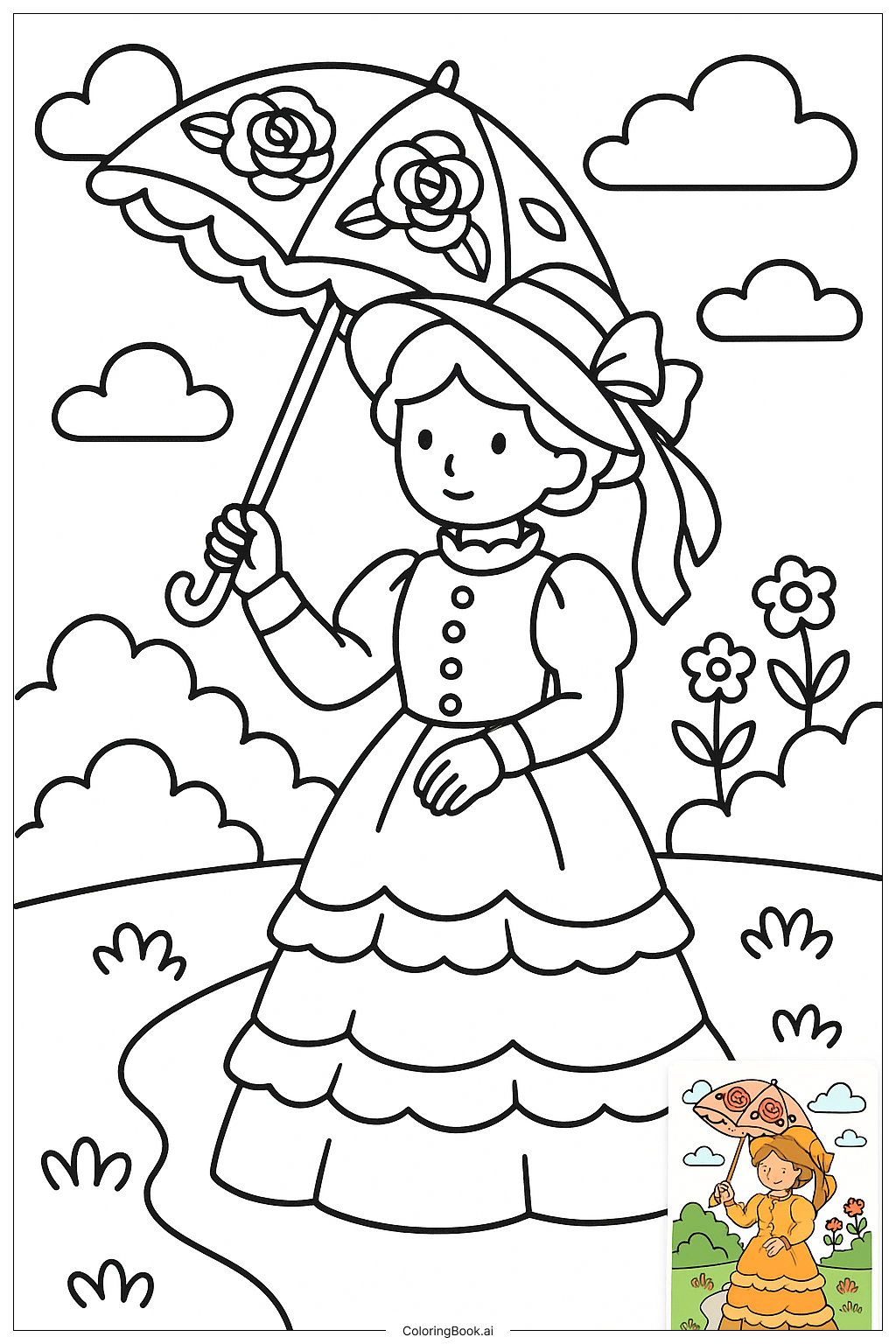
Coloring tips: How to color Victorian Lady Carrying Rose Parasol coloring page well?
Start with the lady's skin using soft peach or ivory tones to give her a gentle, classic look. For her gown, try deep jewel tones like burgundy, navy, or emerald green to capture the richness of Victorian fashion. You can also use pastel lilac or dusty rose for a softer, more romantic feel. Color the roses on the parasol in warm reds, pinks, or coral shades. Use a lighter tint of the same color for the petals' inner sections to add depth. The lace details on her dress look lovely in cream or white. Her hair can be colored in warm chestnut brown, golden blonde, or deep black. Add a soft blush to her cheeks for a lifelike touch. For the background vines and floral elements, shades of sage green and soft yellow work beautifully. Take your time with each section and enjoy bringing this elegant scene to life.
Coloring challenges: Which parts are difficult to color and need attention for Victorian Lady Carrying Rose Parasol coloring page?
• Intricate Lace and Fabric Details: The Victorian gown is filled with tiny lace patterns along the collar, cuffs, and hem. These small, closely spaced lines require a fine-tipped coloring tool and a very steady hand. Using a thin colored pencil or a fine-point marker is strongly recommended to avoid coloring outside the delicate lines.
• Rose Motifs on the Parasol: The parasol features layered rose designs with overlapping petals. Shading each petal individually to show depth and dimension can be tricky. You need to use at least two to three shades of the same color family, applying the darker tone along the petal edges and the lighter tone toward the center.
• Blending Skin Tones: Achieving a natural and smooth skin tone for the lady's face and hands requires careful layering. Too much pressure with a pencil can make the tone look flat or uneven. Light, circular strokes work best, and adding a very faint warm blush to the cheeks brings the face to life.
• Background Floral and Vine Patterns: The decorative background elements include curling vines and small flowers that weave around the main figure. These areas are narrow and close together, making it easy to accidentally color into adjacent sections. Working slowly and using a pointed tool helps keep each area clean and well-defined.
• Folds and Shadows in the Skirt: The flowing skirt has multiple curved folds that need shading to look three-dimensional. Identifying where the light source is and consistently applying darker tones to the deeper folds helps create a convincing sense of volume and movement in the fabric.
Benefits of coloring books: Advantages of drawing Victorian Lady Carrying Rose Parasol coloring page
Coloring this Victorian Lady Carrying Rose Parasol page offers a wonderful range of creative and personal benefits for colorists of all ages. Working through the fine details of her lace gown and rose parasol builds patience and concentration, skills that are valuable both inside and outside of creative activities. For younger colorists, the image introduces concepts of color blending, shading, and composition in a fun and approachable way. For older colorists and adults, the intricate patterns provide a meditative experience that helps reduce stress and quiet a busy mind. Choosing colors for the dress, roses, and background encourages creative thinking and personal expression, since there is no single right answer. Each colorist can make the image uniquely their own. The historical and romantic theme also sparks curiosity about Victorian fashion, history, and art, making it a subtle educational experience. Fine motor skills are strengthened as you navigate small detailed areas with precision. Completing this page also builds a sense of accomplishment and pride. Whether you are coloring for relaxation, learning, or pure fun, this elegant scene offers a deeply satisfying and enriching experience from the first stroke to the last.