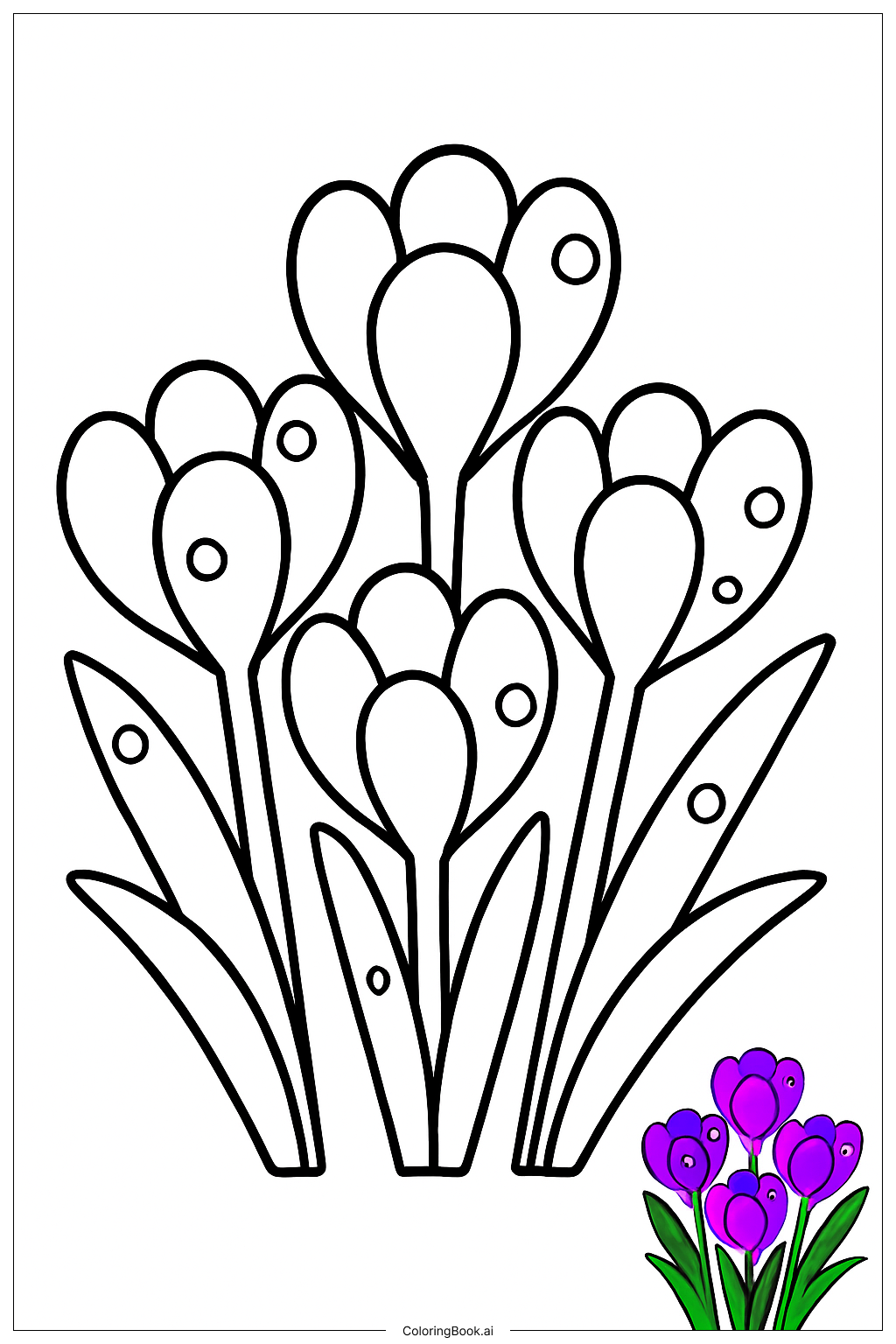
Coloring tips: How to color Spring Crocus Cluster With Dewdrops coloring page well?
Start with the petals first. Crocuses come in many colors, so you have lots of fun choices. Try purple, violet, yellow, white, or soft pink. Use a lighter shade in the center of each petal and a deeper shade near the edges to give them a 3D look. For the inside of the flower, color the stamens bright orange or yellow. Color the long leaves in fresh shades of green. Use a lighter green on one side and a darker green on the other to show depth. For the dewdrops, leave them mostly white or use a very pale blue. Add a tiny bright dot inside each drop to make it look shiny and round. Try coloring each flower a slightly different shade so the whole cluster feels lively and natural. Take your time with the small details — they make the whole picture shine.
Coloring challenges: Which parts are difficult to color and need attention for Spring Crocus Cluster With Dewdrops coloring page?
• Petal Shading and Gradients: Each crocus petal is smooth and curved, which means flat color will look dull. To make the petals look real and three-dimensional, you need to blend two or more shades together. This can be tricky, especially for younger colorists who are still learning how to transition colors smoothly without harsh lines.
• Dewdrop Detailing: The small dewdrops sitting on the petals and leaves are one of the hardest parts of this image. Water drops are mostly clear, so they reflect the colors around them. Capturing that glassy, transparent look means leaving some areas uncolored or very lightly shaded while adding a bright highlight dot. Getting this balance right takes patience and a careful hand.
• Overlapping Flowers and Leaves: Because the crocuses grow in a cluster, many petals and leaves overlap each other. Keeping the colors of each individual flower distinct while making the whole group look natural and unified is a real challenge. Choosing the right color combinations for neighboring flowers is important so they do not blend into one muddy shape.
• Tiny Vein Lines on Petals and Leaves: Fine lines run along the surface of the petals and leaves. Coloring carefully around these lines, or using them to guide shading, requires a sharp pencil or a thin-tipped marker. Going outside these lines too much can make the details look messy.
• Small Stamen Details at the Center: The center of each flower holds delicate stamens. These small structures need bright, contrasting colors like orange or yellow to stand out. Fitting color into such a tight, small space without smudging the surrounding petals is a steady-hand challenge for any colorist.
Benefits of coloring books: Advantages of drawing Spring Crocus Cluster With Dewdrops coloring page
Coloring this Spring Crocus Cluster With Dewdrops page brings many great benefits for kids and adults alike. Working through the soft petal shapes and tiny details helps build fine motor skills and hand control, which are important for writing and everyday tasks. Choosing colors for each flower encourages creative thinking and helps develop a personal sense of style and color sense. Focusing quietly on filling in each small area — the petals, the dewdrops, the leaves — is a great way to calm a busy mind and practice patience. It works like a gentle form of mindfulness, helping to reduce stress and anxiety. For younger children, this page also teaches them about nature and the beauty of spring flowers. Learning that crocuses bloom in purple, yellow, and white helps connect art with the natural world. For older kids and adults, the layering and shading challenges make it a satisfying workout for both creativity and concentration. Best of all, finishing the page gives a real sense of pride and accomplishment. It is a simple, screen-free activity that anyone can enjoy at their own pace.