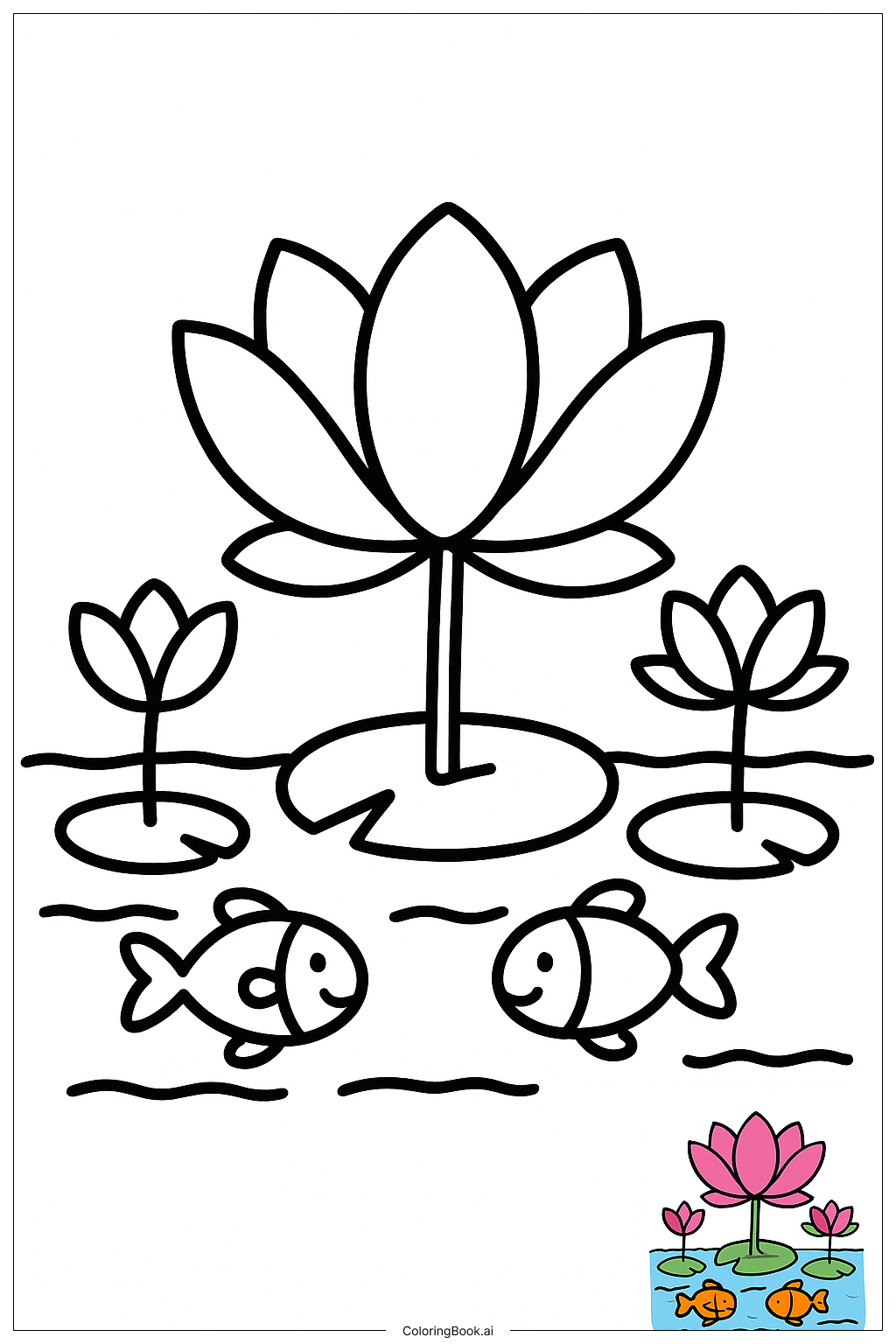
Coloring tips: How to color Simple Lotus Pond With Fish coloring page well?
Start with the lotus flowers. Use soft pink or light purple for the petals, and add a touch of white near the tips to make them look delicate. Color the center of each flower yellow or cream. For the lily pads, use two or three shades of green to show depth — darker green on the outer edge and lighter green toward the middle. The fish can be bright and fun. Try orange, red, gold, or even blue for each fish. Use a lighter shade on the belly and a darker shade on the back. The water can be colored in soft blue or teal. Add streaks of lighter blue to suggest movement. Color the reeds and grasses with olive green or dark green. For dragonflies, use bright colors like teal or violet for the wings. Take your time with each section and enjoy the process of building up colors slowly.
Coloring challenges: Which parts are difficult to color and need attention for Simple Lotus Pond With Fish coloring page?
• Lotus Petal Layering: The lotus flowers have many overlapping petals. It can be tricky to color each petal separately without colors bleeding into each other. Take your time and use a fine-tipped tool to carefully stay within the lines of each petal. Try using a slightly darker shade at the base of each petal where it overlaps another to create a natural shadow effect.
• Fish Scale and Body Shading: The fish have smooth, curved bodies that require blending to look realistic. Coloring a round shape so that it looks three-dimensional is a challenge for younger colorists. Start with a base color, then add a darker shade along the top and edges of the fish body. Leave a small highlight area near the center to give the fish a shiny, wet look.
• Water Texture: Coloring water to look realistic takes patience. Simply filling it with one flat blue color can look dull. Try using several shades of blue and teal together, blending them gently. Add light wavy lines using a slightly lighter color to suggest the movement of the water surface.
• Small Details Around the Pond: The dragonfly wings, thin reed stems, and grass blades are very narrow and small. These tight spaces require a sharp pencil or a fine marker to fill in cleanly without going outside the lines. Work slowly and steadily on these areas.
• Balancing the Overall Color Palette: With so many different elements in the scene, it can be hard to make sure all the colors work well together. Choose colors that feel calm and natural so the whole image looks balanced and peaceful.
Benefits of coloring books: Advantages of drawing Simple Lotus Pond With Fish coloring page
Coloring this lotus pond scene offers many wonderful benefits for children and beginners alike. The peaceful subject matter helps calm the mind and reduce stress. Focusing on the gentle shapes of flowers, leaves, and fish encourages deep concentration and mindfulness. It is a great way to slow down and enjoy a quiet creative moment.
Working on the different textures in this image — smooth fish bodies, soft flower petals, and rippling water — helps children develop fine motor skills and improve hand control. Choosing colors for each element also builds creative thinking and color sense.
This scene is also a great way to learn about nature. As children color the lotus flowers and fish, they can think about real ponds and the plants and animals that live in them. It sparks curiosity about the natural world.
Because the image has both simple large areas and smaller detailed sections, it suits a wide range of skill levels. Younger children can enjoy filling in the big lily pads and fish, while older children can challenge themselves with the finer details. Completing the full image gives a strong sense of accomplishment and pride. It is a fun, educational, and relaxing activity for everyone.