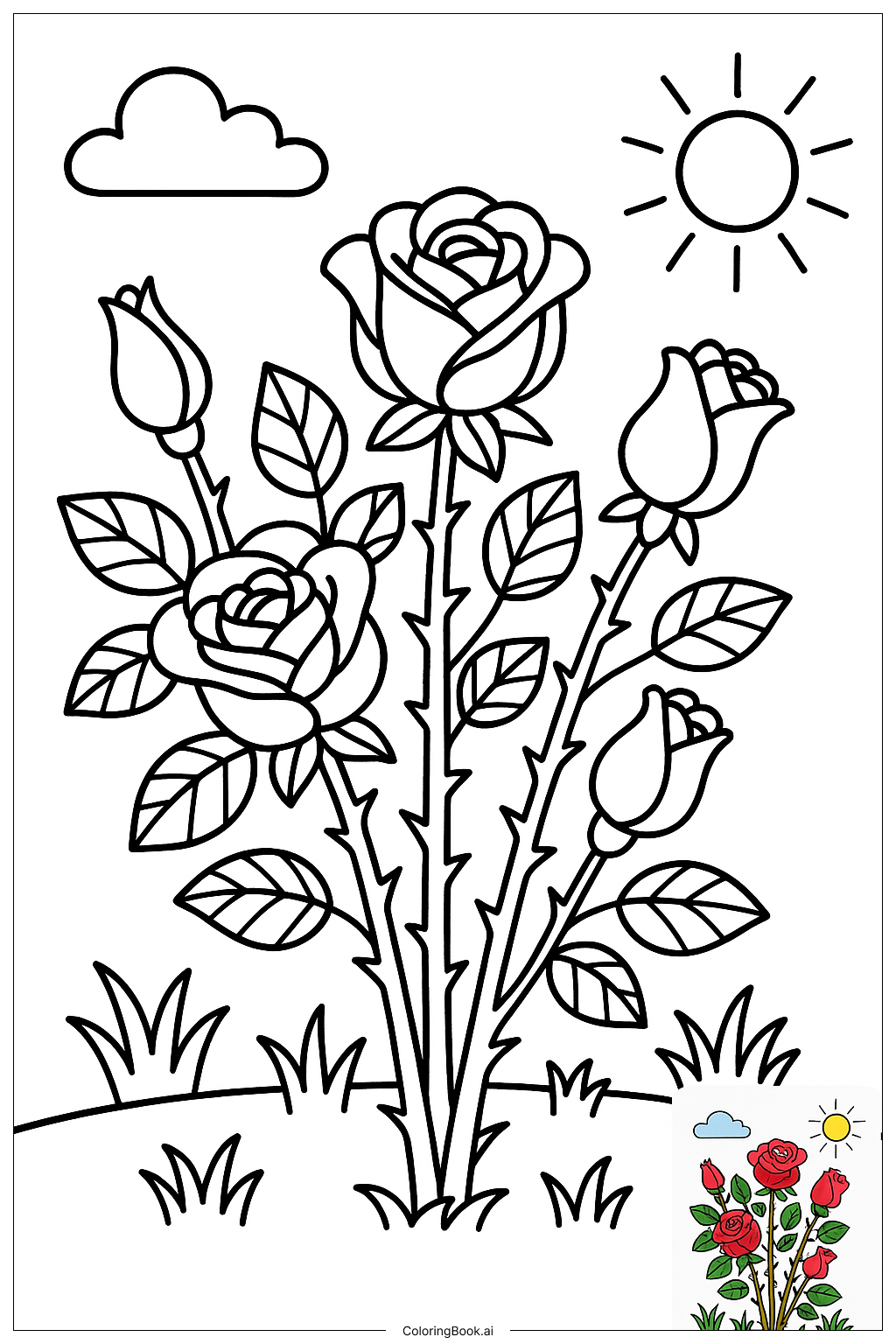
Coloring tips: How to color Rose Bush With Thorns And Buds coloring page well?
Start with the roses themselves. Use deep reds and pinks for the open blooms. Add lighter shades like soft pink or peach near the petal edges for a gentle gradient. For the buds, use a darker, richer tone to show they are still closed and full of potential. Color the leaves in medium green, then add darker green along the veins and in the shadowed areas. Use a lighter yellow-green for leaves catching the light. The stems can be a muted brownish-green. Color the thorns in a slightly darker shade than the stem to make them stand out. Keep your strokes smooth on the petals and slightly textured on the leaves. Feel free to try purple, coral, or yellow roses if you want a creative twist. Take your time with the petal layers — layering two or three colors makes the blooms look full and real.
Coloring challenges: Which parts are difficult to color and need attention for Rose Bush With Thorns And Buds coloring page?
• Layering Rose Petals: The open rose blooms have many overlapping petals with soft curves and folds. Capturing the depth and dimension of each petal requires careful layering of light and dark shades. Beginners may find it tricky to blend colors smoothly without making the petals look flat or muddy. Taking it one petal at a time and working from the outer edges inward can help a lot.
• Coloring Around the Thorns: The thorns are small, pointed, and scattered along every stem. Coloring neatly around them without accidentally filling them in the wrong color takes patience and a fine-tipped tool. This is especially challenging in areas where thorns cluster close together or overlap with leaves.
• Distinguishing Buds From Open Blooms: The closed buds and the open flowers need to look different even though they share the same color family. Using deeper, more saturated tones for the buds and softer, lighter tones for the blooms helps tell them apart. Getting this contrast right takes a careful eye and good color control.
• Serrated Leaf Edges: The leaves have jagged, toothed edges that are hard to color along cleanly. Keeping the color inside those irregular edges without smudging or spilling over requires steady hands and a sharp pencil or fine marker tip.
• Stem and Branch Depth: The rose bush has multiple overlapping stems and branches. Showing which branch is in front and which is behind requires using slightly different tones on each one. Without this contrast, the stems can blend together and lose their natural, three-dimensional look.
Benefits of coloring books: Advantages of drawing Rose Bush With Thorns And Buds coloring page
Coloring this rose bush image offers a wonderful mix of creative joy and practical skill-building. For younger children, it builds fine motor control as they carefully color petals, leaves, and thorns. Staying within the intricate lines sharpens hand-eye coordination and helps develop focus and patience — skills that carry over into schoolwork and everyday tasks.
For older kids and teens, choosing color combinations for the roses, buds, and leaves encourages creative thinking and color theory awareness. Experimenting with gradients and shading builds artistic confidence and attention to detail.
For adults, this image offers a calming, meditative experience. Focusing on the gentle curves of rose petals and the structure of leaves helps quiet the mind and reduce stress. Many people find floral coloring pages especially soothing because flowers are naturally familiar and beautiful subjects.
The image also sparks curiosity about nature. Kids may become interested in how roses grow, why thorns exist, or what different rose colors mean. This makes the activity both artistic and educational.
Overall, this rose bush coloring page is a rewarding experience for all ages — relaxing, skill-building, and genuinely fun from the first petal to the last leaf.