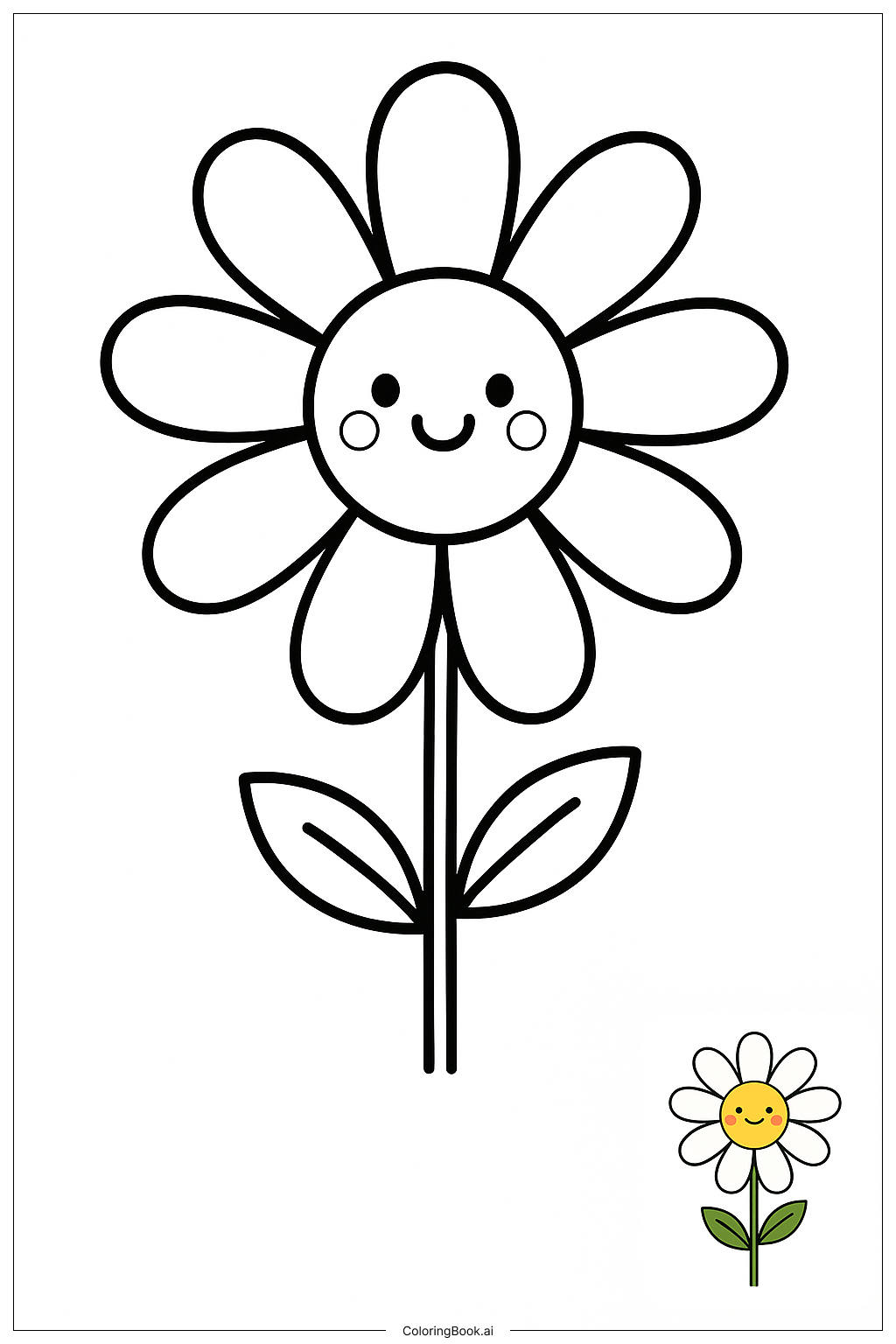
Coloring tips: How to color Laughing Daisy With Cheek Blush coloring page well?
Start with the face center of the daisy. Use a warm yellow or golden yellow to fill it in. Add two small circles of soft pink or peach on the cheeks for the blush. Color the eyes with dark brown or black, and leave a tiny white dot for the shine. For the petals, use bright white or a pale creamy yellow to keep them looking fresh and natural. You can also try soft lavender or light pink petals for a more fantastical look. Color the stem and leaves with different shades of green. Use a darker green along the edges and a lighter green in the middle to add depth. The background can be left white or filled with a light sky blue or pastel color to make the daisy pop. Use colored pencils for smooth blending on the cheeks and face. Markers work great for bold, bright petals. Take your time with the small facial details. Have fun and make your daisy as happy and colorful as you like!
Coloring challenges: Which parts are difficult to color and need attention for Laughing Daisy With Cheek Blush coloring page?
• Blush Cheek Shading: The rosy blush marks on the daisy's cheeks require careful blending. You need to layer a soft pink or peach tone gently so it looks round and natural, not flat or too harsh. This can be tricky for younger colorists who are still learning how to blend colors smoothly without going over the outlines.
• Facial Feature Precision: The eyes, smile, and small facial details are compact and closely spaced within the circular center of the daisy. Filling these tiny areas neatly without smudging or overlapping lines takes a steady hand and a fine-tipped tool. Using a sharp colored pencil or a thin-tipped marker is recommended for best results.
• Petal Consistency: The daisy has multiple petals surrounding the face, and keeping each petal colored with an even tone can be challenging. If you want a gradient or shading effect on the petals, repeating the same technique across every petal without variation in pressure or direction requires patience and practice.
• Leaf and Stem Depth: The leaves and stem may look flat if only one shade of green is used. Creating a sense of dimension by layering light and dark greens or adding vein lines inside the leaves adds realism but demands careful color control, especially near the thin outlined edges.
• Background Balance: Choosing and applying a background color that complements the bright, cheerful daisy without overpowering it is a creative challenge. A poorly chosen or unevenly applied background can make the whole image look unbalanced or messy, so planning the color palette beforehand is important.
Benefits of coloring books: Advantages of drawing Laughing Daisy With Cheek Blush coloring page
Coloring this laughing daisy is a wonderful activity for kids and adults alike. Here are some of the great benefits it offers.
It helps build focus and concentration. Staying inside the lines and working on small details like the eyes and blush cheeks trains the mind to pay close attention.
It encourages creativity. Choosing colors for the petals, face, and background lets you express your own unique style. There is no single right answer, so every colorist can make their daisy one of a kind.
It supports emotional well-being. The happy, smiling face of the daisy naturally lifts your mood. Coloring cheerful images like this one is a calm, relaxing activity that can reduce stress and anxiety.
It develops fine motor skills. Younger children especially benefit from the hand and finger control needed to color carefully within the outlined shapes. This helps prepare them for writing and other detailed tasks.
It sparks a love of nature. This fun flower character can inspire kids to learn more about real daisies and the natural world around them.
Best of all, it is simply enjoyable. Finishing a colorful, glowing daisy gives a real sense of accomplishment and pride. It is a great activity to do alone or share with family and friends.