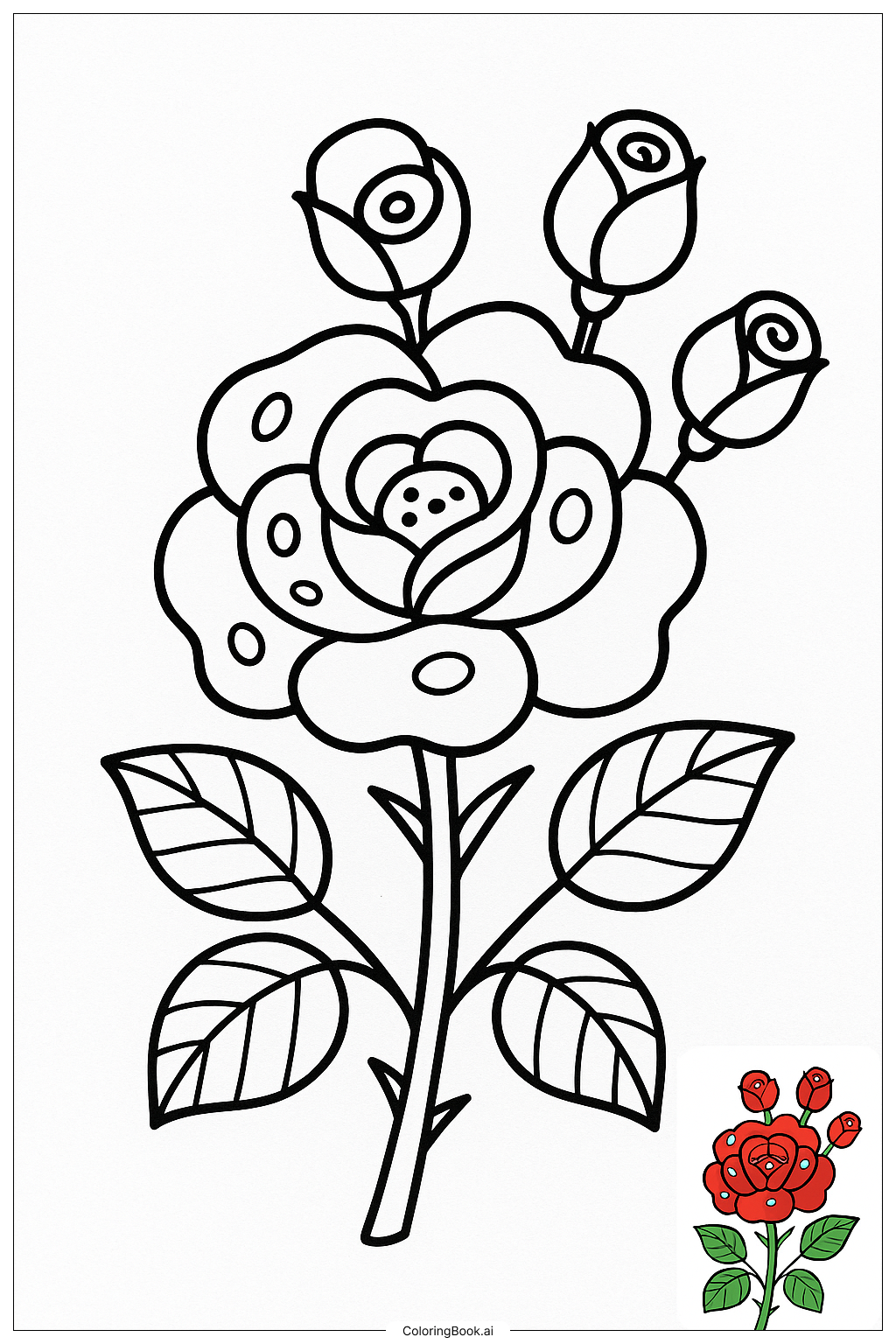
Coloring tips: How to color Grayscale Rose With Velvet Texture coloring page well?
Start from the center of the rose and work your way outward. The innermost petals are tightly curled, so use a deeper shade of your chosen color there. As you move to the outer petals, gradually shift to lighter tones to create a natural gradient. For a classic look, try deep reds and pinks with hints of burgundy in the shadowed areas. For something unique, try purple and lavender tones or even a soft peach palette. The velvet texture means you can blend colors smoothly — colored pencils or watercolor pencils work great here. Color the leaves in different shades of green, using darker green along the veins and edges. Take your time with each petal. Slow, gentle strokes will give the best results. Remember, there is no wrong way to color — make it your own!
Coloring challenges: Which parts are difficult to color and need attention for Grayscale Rose With Velvet Texture coloring page?
• Petal Layering Complexity: The rose has many overlapping petals that spiral from the center outward. Keeping track of which petal sits in front of or behind another can be confusing. You need to use slightly different tones for each layer to show depth and avoid making the petals look flat or blended into each other.
• Velvet Texture Simulation: The velvet-like surface of the petals requires smooth, even color application. Achieving that soft, plush look without creating streaks or harsh lines is a real challenge, especially with crayons or markers. Colored pencils with a light hand work better, but it still takes patience and practice.
• Gradient and Shading Transitions: The pre-drawn shading guides are subtle. Translating those into a convincing light-to-shadow color transition means you must blend carefully. Abrupt color changes will break the illusion of a three-dimensional flower, so smooth transitions are essential.
• Leaf and Stem Detail: The leaves and stem have their own vein details and tonal variations. Using only one flat green will make them look dull. Choosing two or three complementary greens and knowing where to apply each one requires careful observation and color planning.
• Staying Within Fine Lines: The outlines in this image are detailed and relatively thin, especially around the inner petals and leaf edges. Keeping your coloring tool within these fine boundaries, particularly near the tight spiral center, demands steady hands and a sharp pencil or fine-tipped tool.
Benefits of coloring books: Advantages of drawing Grayscale Rose With Velvet Texture coloring page
Coloring this rose page offers a wide range of wonderful benefits for both kids and Adults. The intricate petal details help develop fine motor skills and hand-eye coordination, which are especially important for younger children aged 4 to 16. Focusing on the complex layers of the flower trains the mind to pay close attention to detail, building patience and concentration. Choosing colors and planning how to blend them encourages creative thinking and artistic decision-making. The calming, repetitive motion of coloring also works as a stress-relieving activity, helping to quiet a busy mind and reduce anxiety. For older children and Adults, working through the shading and texture challenges of this velvet rose can feel genuinely rewarding. Completing the page builds a sense of accomplishment and boosts self-confidence. The botanical subject matter also sparks curiosity about nature and the natural world. Whether you color it in realistic reds or a completely imaginary palette, this page is a joyful and enriching creative experience for all ages.