Coloring tips: How to color Galaxy Nebula Patterned Tulip coloring page well?
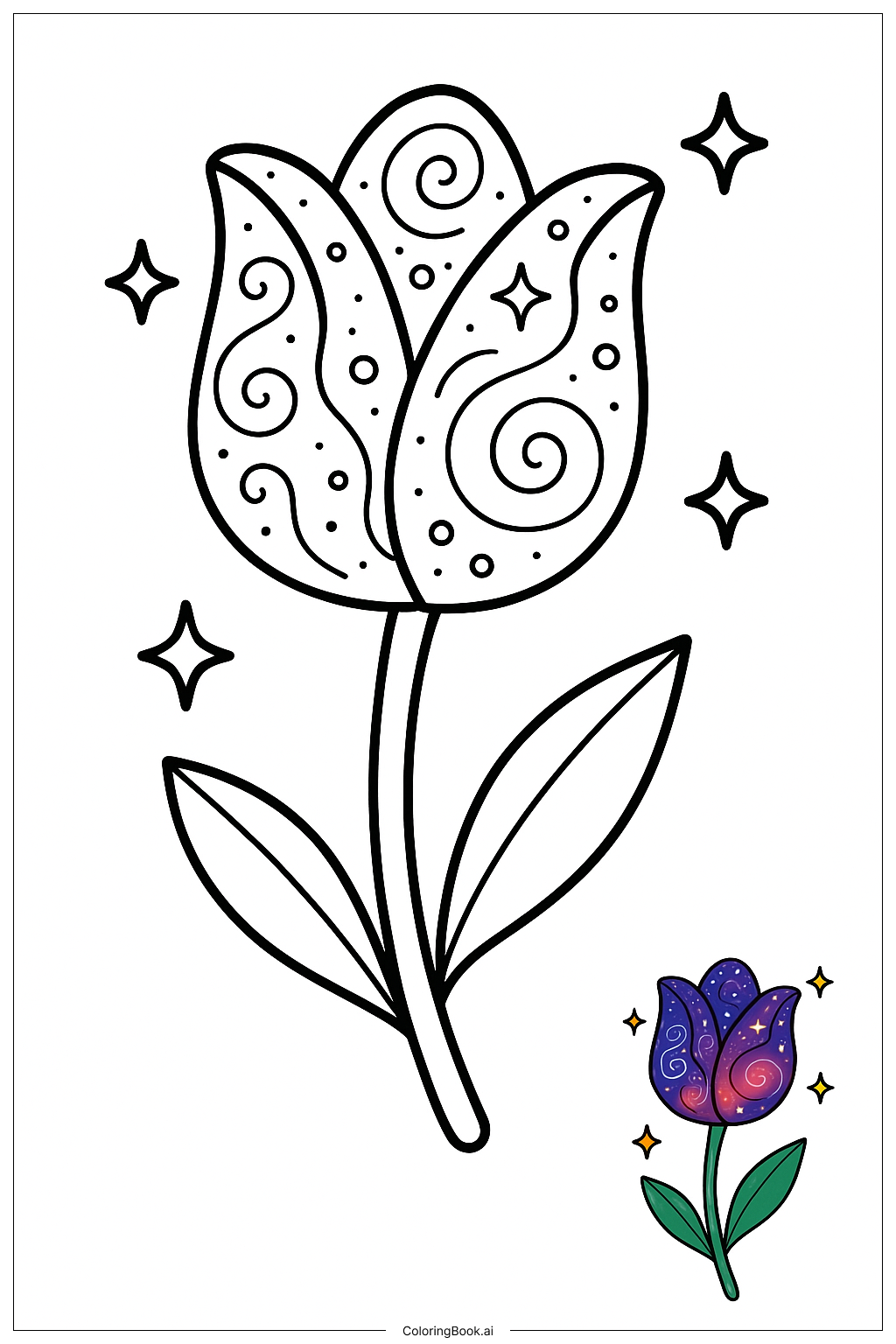
Start with the tulip petals and choose deep space colors like purple, midnight blue, and magenta to bring the galaxy patterns to life. Add bright dots of white or pale yellow to represent stars scattered across the petals. Use blending techniques with colored pencils or markers to create smooth cosmic gradients — go from dark navy at the edges to soft violet or pink near the center. For the stem and leaves, try cool greens with hints of teal or blue to keep the space theme going. The background can be filled with deep black or dark indigo, with clusters of tiny white and gold stars to mimic a real night sky. Feel free to mix unexpected colors — galaxies come in all shades, so there are no wrong choices here. Let your imagination explore the cosmos!
Coloring challenges: Which parts are difficult to color and need attention for Galaxy Nebula Patterned Tulip coloring page?
• Blending Petal Gradients: The tulip petals are filled with swirling nebula patterns that require smooth color transitions. Moving from deep space blues and purples to lighter pinks and whites without harsh lines can be tricky. Take your time layering colors gradually, and use a blending tool or a light-colored pencil to soften edges between shades.
• Filling Tiny Star Details: Scattered across the petals and background are many small star shapes and fine dots. These tiny elements require a sharp, fine-tipped tool to color accurately without accidentally going outside the lines. A fine-point marker or a well-sharpened colored pencil works best here.
• Balancing Foreground and Background: The tulip must stand out from the starry background. If both are colored with similar dark tones, the flower can get lost. Finding the right contrast between the nebula-patterned petals and the outer space background takes careful planning before you begin.
• Maintaining Consistent Cosmic Theme: Every section of the image — petals, stem, leaves, and background — should feel like part of one galaxy scene. Keeping colors harmonious across all these areas without making any section look out of place requires thinking about the full image as a whole, not just one part at a time.
• Intricate Line Patterns on Leaves and Stem: The stem and leaves carry delicate line patterns that are smaller in scale than the petal designs. Staying inside these narrow spaces while applying color neatly is a challenge, especially for younger colorists. Using a fine-tipped tool and going slowly helps achieve clean, crisp results.
Benefits of coloring books: Advantages of drawing Galaxy Nebula Patterned Tulip coloring page
Coloring this Galaxy Nebula Patterned Tulip page offers a wonderful mix of creativity and calm. As you fill in the swirling cosmic patterns and delicate star details, your mind naturally slows down and focuses, helping to reduce stress and anxiety. This kind of mindful activity is great for both kids and adults.
For younger colorists, working through the intricate galaxy designs helps develop fine motor skills and hand-eye coordination. Choosing colors for nebulas and stars also sparks imaginative thinking and builds confidence in creative decision-making.
For older children and adults, the detailed patterns provide a satisfying challenge that sharpens concentration and patience. The process of blending colors to create glowing cosmic effects can feel deeply rewarding and even meditative.
The design also introduces a playful way to explore science and art together. Kids can learn about galaxies and nebulas while they color, making the activity both fun and educational.
Finishing a beautiful, complex page like this gives a real sense of accomplishment. Displaying the completed artwork is a proud moment for any colorist. Overall, this page is a joyful way to spend creative time and nurture a love of both nature and the stars.