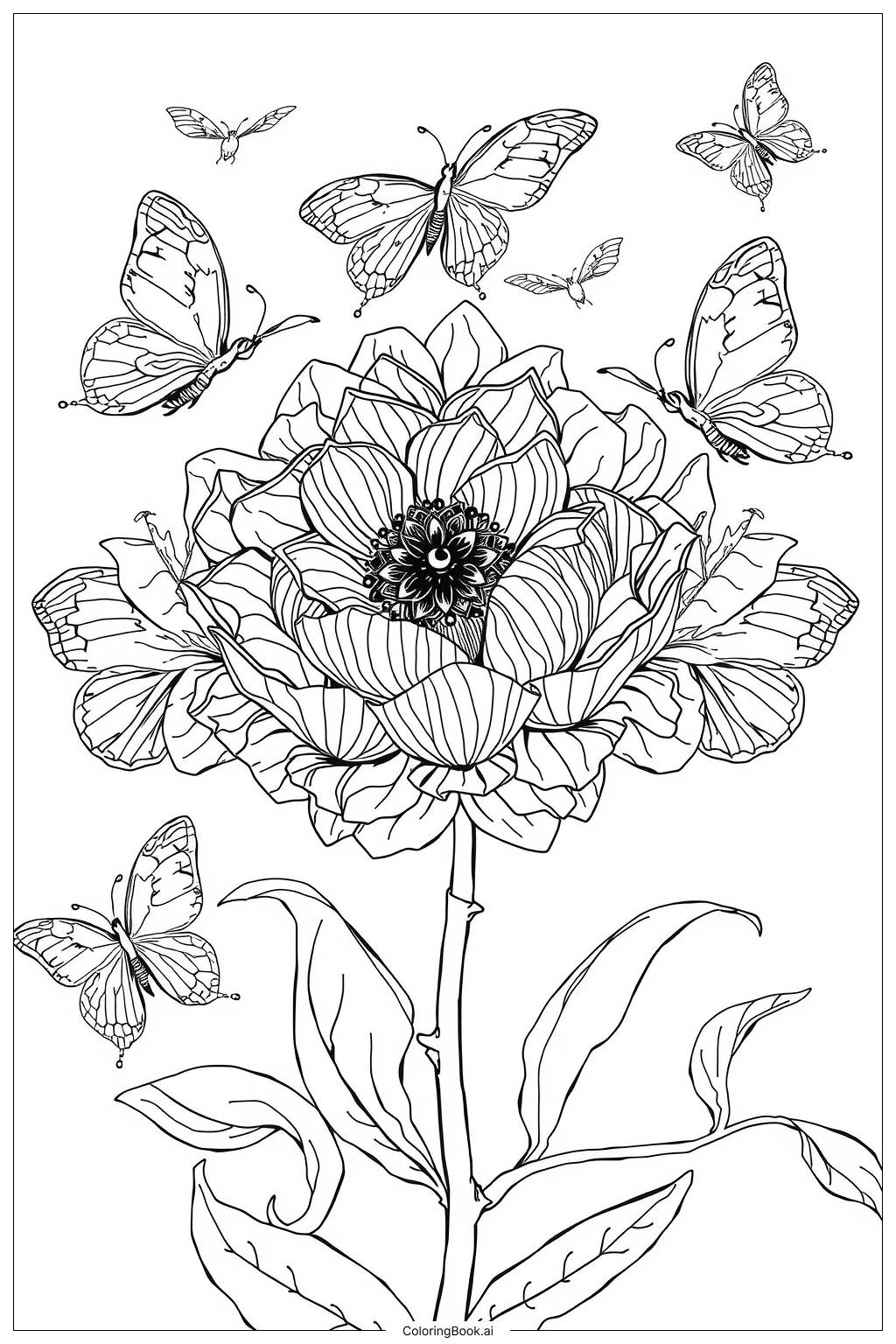
Coloring tips: How to color Flower Butterfly Dance coloring page well?
Start with the butterfly wings using bright, cheerful colors like orange, yellow, purple, or blue. You can mix two colors on each wing to make them look more realistic and beautiful. Use a darker shade along the edges of the wings to add depth. For the flowers, try pink, red, lavender, or soft peach for the petals, and yellow or orange for the centers. Color the leaves and stems in different shades of green to make the garden feel lush and full of life. Use light blue or soft purple for the background to make the butterflies and flowers pop. Do not be afraid to mix colors and experiment. This is your garden, so make it as colorful and magical as you like!
Coloring challenges: Which parts are difficult to color and need attention for Flower Butterfly Dance coloring page?
• Butterfly Wing Patterns: The butterfly wings contain fine, detailed patterns such as swirls, dots, and veins. These small areas require a steady hand and a sharp colored pencil or thin marker. Coloring within these tiny spaces without going outside the lines can be tricky, especially for younger children. Take your time and move slowly through each section.
• Layered Flower Petals: The flowers have multiple overlapping petals, which means you need to decide how to shade each layer differently. If all petals are the same color, the flower can look flat. Try using a lighter shade on the inner petals and a slightly darker shade toward the outer edges to give the flowers a natural, three-dimensional look.
• Intricate Line Work: This image has a high density of lines and shapes packed closely together. Keeping colors contained within each section requires patience and focus. Using fine-tipped tools will help you stay neat and avoid color bleed between the butterfly wings, flower petals, and background elements.
• Balancing Colors Across the Scene: With so many butterflies and flowers spread across the page, it can be hard to make sure no single area looks too heavy or too plain. Try to spread similar colors evenly across the whole image so it feels balanced and visually pleasing when complete.
• Stems and Vines: The thin, curving stems and vines that connect the flowers are narrow and easy to accidentally skip over. Use a mid-tone or dark green carefully along these lines to ensure the garden feels connected and complete.
Benefits of coloring books: Advantages of drawing Flower Butterfly Dance coloring page
Coloring this Flower Butterfly Dance page offers many wonderful benefits for children and beginners alike. The detailed butterfly wings and layered flower petals help improve fine motor skills and hand-eye coordination as kids practice staying within the lines. Choosing colors for wings and petals encourages creativity and lets children express their own unique artistic style. The calming, nature-inspired scene promotes focus and patience, making it a great quiet activity after a busy day. As children work through each butterfly and flower, they build confidence in their coloring abilities and feel proud of their finished artwork. The image also sparks curiosity about nature, butterflies, and garden life, making it both fun and educational. For older children, experimenting with shading and color blending on the wing patterns develops more advanced art skills in a relaxed, pressure-free way. Overall, this coloring page turns a simple creative activity into a meaningful experience that nurtures the mind, builds skills, and brings joy.