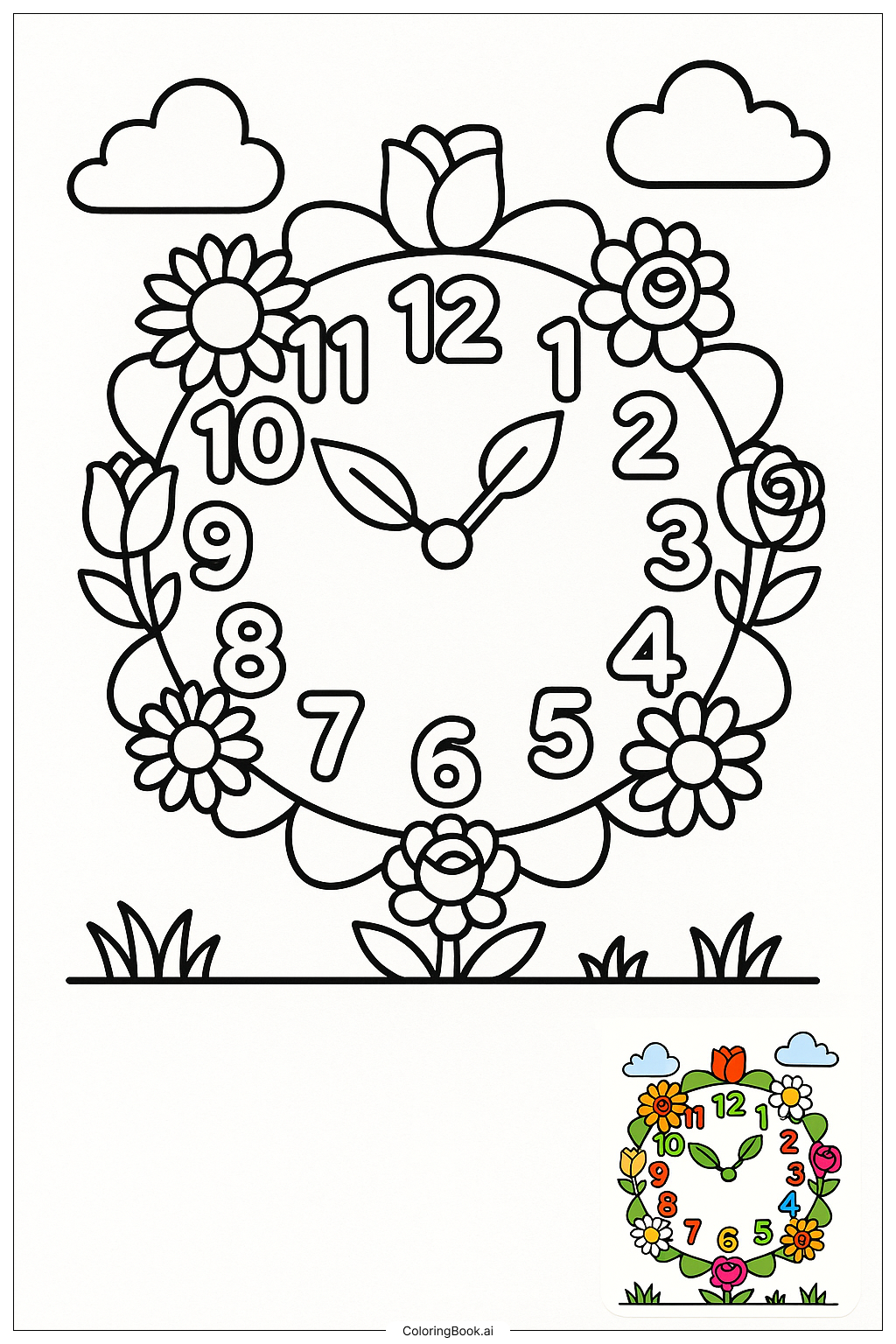
Coloring tips: How to color Floral Clock With Blooming Numbers coloring page well?
Start with the clock face background. Use a soft cream or pale yellow to keep it light and open. Then move to the numbers. Try green shades for the vines and add pops of color to the petals — pink, red, or purple work great for roses, while white or yellow suits daisies. Color the leaves in different shades of green to add depth. Use a darker green for shadow areas and a lighter green for the tips. For the clock hands, try gold or brown to make them stand out. Fill small buds with soft lavender or peach. Work from the center outward so you avoid smudging finished areas. Kids can keep colors bright and bold, while older colorists can try blending and shading to make the flowers look more realistic. Have fun mixing warm and cool tones across the design.
Coloring challenges: Which parts are difficult to color and need attention for Floral Clock With Blooming Numbers coloring page?
• Floral Number Details: Each number on the clock is formed by tiny vines, petals, and leaves. These shapes are very small and close together. Staying inside the lines requires a fine-tipped colored pencil or a thin marker. Rushing through this area can cause colors to bleed into each other and ruin the look of the numbers.
• Clock Hand Decoration: The clock hands have delicate swirls and floral accents along their length. These narrow sections are tricky to color without going over the edges. A sharp pencil point is essential here. Choosing a contrasting color like gold or deep brown helps the hands stand out from the busy background.
• Layered Flower Clusters: Many flowers overlap each other around the clock face. When flowers sit on top of one another, it can be hard to decide which color goes where. Coloring overlapping petals in slightly different shades of the same color family helps separate them visually without making the image look too busy.
• Leaf Shading and Depth: There are many leaves of different sizes filling the border and frame. Without some form of shading, all the leaves can blend together into a flat green mass. Adding a darker tone along the center vein and a lighter tone near the leaf edges creates a sense of depth and makes each leaf feel distinct.
• Balancing the Overall Color Palette: With so many elements — flowers, leaves, vines, numbers, and clock hands — it is easy to end up with a chaotic mix of colors. Planning a limited palette of three to five main colors before starting helps keep the finished piece harmonious and visually pleasing.
Benefits of coloring books: Advantages of drawing Floral Clock With Blooming Numbers coloring page
Coloring this Floral Clock With Blooming Numbers image offers many wonderful benefits for kids and older colorists alike. First, it builds focus and patience. The intricate details in the flowers and vine numbers require careful, steady work, which trains the brain to concentrate for longer periods. Second, it develops fine motor skills. Guiding a pencil or marker through small petal shapes and narrow clock hands strengthens hand and finger muscles, which is great for young children still developing their grip and control. Third, it encourages creative thinking. Choosing which colors go where pushes colorists to make decisions, experiment with combinations, and express their own personal style. There is no single right answer, so every finished piece is unique. Fourth, it introduces basic art concepts like shading, layering, and color harmony in a fun, low-pressure way. Kids learn how light and dark tones work together without even realizing they are learning. Finally, coloring is a calming activity. Spending quiet time on a detailed image like this helps reduce stress and anxiety, making it a great way to unwind after a busy day. It turns screen-free time into something both productive and enjoyable.