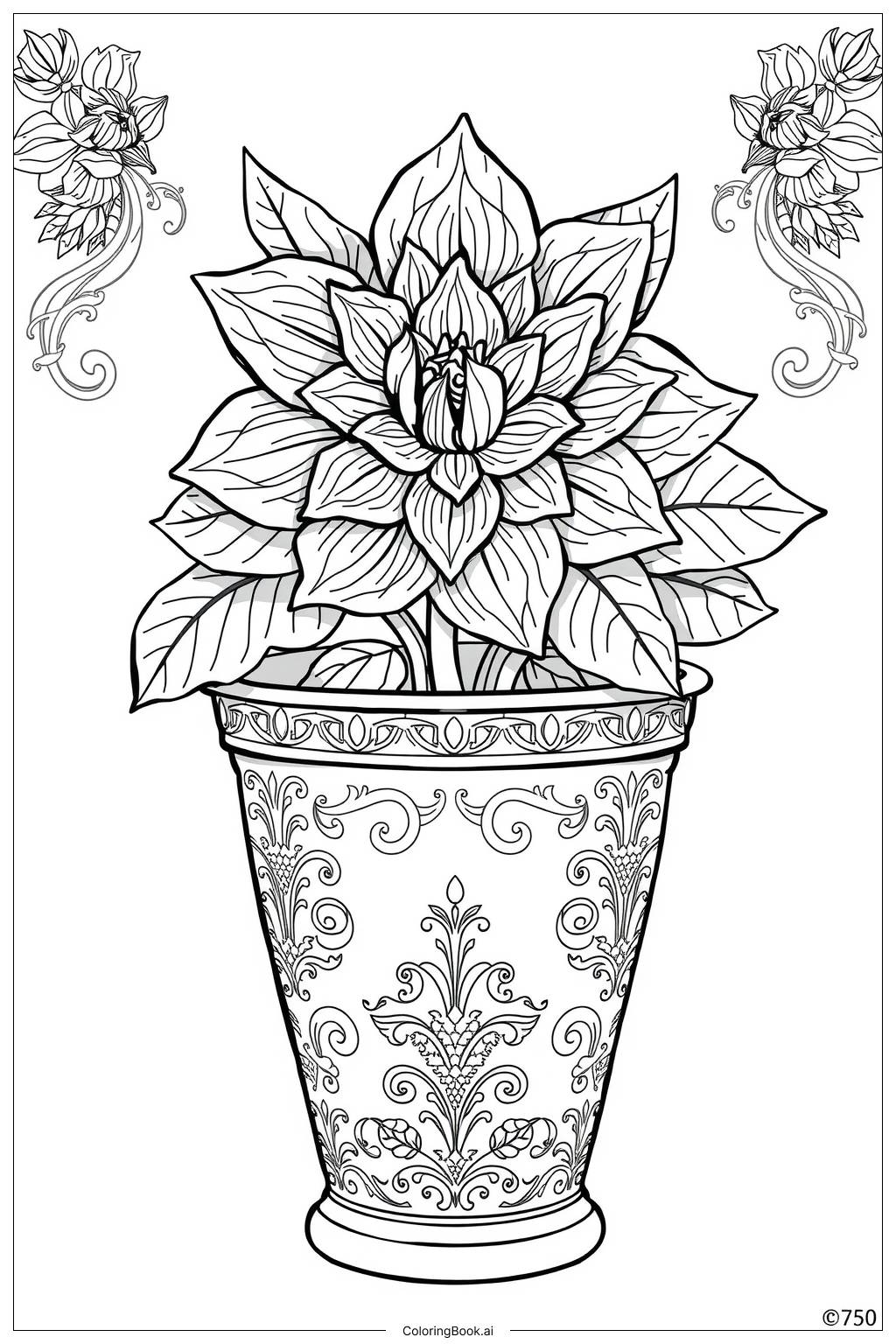
Coloring tips: How to color Easy Flower Pot coloring page well?
Start with the flower petals. Try bright, happy colors like yellow, pink, orange, or red. Use one color for all the petals, or mix two colors to make them look fun and unique. Color the round center of the flower in a darker shade, like brown or deep orange, to make it stand out. For the stem and leaves, use different shades of green. A lighter green on one leaf and a darker green on the other adds depth. For the pot, try earthy tones like terracotta, brown, or clay red. You can also make it playful with a bright blue or purple pot. Add small dots or stripes to the pot for extra decoration. Keep the background simple with a light sky blue or soft yellow, or leave it white to let the flower shine. There are no wrong color choices here, so have fun and be creative!
Coloring challenges: Which parts are difficult to color and need attention for Easy Flower Pot coloring page?
• Petal Consistency: The flower has several petals of similar size and shape arranged around a central circle. Keeping each petal colored evenly and cleanly without going over the outlines can be tricky, especially for younger children. Take your time on each petal and use slow, steady strokes to stay inside the lines.
• Color Blending on Leaves: The two leaves on either side of the stem offer a chance to show shading, but blending two shades of green smoothly within a limited space requires a steady hand. Pressing lightly with your coloring tool and gradually building up color helps achieve a natural look.
• Pot Surface Details: The pot has a curved surface, and keeping color application smooth across this rounded shape without streaks or uneven patches can be challenging. Moving your coloring strokes in a consistent direction, following the curve of the pot, will help produce a cleaner result.
• Small Center Circle: The circular center of the flower is a compact area surrounded by petals. Filling it neatly with a contrasting color without accidentally bleeding into the petals requires careful, precise work. Using a finer-tipped coloring tool for this area is a helpful approach.
• Balancing Overall Color Harmony: Choosing colors that look good together across the whole image — flower, leaves, stem, and pot — can feel overwhelming at first. Planning your color choices before you start, and making sure the pot color does not clash with the flower, will help the final result feel balanced and pleasing to the eye.
Benefits of coloring books: Advantages of drawing Easy Flower Pot coloring page
Coloring this easy flower pot image offers a wide range of wonderful benefits for children and beginners alike. The simple, bold outlines make it approachable and enjoyable, helping build confidence in young colorists who are just starting out.
Focusing on staying within the lines helps children develop fine motor skills and strengthen hand-eye coordination. These small movements support the same muscle control needed for writing and drawing.
Choosing colors for the petals, leaves, and pot encourages creative thinking and self-expression. There are no rules about what color a flower must be, so children are free to explore their imagination and make the image entirely their own.
The calm, repetitive motion of coloring helps reduce stress and anxiety. It brings a sense of focus and peace, making it a great quiet-time activity after a busy day.
Completing the image from start to finish gives children a real sense of accomplishment. Seeing a finished, colorful page that they created themselves builds confidence and encourages a love of art.
Coloring flower and nature themes also gently introduces children to the natural world, sparking curiosity about plants and the environment around them. It is a simple, screen-free activity the whole family can enjoy together.