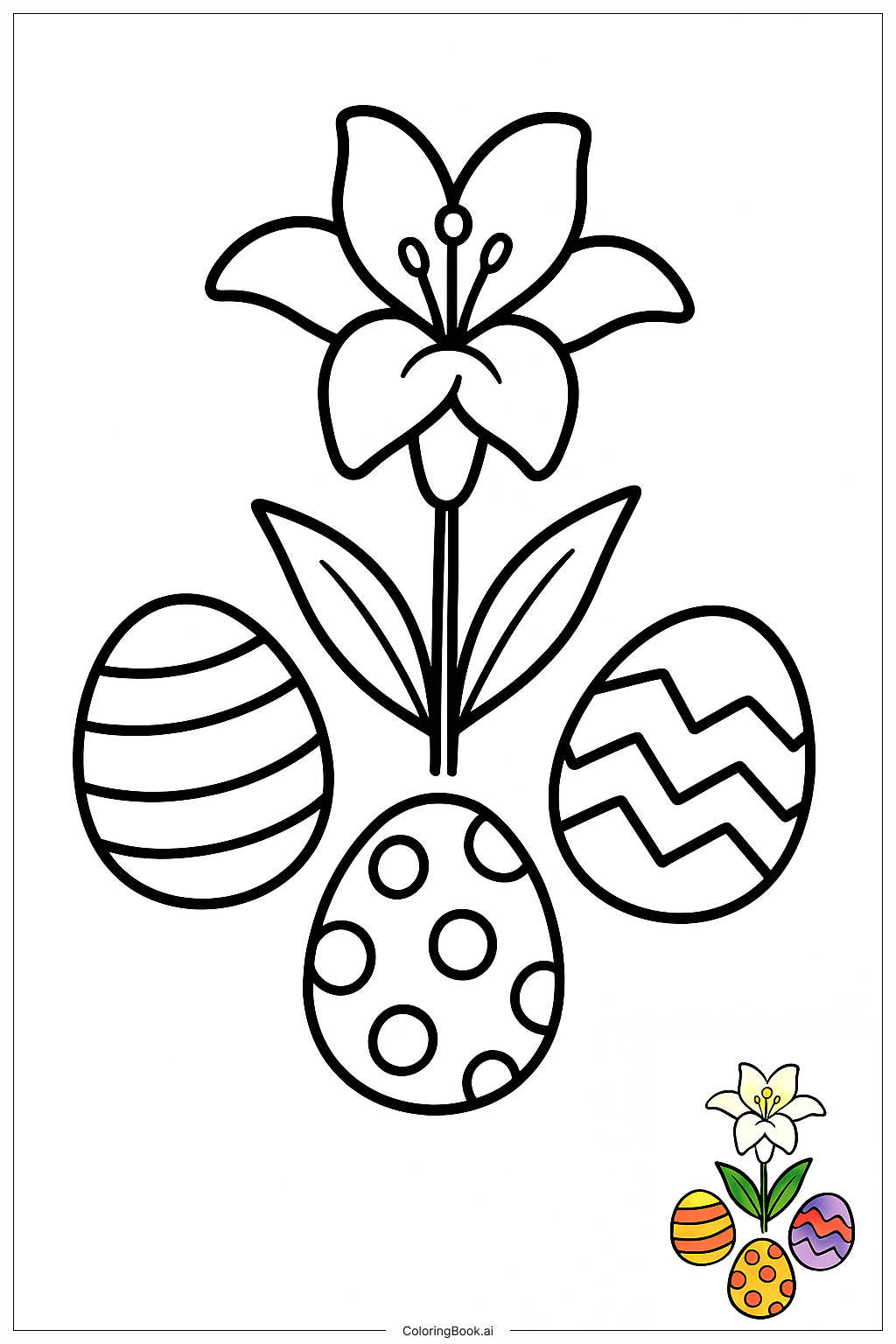
Coloring tips: How to color Easter Lily With Decorative Eggs coloring page well?
Start with the Easter lily petals. Use soft white or pale cream as your base color. Add light pink or lavender shading near the petal edges and center folds to give them depth. Color the stamens golden yellow and the stems and leaves in fresh shades of green. For the Easter eggs, let your creativity shine! Each egg has its own pattern, so use bright, cheerful colors like red, blue, orange, purple, and yellow. Try to use different color combinations for each egg so they stand out from one another. Use darker shades to fill in the decorative patterns on the eggs. A light blue or soft green background can make the whole scene feel like a bright spring day.
Coloring challenges: Which parts are difficult to color and need attention for Easter Lily With Decorative Eggs coloring page?
• Lily Petal Shading: The large petals of the Easter lily have natural curves and folds. Capturing this three-dimensional look requires careful blending. You need to apply lighter tones at the center and gradually darken toward the petal edges. Without smooth transitions, the petals may look flat instead of lifelike.\n\n• Intricate Egg Patterns: Each decorative egg features small, detailed designs such as dots, stripes, zigzags, and geometric shapes. Staying within these tiny pattern lines takes a steady hand and patience. Using fine-tipped coloring tools like colored pencils or thin markers will help you color each section neatly without bleeding into neighboring areas.\n\n• Leaf Vein Details: The leaves surrounding the lily have visible veins running through them. Coloring these correctly means using at least two shades of green — a lighter tone for the veins and a deeper green for the rest of the leaf. This contrast brings the foliage to life and adds a realistic touch to the image.\n\n• Balancing Colors Across the Scene: With both the lily and multiple Easter eggs in one image, choosing a balanced color palette is challenging. If too many bright colors are placed next to each other without contrast, the image can look overwhelming. Planning your color choices before you begin helps ensure the lily remains the focal point while the eggs complement it.\n\n• Small Decorative Details: Some of the pattern elements on the eggs are very small. Filling these tiny spaces with color without going outside the lines requires concentration and control, especially for younger artists or those new to detailed coloring work.
Benefits of coloring books: Advantages of drawing Easter Lily With Decorative Eggs coloring page
Coloring this Easter Lily With Decorative Eggs page offers a wonderful range of benefits for children and beginners alike. Working on the detailed lily petals and egg patterns helps strengthen hand-eye coordination and improves fine motor skills. Carefully guiding a pencil or marker along small lines builds the kind of precision that supports writing and drawing in everyday life. This image also encourages creativity. Choosing colors for the eggs and lily lets young artists express themselves freely and experiment with color combinations in a fun, low-pressure way. There are no wrong answers when it comes to picking your favorite shades! The repetitive motion of coloring is also naturally calming. It helps children slow down, focus, and enjoy a quiet, mindful activity. This can reduce stress and improve concentration. Completing the full image gives a strong sense of accomplishment, building confidence and motivation to take on more creative challenges. The Easter theme makes this page especially meaningful during the spring season, connecting art with cultural traditions and celebrations. It is a great activity for families to enjoy together.