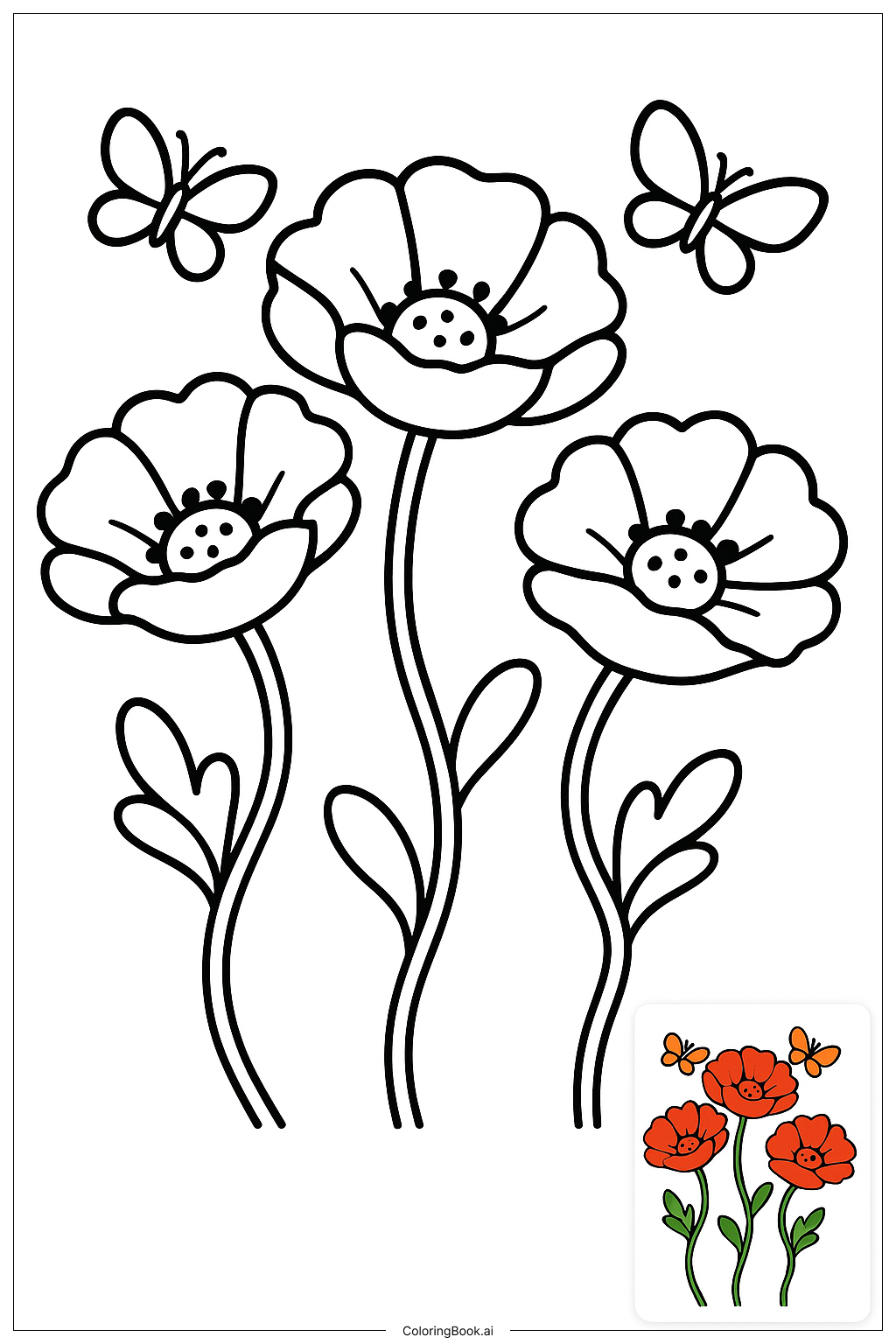
Coloring tips: How to color Dancing Poppies In Summer Breeze coloring page well?
Start with the poppy petals using warm, vibrant shades like red, orange, or coral. You can make some petals a bit lighter at the edges to show how sunlight hits them. Use a deep maroon or dark red for shadowed areas between the petals to add depth. Color the centers with black or dark brown, then add small yellow or white dots to make them pop. The stems and leaves look great in bright or medium green. Try using two shades of green — one lighter and one darker — to make the leaves look lush and full. For the background, soft yellows, pale sky blue, or a warm cream color will give a sunny summer feel. If you want your poppies to really stand out, keep the background light and simple. Use smooth, gentle strokes on the petals so they look soft and silky. Take your time with the small details in the flower centers — they make a big difference!
Coloring challenges: Which parts are difficult to color and need attention for Dancing Poppies In Summer Breeze coloring page?
• Petal Layering and Overlap: Poppies have thin, overlapping petals that can be tricky to color without blending the shades together. Each petal needs its own range of light and shadow to look separate and three-dimensional. Keeping track of which petal is in front and which is behind takes careful attention and a steady hand.
• Delicate Petal Texture: The petals of a poppy have a soft, almost crinkled look. Capturing this texture with color requires smooth gradients and gentle shading. Pressing too hard or using a single flat color can make the petals look stiff rather than silky and light.
• Flower Centers: The center of each poppy is filled with small stamens and a detailed seed pod. These tiny elements are very small and closely packed together, making them one of the hardest parts to color neatly. Using a fine-tipped tool and keeping a steady hand is important to avoid smudging or going outside the lines.
• Stems and Leaves in Motion: Because the poppies are dancing in the breeze, the stems and leaves are shown at various angles and curves. Coloring curved shapes evenly without streaks or gaps can be challenging, especially where leaves meet the stem.
• Creating a Cohesive Background: The open background needs to feel airy and warm without overpowering the flowers. Blending soft colors smoothly across the background while keeping the edges of the flowers crisp is a skill that requires patience and a light touch.
Benefits of coloring books: Advantages of drawing Dancing Poppies In Summer Breeze coloring page
Coloring this Dancing Poppies In Summer Breeze page offers a wonderful range of benefits for children and young artists. Working on the flowing petals and curved stems helps build fine motor skills and hand control, which are important for writing and other everyday tasks. Choosing colors for the flowers encourages creative thinking and helps kids develop their own sense of style and color. The gentle, nature-inspired design has a calming effect, making it a great activity for winding down after a busy day. Focusing on the small details, like the flower centers and the movement of the leaves, trains the brain to concentrate and pay attention. This kind of mindful focus can carry over into schoolwork and other learning activities. Completing the page also gives children a real sense of accomplishment and pride in their work. Sharing or displaying a finished piece boosts self-confidence and encourages a love of art. Whether coloring alone or with friends, this page is a joyful way to connect with nature and express creativity at any age.