Coloring tips: How to color Basic Flower Heart coloring page well?
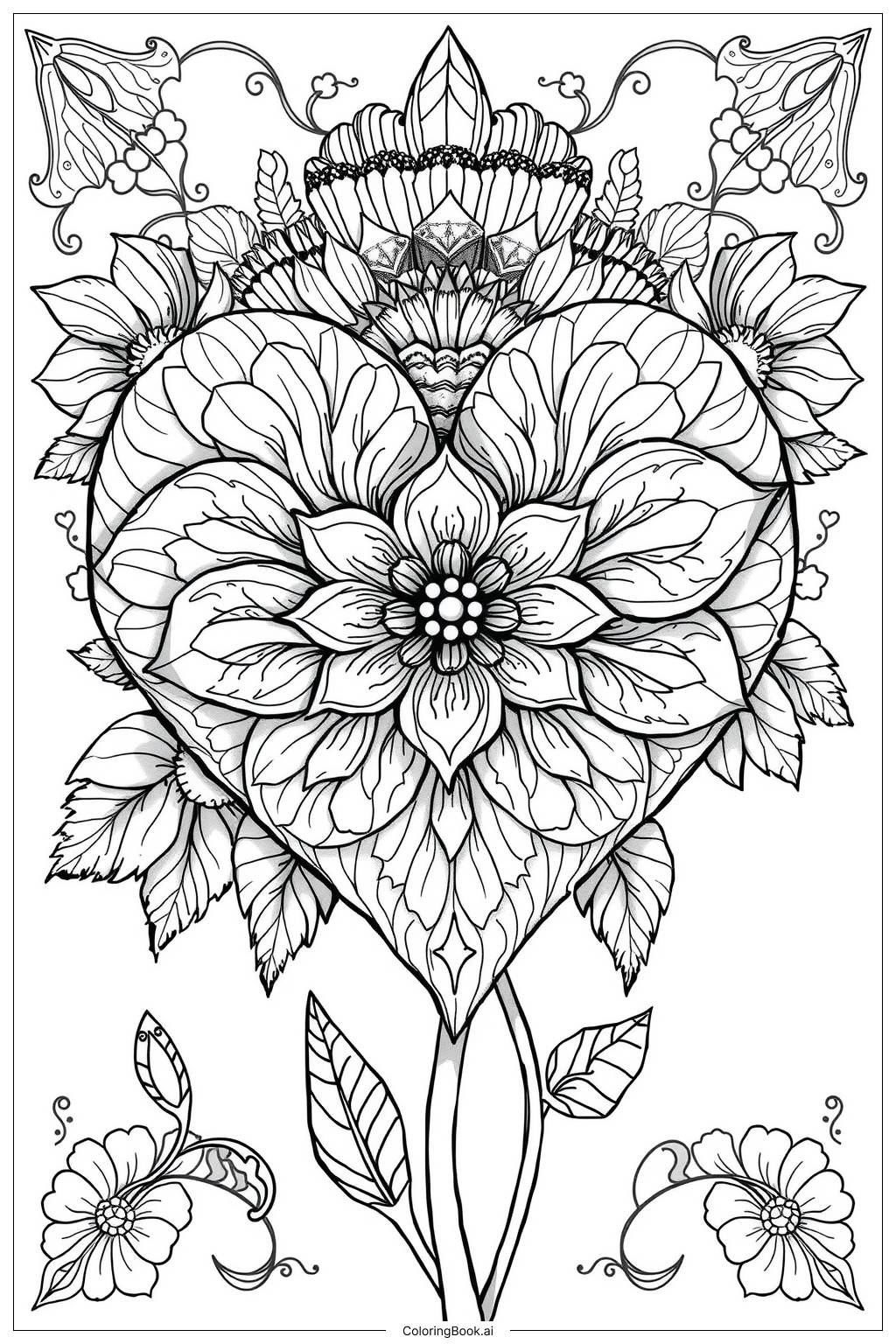
Start by coloring the heart outline to define the overall shape. You can use red or pink to give it a classic, loving feel. For the flowers, try using a mix of warm colors like yellow, orange, and soft purple to make each bloom look unique. Give every flower a slightly different color so the design feels lively and fun. Color the small circular centers in yellow or cream. Use different shades of green for the leaves and buds to add depth. If you want a softer look, try pastel shades throughout. Older kids and adults can try blending colors on the petals to create a gradient effect. Use a light touch with colored pencils to layer colors smoothly. Feel free to add a colorful background in sky blue or light lavender to make the heart shape pop. There are no strict rules — let your creativity guide you and enjoy the process.
Coloring challenges: Which parts are difficult to color and need attention for Basic Flower Heart coloring page?
• Staying Within the Petal Lines: Each flower has small, rounded petals that are close together. It can be tricky to color inside each petal without going over the edges. Using a fine-tipped coloring tool like a colored pencil or thin marker will help you stay neat and precise within the curved lines.
• Keeping Colors Consistent Across the Heart: The heart is made up of many flowers, and it can be challenging to plan a color scheme that looks balanced across the whole design. If you use too many random colors, the image may look uneven. Try grouping similar colors in sections or repeating a pattern to keep everything looking harmonious.
• Coloring the Small Centers: The circular centers of each flower are tiny and require a steady hand. Filling them in with a single neat color without smudging the surrounding petals takes patience and a sharp pencil tip or a fine-point marker.
• Handling the Leaves and Buds in Tight Spaces: The small leaves and buds are tucked between the flowers, leaving very little room to work with. These areas are easy to miss or accidentally color over. Take your time and use a pointed tool to carefully fill in these small green details without overlapping onto the petals.
• Creating Depth Without Losing the Simple Style: This is a clean and simple design, but adding shading or blending to make it look more dimensional can be difficult without making it look overcrowded. If you want to add depth, apply shading lightly only at the base of petals, keeping the overall look soft and gentle.
Benefits of coloring books: Advantages of drawing Basic Flower Heart coloring page
Coloring this Basic Flower Heart page offers a wonderful range of benefits for children and adults alike. The simple, repetitive shapes of the flowers help young children practice staying within lines, which builds fine motor skills and hand-eye coordination. As they carefully fill in each petal and leaf, they develop focus and patience in a fun, low-pressure way.
Choosing colors for each flower also encourages creativity and artistic thinking. Kids get to experiment with color combinations and learn how different hues work together, which supports their visual and artistic development.
For older children and adults, this image provides a calming, mindful activity. The gentle rhythm of coloring flower after flower can reduce stress and bring a sense of peace and relaxation. It works like a quiet meditation, helping to clear the mind after a busy day.
The heart shape adds an emotional dimension to the activity. Coloring it can feel like an act of love, making it a meaningful gift when completed and shared with someone special. It can also spark conversations about feelings, nature, and beauty.
Overall, this coloring page blends creativity, calm, and joy into one simple activity that is suitable for all ages and skill levels.