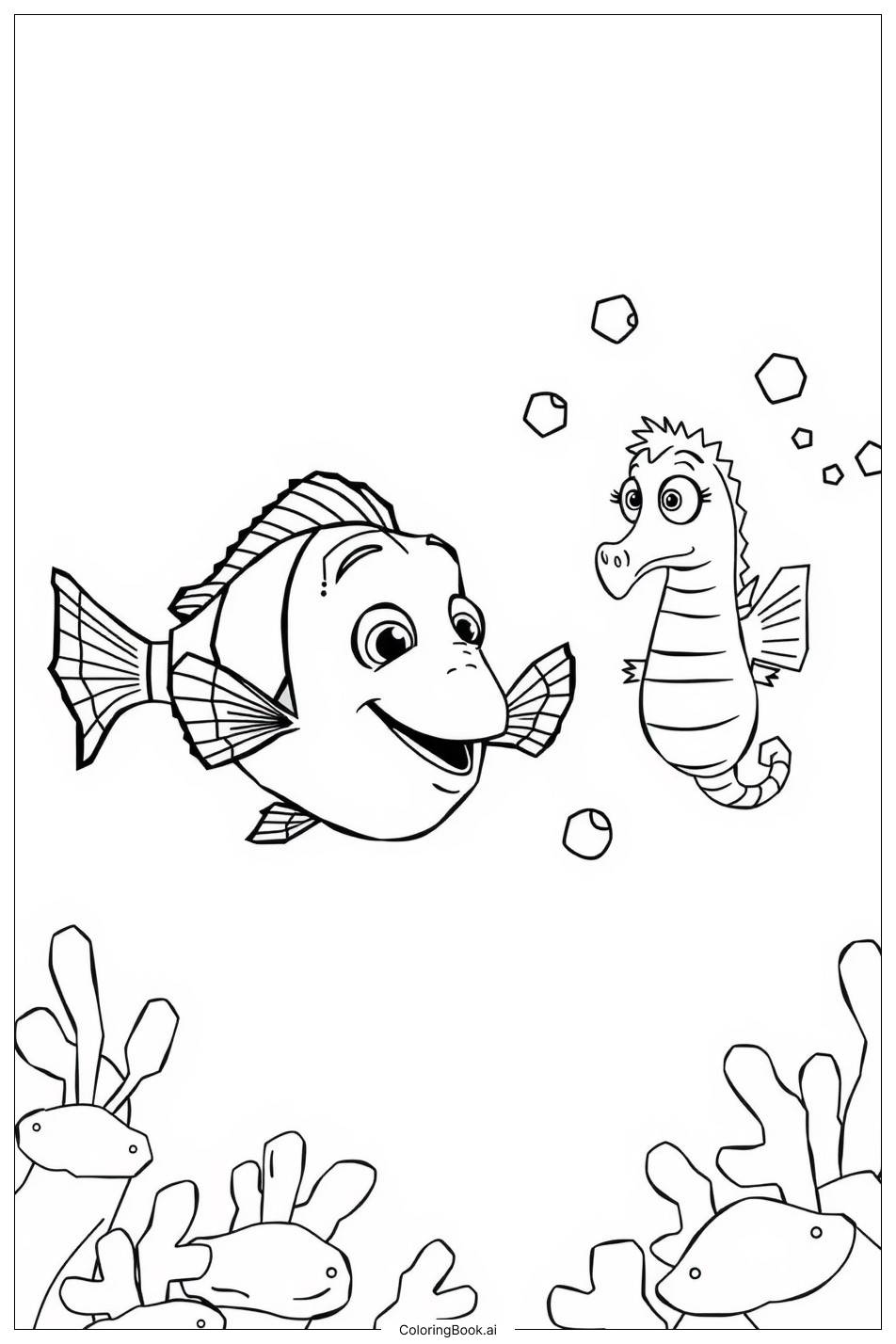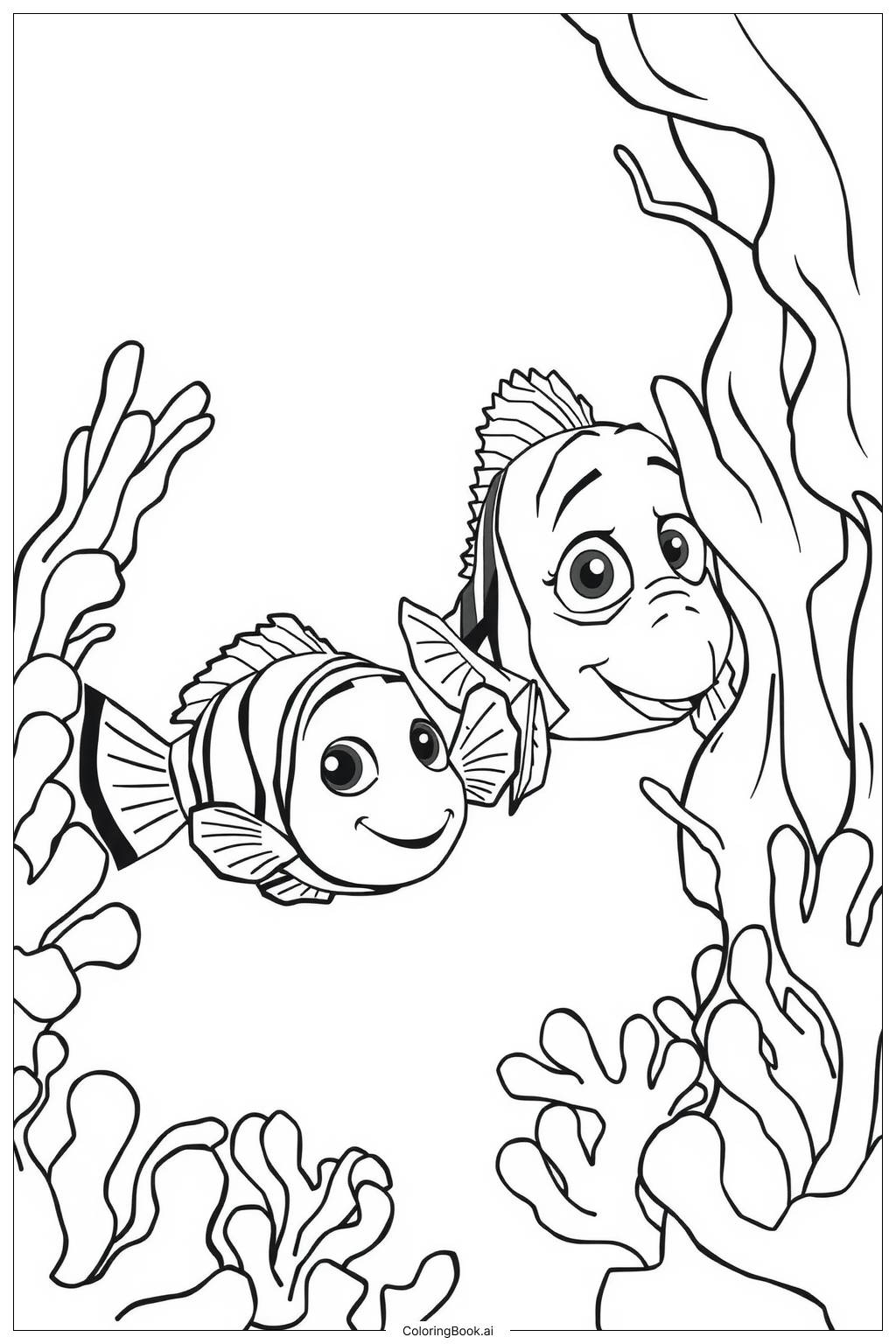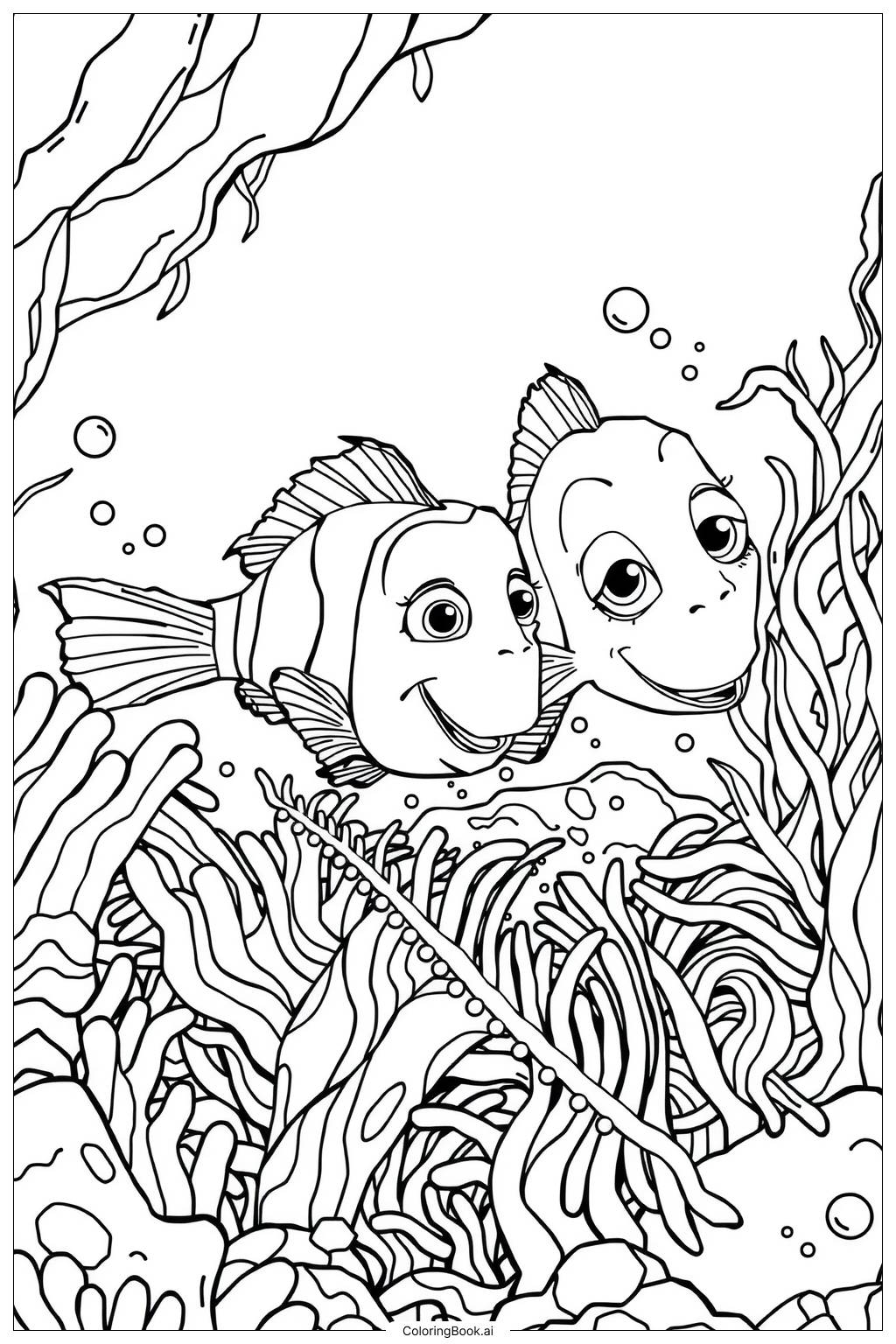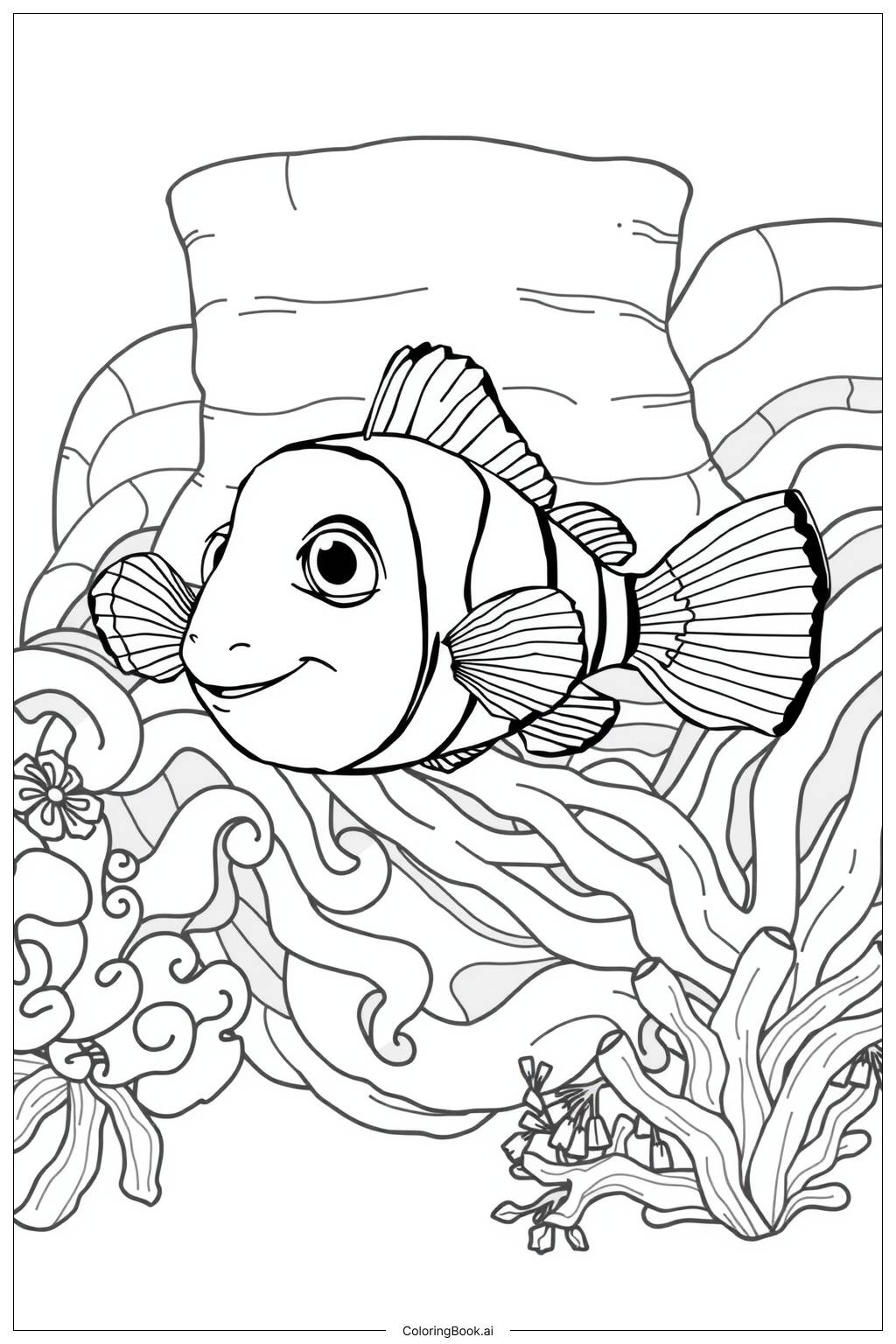
Coloring tips: How to color Finding Nemo's Brave Journey Through the Open Ocean coloring page well?
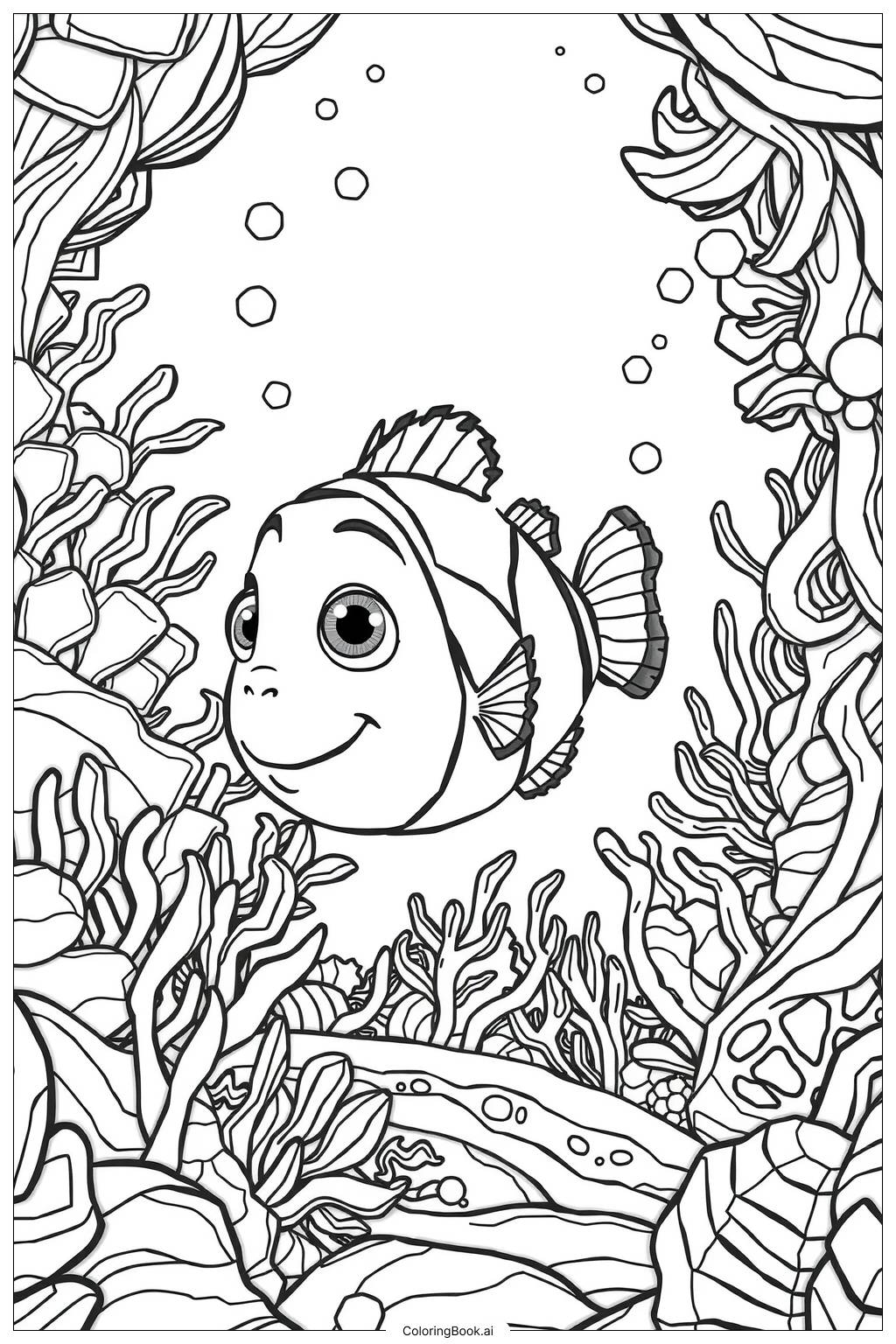
Start with Nemo's body by using a bright orange for his main scales and clean white for his stripe bands. Add a thin black outline around each stripe to make them pop. Use deep ocean blues and blue-greens for the surrounding water, blending lighter shades near the surface and darker tones toward the bottom to create a sense of depth. Color the coral in warm reds, pinks, and purples to contrast with the cool ocean background. Bubbles can be left white or lightly shaded with pale blue. Use yellow or light gold for any sunlight rays filtering through the water. Keep Nemo's eyes bright white with a dark pupil to make him look lively and expressive. For younger colorists, using bold and simple colors works great. Older kids can try blending and shading to bring the ocean scene to life.
Coloring challenges: Which parts are difficult to color and need attention for Finding Nemo's Brave Journey Through the Open Ocean coloring page?
• Nemo's Stripe Patterns: Nemo has a very recognizable pattern of orange and white stripes separated by thin black lines. Staying within these narrow stripe borders is tricky, especially for younger children. Carefully outlining each section with a fine-tipped marker or pencil before filling it in can help keep the colors clean and accurate.
• Ocean Depth and Water Gradients: Creating a realistic ocean background requires blending multiple shades of blue together smoothly. The water should appear lighter near the top and gradually darker toward the bottom. Achieving this gradient effect with crayons or colored pencils takes patience and a light hand, and can be challenging for beginners.
• Small Details and Fine Lines: The image contains fine details such as bubble outlines, coral textures, and the delicate patterns on Nemo's fins. These small areas require a sharpened pencil or a thin marker to color neatly without going outside the lines. Rushing through these sections can cause colors to bleed into adjacent areas.
• Coral and Background Elements: The coral formations and background elements overlap in complex ways, making it hard to decide which sections get which colors. Planning the color scheme in advance and working from the background to the foreground helps prevent confusion and keeps the final image looking organized and vibrant.
• Contrast and Visual Balance: Balancing the warm colors of Nemo against the cool blues of the ocean requires thoughtful color choices. If the background is too dark or too bright, Nemo may get lost in the scene. Choosing colors with enough contrast ensures Nemo remains the clear and bold focus of the page.
Benefits of coloring books: Advantages of drawing Finding Nemo's Brave Journey Through the Open Ocean coloring page
Coloring this Finding Nemo scene offers wonderful benefits for children and fans of all ages. For young kids, tracing and filling in Nemo's stripes helps develop fine motor skills and improves hand-eye coordination. Choosing colors for the ocean, coral, and sea creatures encourages creative thinking and imaginative expression.
The underwater setting introduces children to the natural world in a fun and engaging way. As they color different ocean elements, they can learn about marine life, ocean depth, and the vibrant colors found in coral reefs.
For older children and teens, the challenge of blending ocean blues and shading coral textures builds patience and attention to detail. These are skills that carry over into drawing, painting, and other artistic pursuits.
Coloring also has a calming effect. Focusing on a creative task helps reduce stress and provides a healthy way to relax after a busy day. It encourages kids to slow down and be present in the moment.
Sharing a finished coloring page based on a beloved story like Finding Nemo also sparks conversation, storytelling, and emotional connection. It reminds children of themes like bravery, friendship, and never giving up, making this a meaningful and enjoyable activity for everyone.