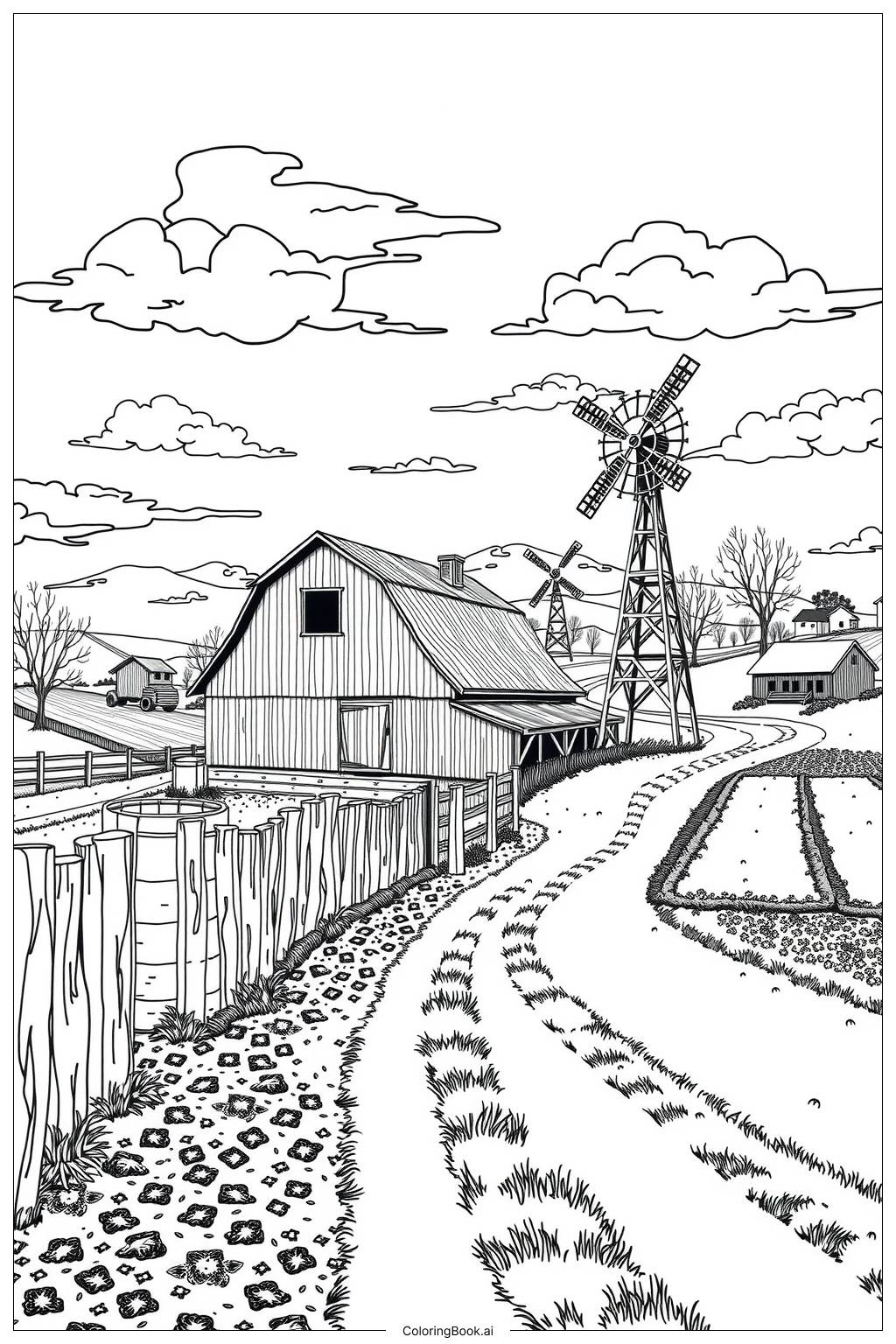
Coloring tips: How to color Farm Life During the Changing Seasons coloring page well?
Start with the sky. Use light blue for a clear day or soft orange and pink for a sunset feel. The farmhouse looks great in warm cream or soft yellow, with a brown or gray roof. Color the barn in classic red with white trim. For the fields, try bright green for spring crops, golden yellow for summer or autumn harvests, and pale tan for bare winter soil. Give the trees rich greens in summer, warm reds and oranges in fall, or bare brown branches in winter. Animals can be colored in natural shades — brown or black and white for cows, golden tan for the horse, and white or speckled brown for the chickens. The farmer's clothes can be any fun colors you like, such as denim blue overalls and a flannel shirt. Use earthy browns and greens throughout to keep the scene feeling warm and natural. Take your time with the details — there is a lot to explore!
Coloring challenges: Which parts are difficult to color and need attention for Farm Life During the Changing Seasons coloring page?
• Seasonal Color Blending: One of the biggest challenges in this image is showing the transition of seasons across the landscape. Different areas may need to reflect spring greens, summer golds, autumn reds, or winter whites all at once. Blending colors smoothly or deciding which season to highlight takes careful thought and planning before you start.
• Small Animal Details: The farm animals — including cows, chickens, and a horse — have small features like spots, feathers, and fur textures. Coloring these tiny details neatly requires a sharp pencil or a fine-tipped marker. Staying inside the lines on small areas can be tricky, especially for younger colorists.
• Busy Background Fields: The fields and crops in the background contain many rows and small shapes. Coloring each row consistently without the scene looking cluttered takes patience. Choosing the right shades to separate the foreground farm from the distant fields also requires some planning.
• Farmhouse and Barn Architecture: The buildings have windows, doors, roof edges, and wooden plank details. These straight lines and small sections are hard to color neatly. Using a ruler as a guide or switching to fine-tipped tools can help keep these areas clean and precise.
• Tree Foliage Variety: The trees along the fence line need to reflect different seasonal stages. Coloring leaves with multiple tones — layering yellow over green or orange over red — to create a natural look is a rewarding but challenging technique, especially for beginners working with colored pencils or crayons.
Benefits of coloring books: Advantages of drawing Farm Life During the Changing Seasons coloring page
Coloring this farm scene offers a wonderful range of benefits for kids and adults alike. Working through all the seasonal details helps build focus and concentration. Choosing colors for fields, animals, and buildings encourages creative thinking and decision-making skills.
For younger children, filling in the shapes of animals and crops helps develop fine motor skills and hand-eye coordination. The repetitive motion of coloring also has a calming effect, making it a great activity after a busy day.
Learning about farm life through this image sparks curiosity about nature, animals, and where food comes from. Kids can think about how seasons change the land while they color, connecting art with real-world learning.
For older kids and adults, the challenge of blending seasonal colors and adding texture to fur, feathers, and crops makes this a genuinely engaging artistic exercise. It encourages experimentation with color theory and shading techniques.
Coloring together as a family also creates a shared activity that sparks conversation about farms, seasons, and nature. Whether you're a beginner picking up crayons for the first time or someone who loves detailed artwork, this farm scene offers something meaningful and enjoyable at every skill level.