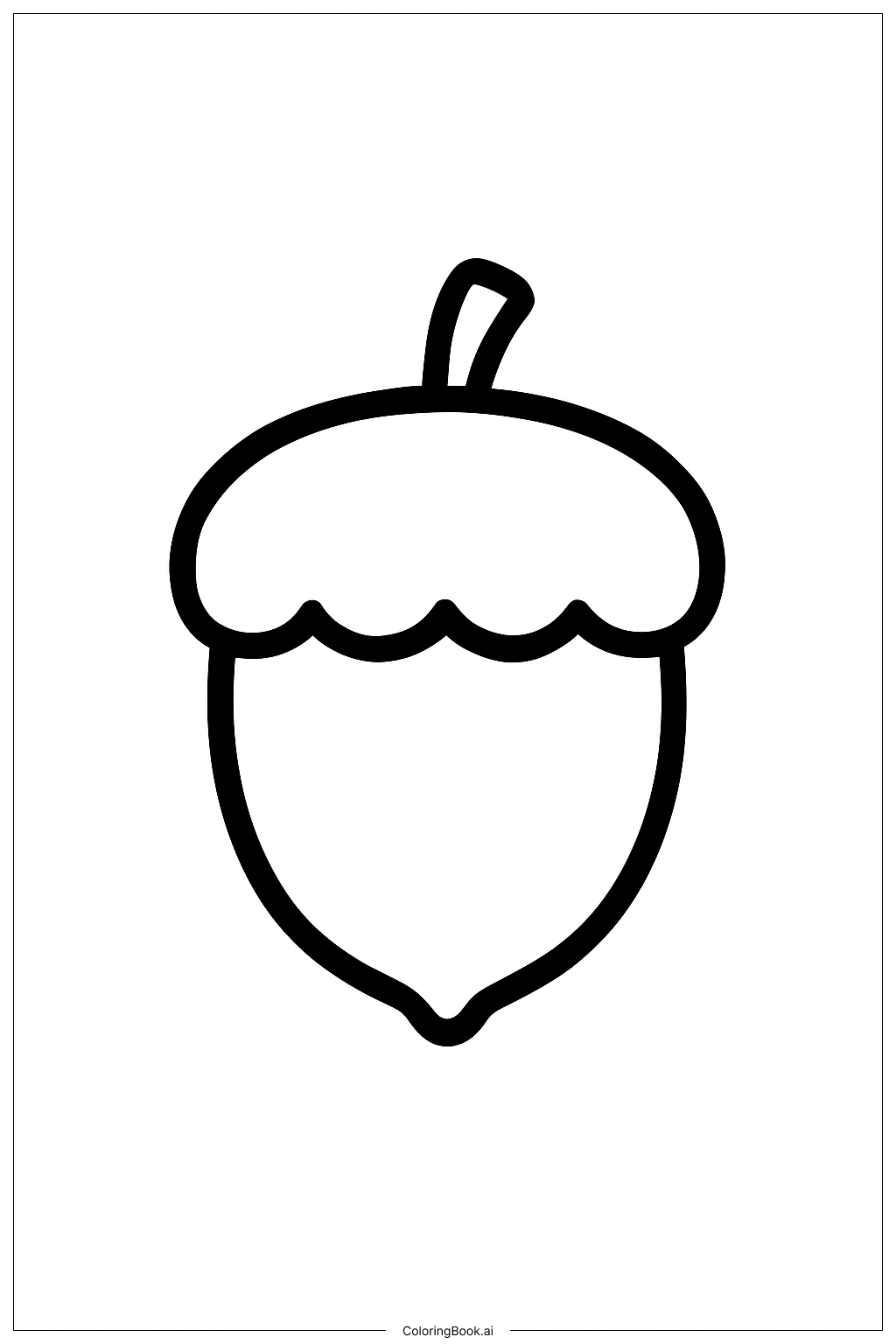
Coloring tips: How to color Single Acorn Fall coloring page well?
You can color the acorn with warm shades of brown and tan to make it look realistic. The cap of the acorn can be darker, like chocolate brown, while the nut part can be lighter, like honey brown. For the leaves or grass around it, use reds, oranges, and yellows to show the colors of Fall. Feel free to add some shading by using a darker color on one side and a lighter color on the other side. This will help the acorn look round and three-dimensional. You can also color the background with soft blues or light gray to show an autumn sky or early Fall day. Remember, you can be creative and use any colors you like!
Coloring challenges: Which parts are difficult to color and need attention for Single Acorn Fall coloring page?
• Small details: The texture on the acorn cap has tiny, intricate lines that need careful coloring to keep the pattern clear and to avoid making it look messy.
• Shading the nut: Coloring the curved surface of the acorn nut to look round and natural requires blending different browns smoothly.
• Leaf edges: If there are leaves around the acorn, their edges might be delicate and uneven, needing patience to color within the lines.
• Maintaining contrast: Keeping the acorn visually separate from the background and grass means choosing colors that don’t blend too much.
• Simplicity vs detail: Because the picture is simple, it might be challenging to make it look interesting without using good color choices and shading techniques.
Benefits of coloring books: Advantages of drawing Single Acorn Fall coloring page
Coloring this Single Acorn Fall image helps children focus on fine motor skills as they stay inside the lines and color small details carefully. It encourages creativity by allowing choices in natural Fall colors as well as imaginative ones. This picture teaches about nature and seasons, helping kids to appreciate the little things they see outdoors in Fall. Coloring such a calm and simple image can be relaxing, reducing stress and improving concentration. It’s suitable for a wide age range, making it a fun and educational activity for both young and older children.