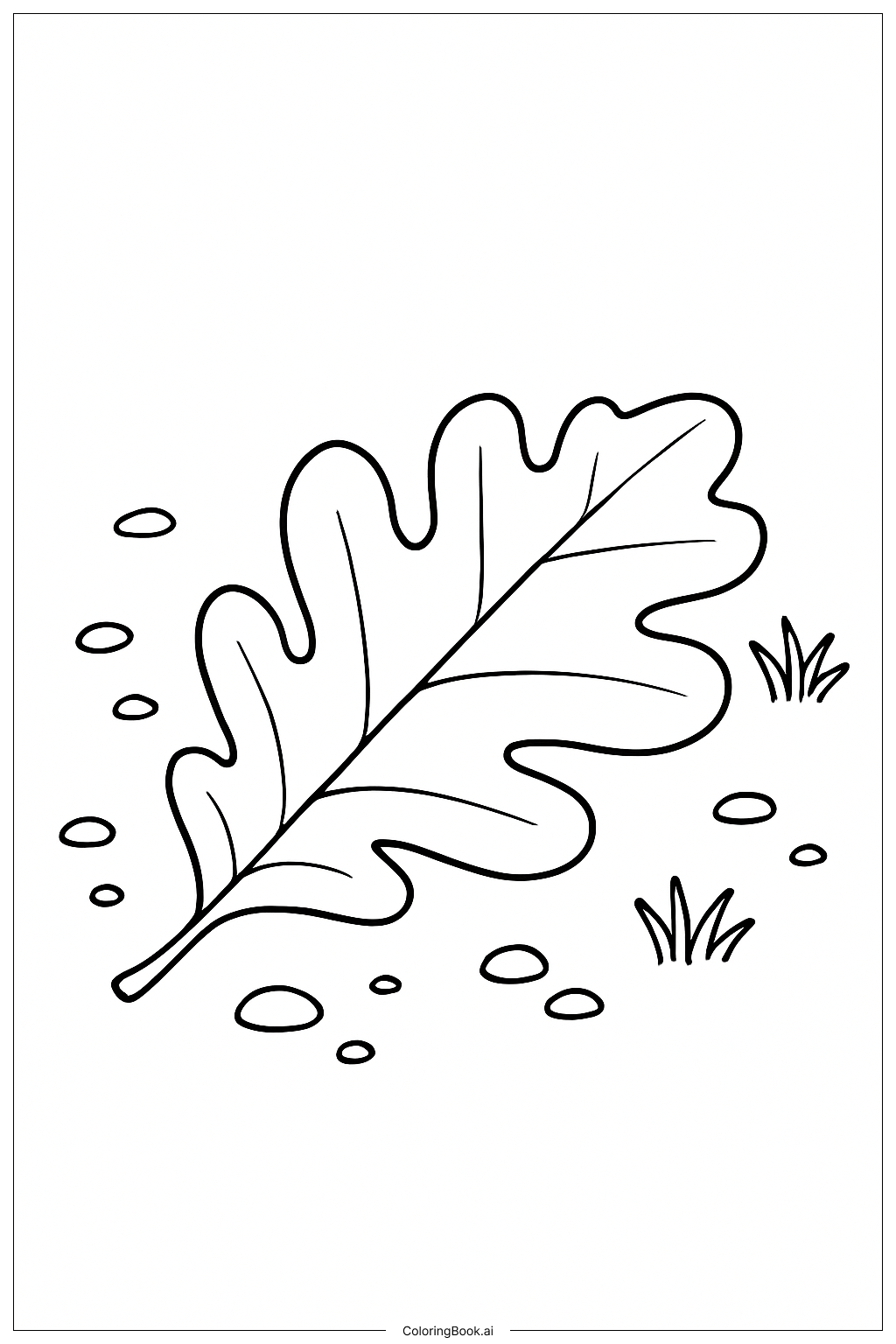
Coloring tips: How to color Oak Leaf On Ground Fall coloring page well?
Use warm colors like oranges, reds, yellows, and browns to bring this fall scene to life. You can start by coloring the oak leaf in deep rust or burnt orange shades to show its maturity in autumn. Add highlights with lighter yellows or creams on the veins to make them stand out. For the ground, use a mix of browns and muted greens to show soil and fallen leaves. Don’t be afraid to layer colors to create a more realistic texture. You might also try blending from darker colors at the edges of the leaf to lighter in the middle to show light falling on it. Keep the background simple with soft earth tones so the oak leaf remains the focus.
Coloring challenges: Which parts are difficult to color and need attention for Oak Leaf On Ground Fall coloring page?
• Leaf Veins Details: The strong veins on the oak leaf require careful coloring to highlight texture. Coloring inside the tiny spaces without overlapping is challenging for small hands.
• Color Blending: Achieving a smooth blend between warm fall colors like orange, red, and yellow takes practice, especially with crayons or colored pencils.
• Layering Effects: To get a natural autumn look, layering colors subtly is important, which can be difficult for beginners to control pressure and overlap.
• Small Surrounding Elements: Twigs and smaller leaves on the ground need precision to avoid coloring outside the tiny shapes.
• Maintaining Clean Edges: The jagged leaf edges mean staying inside curved lines while coloring, which can be tricky for younger children developing fine motor skills.
Benefits of coloring books: Advantages of drawing Oak Leaf On Ground Fall coloring page
Coloring this Oak Leaf On Ground Fall image helps improve hand-eye coordination as children focus on staying inside the shapes and veins. It encourages attention to detail with the leaf’s complex outline and texture. The image inspires creativity through color choices and blending, teaching about autumn colors and nature. This activity also promotes calmness and concentration, providing a relaxing way to practice fine motor skills. For older children, it offers an opportunity to experiment with shading and layering, building their artistic skills step by step.