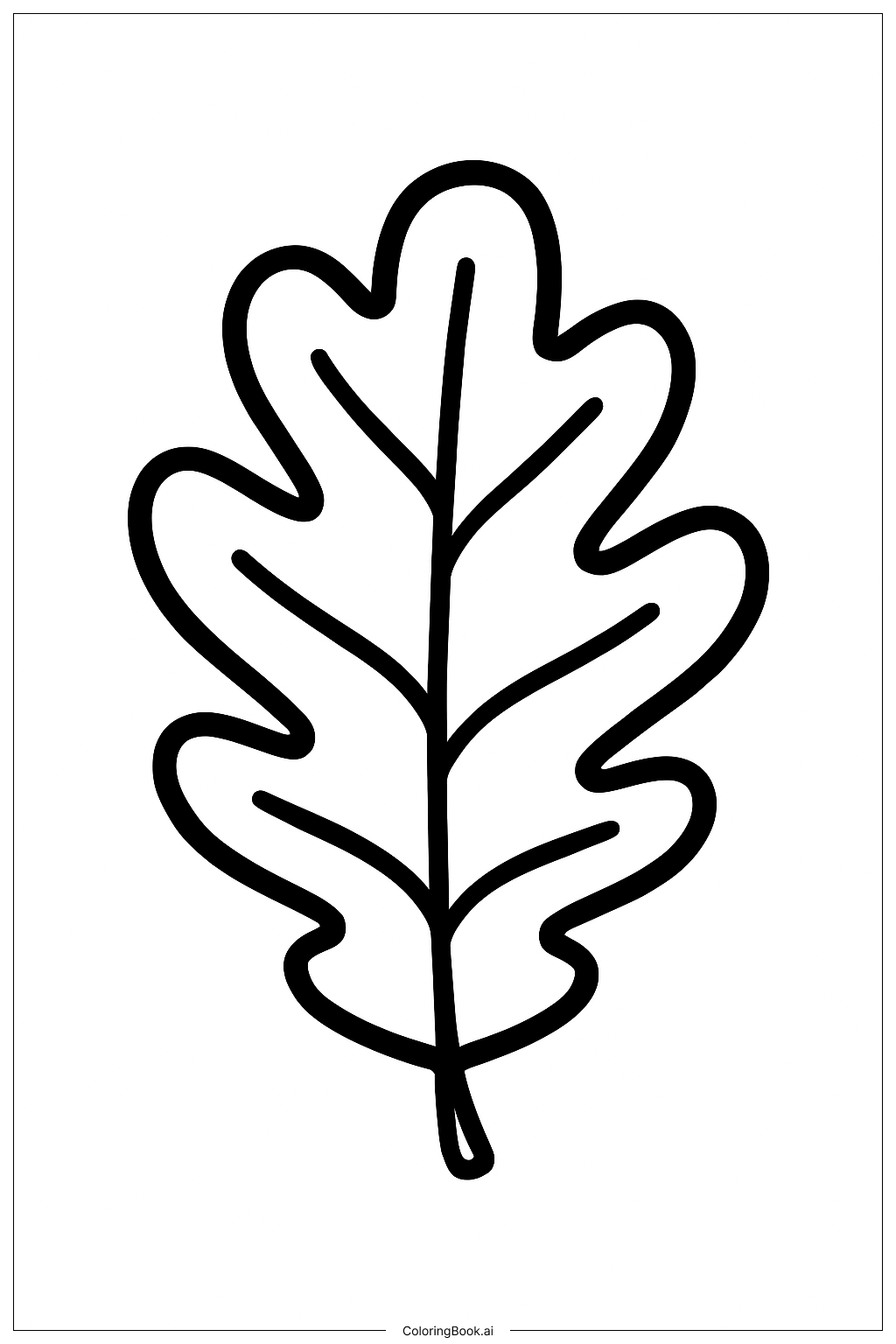
Coloring tips: How to color Oak Leaf Fall coloring page well?
Try using warm fall colors like red, orange, yellow, and brown to bring the oak leaf to life. You can blend these colors to create a smooth transition, just like real autumn leaves. Start with lighter colors on the edges and use darker shades near the center vein for depth. Feel free to add some spots or small dots with a darker brown or red to mimic the natural look of changing leaves. Using colored pencils or crayons would work well for shading and blending the colors gently.
Coloring challenges: Which parts are difficult to color and need attention for Oak Leaf Fall coloring page?
1. Staying inside the bold lines can be tricky for younger children since the leaf has curved, wavy edges.
2. Blending colors smoothly from one shade to another requires careful control and practice.
3. Coloring the small vein lines without overlapping the main leaf color can be challenging.
4. Choosing the right combination of colors to make the leaf look natural might confuse some kids.
5. Adding small details like spots or patterns may be hard, but it helps improve fine motor skills.
Benefits of coloring books: Advantages of drawing Oak Leaf Fall coloring page
Coloring this oak leaf helps children learn about fall and nature. It encourages creativity by letting kids experiment with different colors and shading techniques. It also improves hand-eye coordination and fine motor skills through careful coloring of veins and edges. Plus, it boosts focus and patience as children take their time to color within the lines. Overall, it’s a fun way to connect with the autumn season and develop important artistic skills.