Coloring tips: How to color Victorian Street Fall Leaves coloring page well?
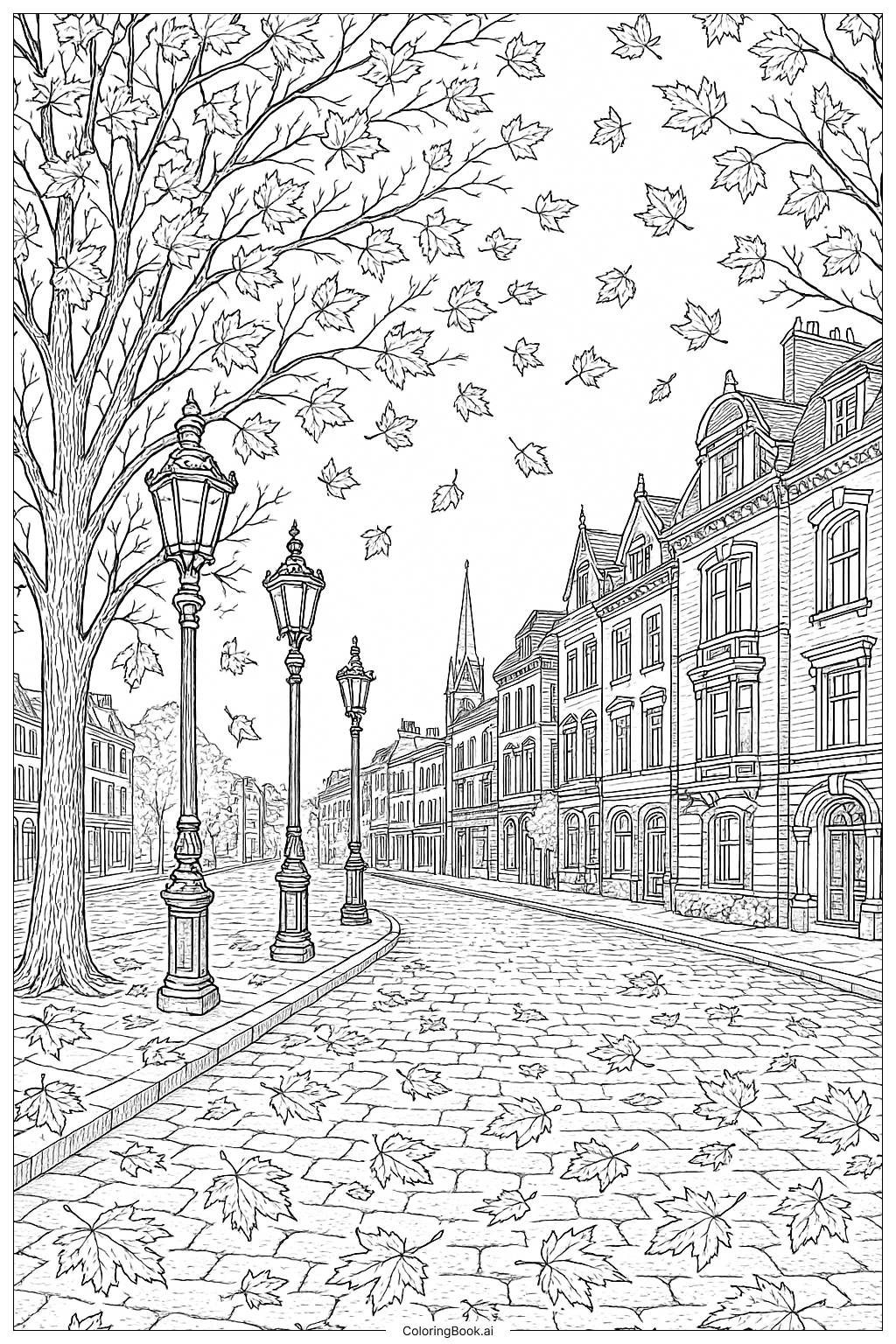
Start with the sky and work your way down. Use a soft pale blue or warm peach for the sky to set an autumn mood. For the Victorian buildings, try warm tones like cream, tan, brick red, or dusty brown. Use darker shades for shadows around windows, doorways, and ironwork to add depth. The trees are the stars of the scene. Use a mix of orange, red, yellow, and golden brown for the leaves. Some leaves can be green to show the season changing. For the fallen leaves on the ground, repeat those warm colors. The cobblestones can be colored in grey, taupe, or soft brown. Gas lamp posts look great in black, dark green, or bronze. Add lighter and darker versions of each color to give the image a sense of light and shadow. Take your time with the small details on the building facades — they really bring the Victorian style to life.
Coloring challenges: Which parts are difficult to color and need attention for Victorian Street Fall Leaves coloring page?
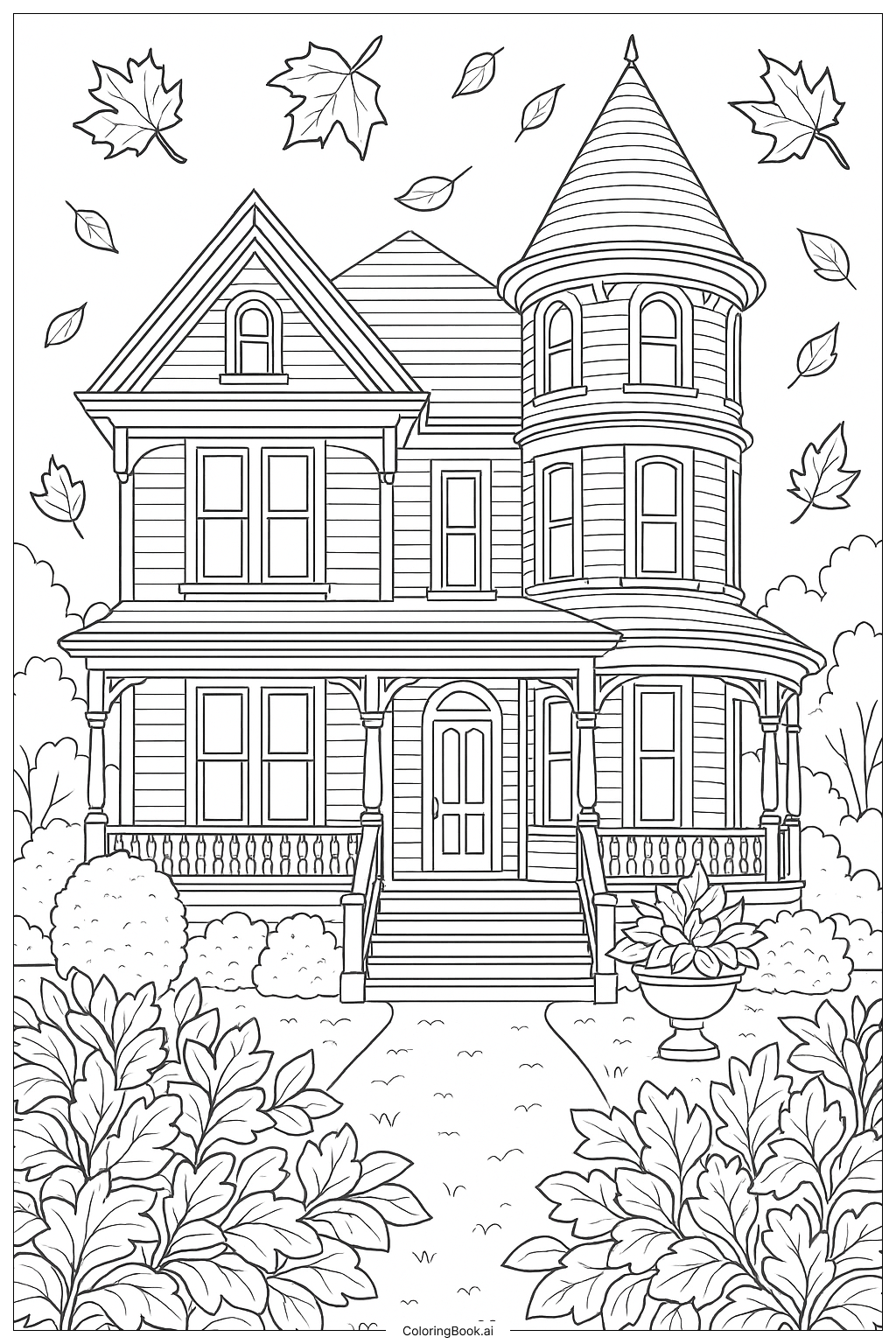
• Architectural Details: The Victorian buildings are filled with intricate ornamental features such as carved cornices, decorative moldings, arched window frames, and wrought iron railings. These small elements require a steady hand and fine-tipped coloring tools. Rushing through them can make the details appear muddy or indistinct, so patience is key when working on the facade sections.
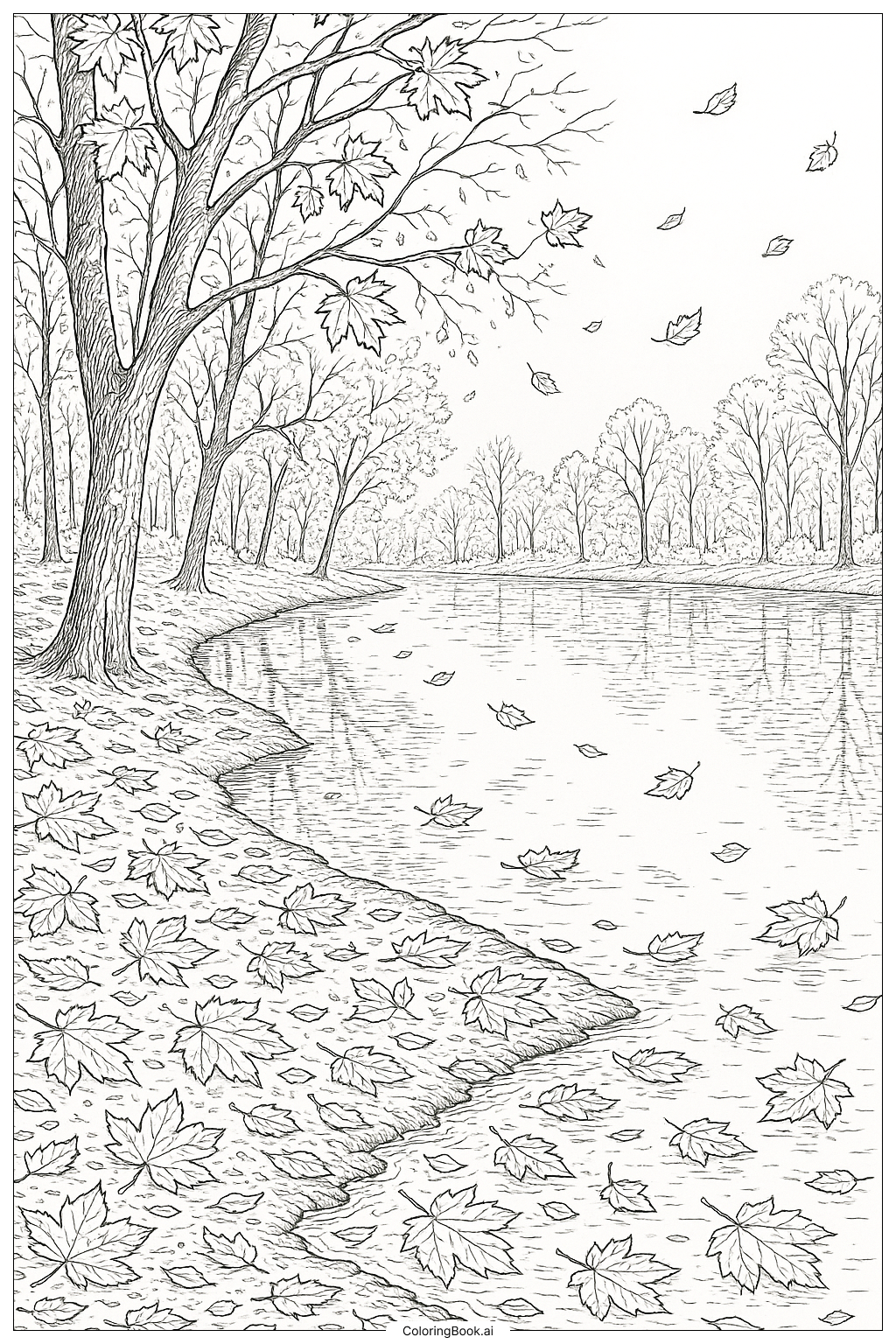
• Layered Foliage: The trees in this scene have overlapping branches and clusters of leaves at different depths. Distinguishing which leaves are in the foreground and which are further back requires thoughtful use of light and dark shades of the same color family. Without this variation, the canopy can look flat and lack a natural three-dimensional feel.
• Fallen Leaves on the Ground: The scattered leaves on the cobblestones need to blend naturally with the street surface while still standing out as individual shapes. Balancing warm leaf colors against the neutral tones of the cobblestones takes careful planning so neither element overpowers the other.
• Cobblestone Texture: Giving the cobblestone road a realistic look involves using multiple shades of grey, beige, or brown and leaving subtle highlights on each stone. This repetitive process across a large surface area can be time-consuming and requires consistent pressure to avoid uneven patches.
• Overall Color Harmony: With so many elements in one scene, keeping a unified autumn color palette across buildings, trees, ground, and sky is a real challenge. It is easy for the image to feel disjointed if warm and cool colors are not balanced thoughtfully throughout the entire composition.
Benefits of coloring books: Advantages of drawing Victorian Street Fall Leaves coloring page
Coloring this Victorian Street Fall Leaves scene offers a wonderful range of benefits for both children and Adults. The rich architectural details encourage focus and concentration, helping to build patience and a steady hand over time. Working through the many small elements of the image sharpens fine motor skills, which is especially valuable for younger colorists. The autumn theme invites creative color choices, sparking imagination as colorists decide how to blend oranges, reds, yellows, and browns to capture the season. This creative freedom helps build confidence and a personal sense of artistic expression. For older colorists and Adults, the complexity of the scene provides a calming, meditative experience. Focusing on one small section at a time can quiet a busy mind and reduce everyday stress. The nostalgic Victorian setting also stimulates curiosity about history and architecture, making the activity both relaxing and subtly educational. For Girls and Boys alike, this image is a great way to learn about seasonal changes and observe how color in nature shifts during fall. Whether working quickly with bold colors or taking time to add careful shading, everyone can enjoy this scene at their own pace and walk away with a beautiful, one-of-a-kind piece of art.