Coloring tips: How to color Baby Squirrel With Leaf Fall Leaves coloring page well?
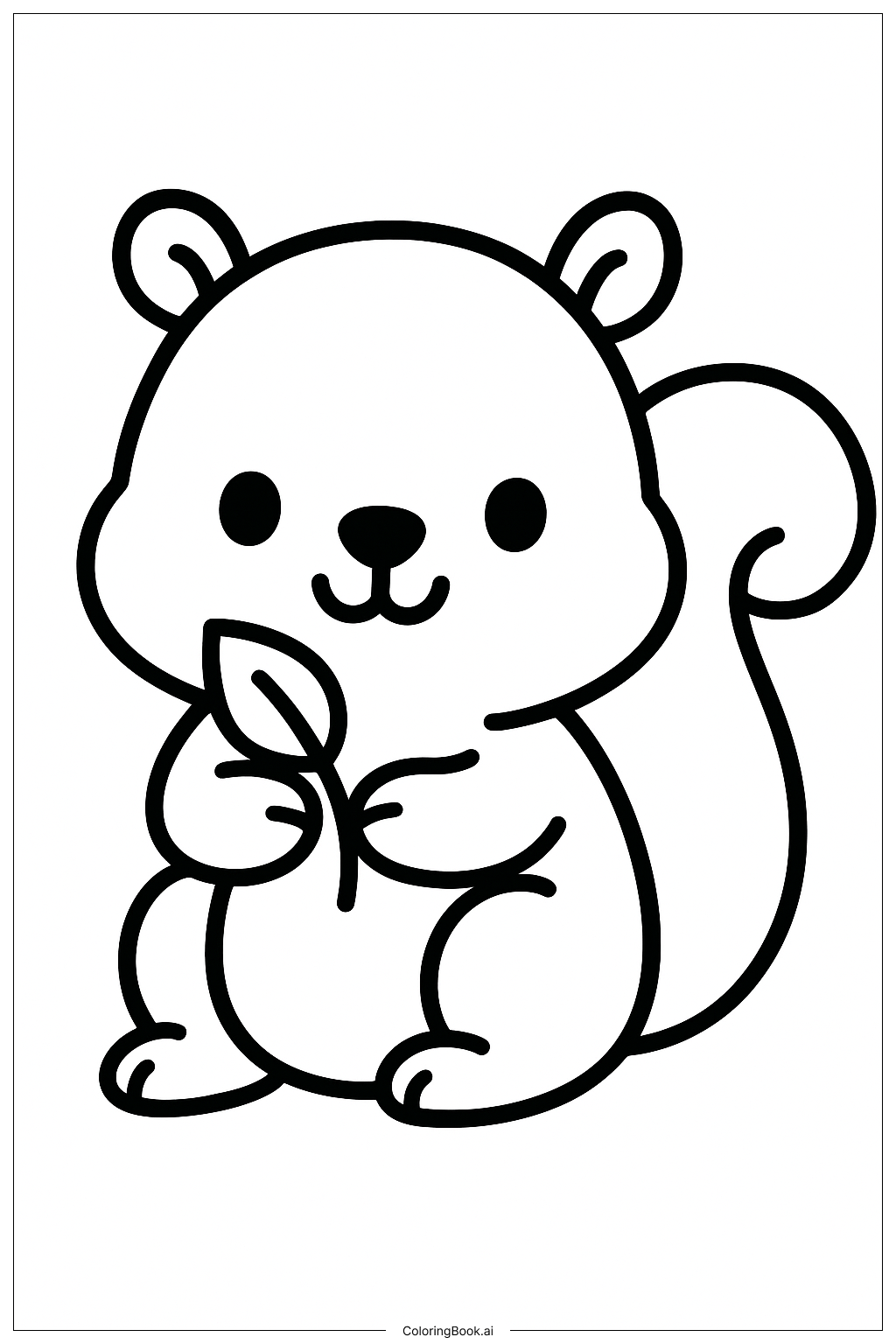
For this picture, try using warm autumn colors. You can color the leaf with shades of orange, yellow, red, or brown. The squirrel’s fur can be a soft brown, gray, or even a mix of light and dark colors. To add more interest, use a lighter color on the squirrel’s belly and inside the ears. Don’t forget to color the eyes black or dark brown to make them stand out. You can also use a light pink or peach color for the nose and mouth area. Try blending colors gently on the leaf to show the different fall shades. The tail can have darker tones to look fluffy. Keep the background white or add light blue or soft green if you like.
Coloring challenges: Which parts are difficult to color and need attention for Baby Squirrel With Leaf Fall Leaves coloring page?
1. The squirrel's small paws holding the leaf are tiny and need careful coloring to avoid going outside the lines.
2. The curved tail has narrow spaces that require patience to color neatly.
3. The leaf has a simple shape but the small central vein detail can be tricky to color precisely.
4. Maintaining a balance of colors on the squirrel’s body to make it look realistic and soft may be hard for younger children.
5. Coloring inside the small eyes and nose area needs steady hands to keep the lines clean.
Benefits of coloring books: Advantages of drawing Baby Squirrel With Leaf Fall Leaves coloring page
Coloring this baby squirrel with a fall leaf helps improve hand-eye coordination. It encourages children to practice coloring within the lines. Choosing colors for the squirrel and leaf develops their creativity and understanding of colors, especially autumn shades. Coloring this picture also builds patience and focus because of the small details. It can be relaxing and fun, providing a great way to learn about animals and seasonal themes.