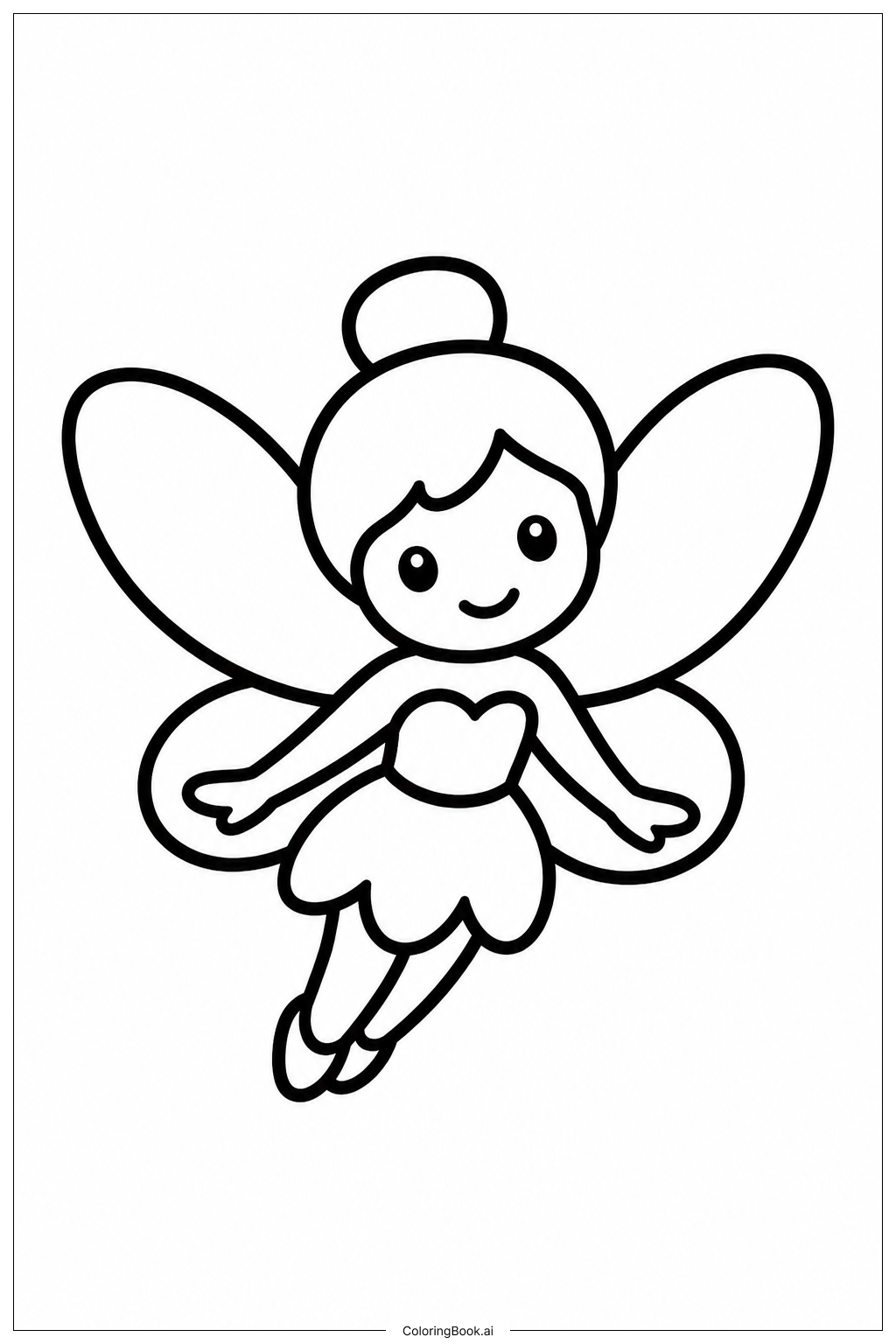
Coloring tips: How to color Fairy With Big Wings coloring page well?
Start by choosing soft, dreamy colors for this magical fairy scene. Use light purples, pinks, and sky blues for the large wings to give them an ethereal, glowing feel. You can add a gradient effect by blending two shades together, going lighter toward the edges of the wings. For the fairy's gown, try pastel yellow, lavender, or mint green. Her hair looks lovely in golden blonde, warm auburn, or even a fantasy shade like silver or lilac. Use bright greens for the leaves and vines, and soft pinks or whites for the flowers. Add tiny gold or yellow dots to the stars around her for a sparkling touch. Light pencils or watercolor pencils work beautifully for the wings. Crayons or markers are great for the bold outlines. Take your time on the wing patterns — they are the star of this page!
Coloring challenges: Which parts are difficult to color and need attention for Fairy With Big Wings coloring page?
• Wing Pattern Details: The fairy's large wings are filled with intricate layered patterns, fine lines, and delicate petal or feather shapes. Staying within these small sections without smudging or overlapping colors requires a steady hand and a sharp, fine-tipped coloring tool. Take your time and work in small areas at once.
• Blending the Wing Gradient: To make the wings look magical and glowing, a smooth color gradient from the center outward is ideal. Achieving a seamless blend — especially from a deeper hue to a lighter tint — can be tricky, particularly for younger colorists. Practicing on a scrap sheet first can help build confidence.
• Gown and Floral Embellishments: The fairy's dress is decorated with small flowers, petals, and curved details. Each tiny element needs its own color choice to stand out clearly from the surrounding fabric, which means careful color selection and precise application in tight spaces.
• Hair Flow and Shading: The long, wavy hair has multiple flowing strands. Adding dimension by using two shades of the same color — a lighter tone on top and a darker tone underneath — creates a natural, realistic look. This layering technique can be challenging for beginners who are not yet comfortable with shading.
• Background Vines and Stars: The surrounding decorative elements like swirling vines, tiny stars, and small blooms fill the negative space around the fairy. Coloring these without accidentally overlapping onto the fairy's body or wings takes patience and attention to detail, especially near the edges where elements meet.
Benefits of coloring books: Advantages of drawing Fairy With Big Wings coloring page
Coloring this fairy page offers a wide range of wonderful benefits for children and young artists. The large, sweeping wings and intricate patterns make this image an excellent exercise for building fine motor skills and hand-eye coordination. Carefully filling in small sections trains the hand to move with control and precision.
Choosing colors for a magical fairy encourages creative thinking and imagination. Kids get to decide what kind of fairy she is — is she a forest fairy, a moonlight fairy, or a flower fairy? Every color choice tells a new story.
Working through the detailed wing patterns also builds patience and focus. Completing a complex image gives children a strong sense of accomplishment and boosts self-confidence.
For older kids and teens, experimenting with blending, shading, and gradients on the wings is a great introduction to real art techniques used by professional illustrators and painters.
The calming, repetitive motion of coloring also helps reduce stress and anxiety, making this a relaxing activity after a busy school day. It encourages mindfulness and helps kids slow down and enjoy a quiet, creative moment. This fairy page is not just fun — it is a meaningful creative experience for Girls, Boys, and Adults alike.