Coloring tips: How to color Fairy Tea Party With Friends coloring page well?
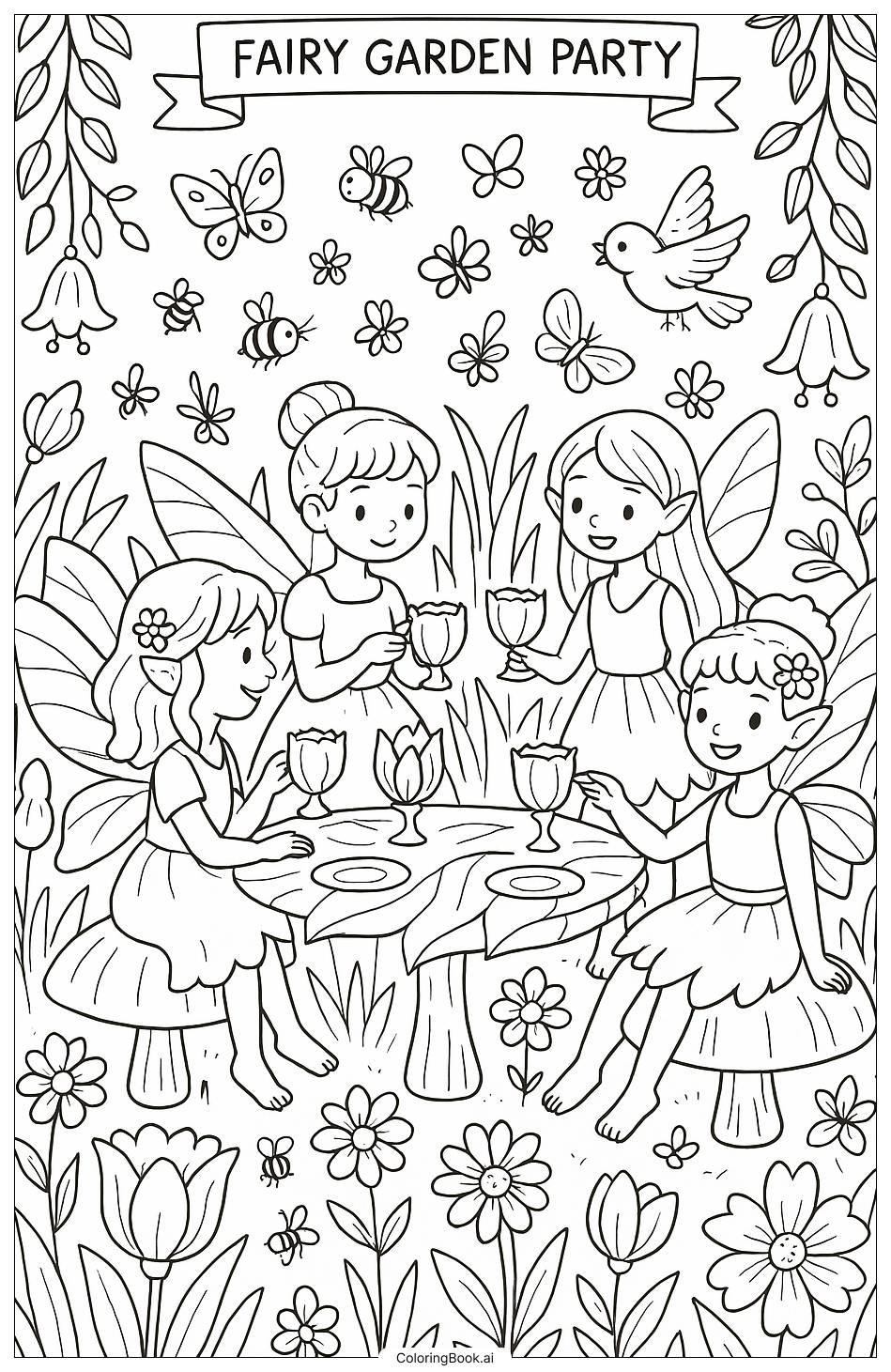
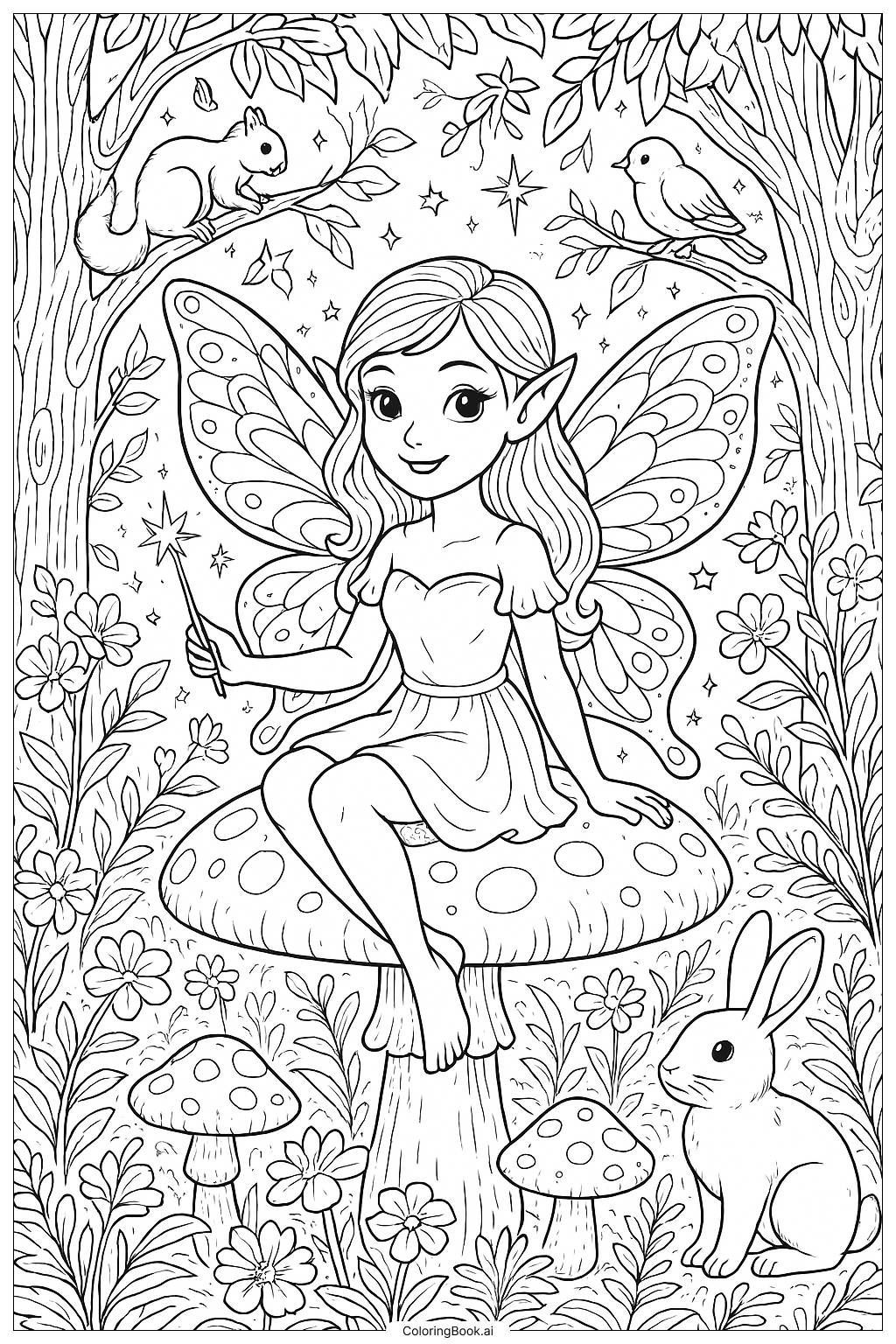
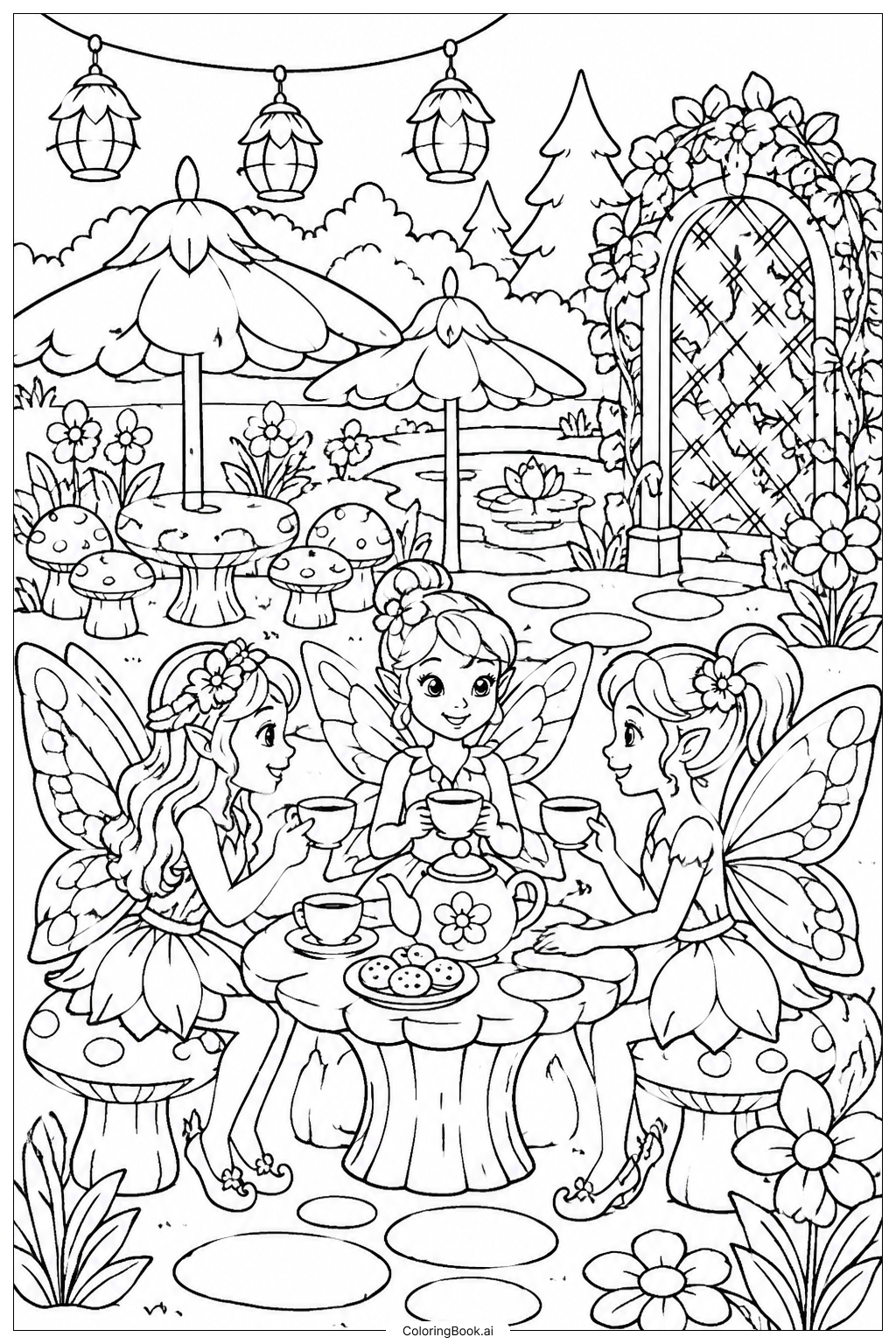
Start with the fairies' skin using soft peach or warm tan tones to keep them looking gentle and magical. Use pastel shades like lavender, mint, and rose for their flowing dresses to give the scene a dreamy feel. Their wings look beautiful in sheer, translucent colors — try light blue, pale yellow, or soft pink with a little shimmer effect using white highlights. Color the mushroom table in warm reds and oranges with white spots for a classic fairy-tale look. Use earthy greens and deep teals for the leaves and vines in the background. The teacups and teapot can be painted in gold or soft cream with tiny floral patterns. Bright, cheerful colors work great for the flowers — mix purples, yellows, and pinks to make the garden pop. Add soft glowing yellows or warm whites to the fireflies to make them look like they are actually glowing. Feel free to mix bold and pastel shades throughout the image to create a lively, magical atmosphere that feels full of wonder.
Coloring challenges: Which parts are difficult to color and need attention for Fairy Tea Party With Friends coloring page?
• Fairy Wing Details: The wings of each fairy are filled with fine lines, delicate veins, and layered sections. Coloring them neatly requires a very sharp pencil or a fine-tip marker. Keeping the colors light and layered to mimic a translucent look is tricky, especially for younger colorists who may press too hard and lose the airy effect.
• Tiny Tea Set: The teacups, teapot, and small cakes on the table are very small within the image. Staying inside the lines on these miniature objects takes patience and a fine tool. Adding decorative details like tiny flowers or gold rims requires a steady hand and careful control.
• Overlapping Characters and Foliage: The fairies, flowers, leaves, and vines overlap in many places throughout the scene. Knowing where one element ends and another begins can be confusing. Colorists need to plan their color choices ahead of time so that overlapping areas remain visually clear and do not blend together into a muddy mess.
• Dress Folds and Fabric Texture: Each fairy's flowing dress has many folds and layers. Shading these folds to show depth and movement adds a realistic touch, but requires blending skills. Younger children may find it hard to create smooth gradients, while older colorists may want to spend extra time perfecting the light and shadow on the fabric.
• Background Garden Elements: The dense background of flowers, curling vines, and leaves fills nearly every corner of the image. Choosing a wide enough variety of greens, purples, and pinks to distinguish each plant without making the background look overwhelming is a real challenge that requires thoughtful color planning.
Benefits of coloring books: Advantages of drawing Fairy Tea Party With Friends coloring page
Coloring this fairy tea party scene offers a wide range of benefits for children and creative minds of all ages. The detailed design encourages focus and concentration, helping young colorists practice sitting with a task and seeing it through to the end. Choosing colors for the fairies' dresses, wings, and the magical garden sparks imagination and creative thinking, as there are no wrong choices in a world full of magic. The fine lines and small details — like the tiny teacups and intricate wings — help build fine motor skills and improve hand-eye coordination with every stroke. For older children and adults, blending and shading the fabric folds and translucent wings offers a satisfying artistic challenge that builds real coloring technique. The peaceful, whimsical theme of friends sharing tea in a beautiful garden also has a calming effect, making it a wonderful way to unwind and reduce stress after a long day. Working through the many layers of the scene teaches patience and planning, as colorists must think ahead about how colors will interact. Sharing the finished page with friends or family adds a social and emotional reward to the creative process, boosting confidence and pride in one's own work.