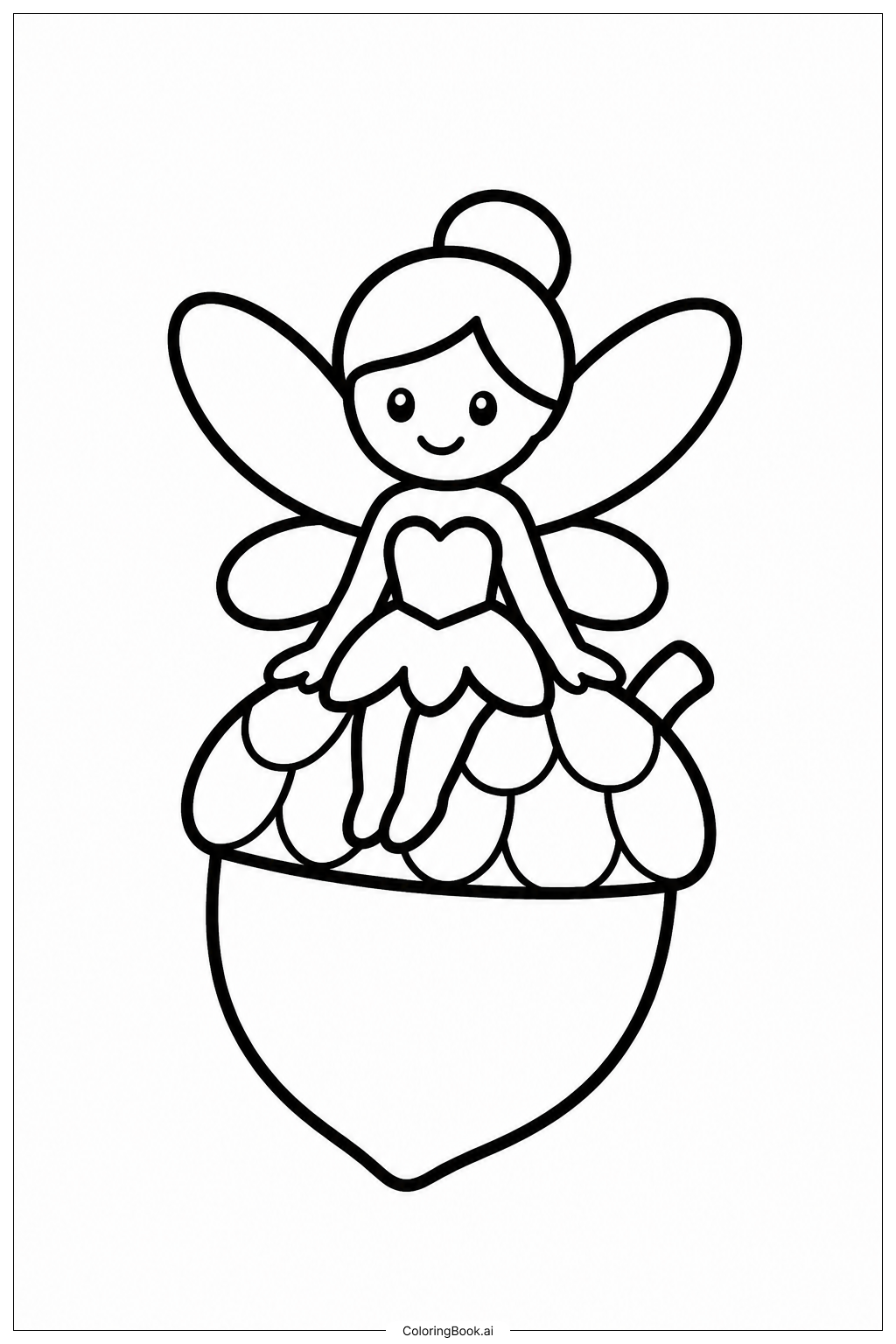
Coloring tips: How to color Fairy On Acorn coloring page well?
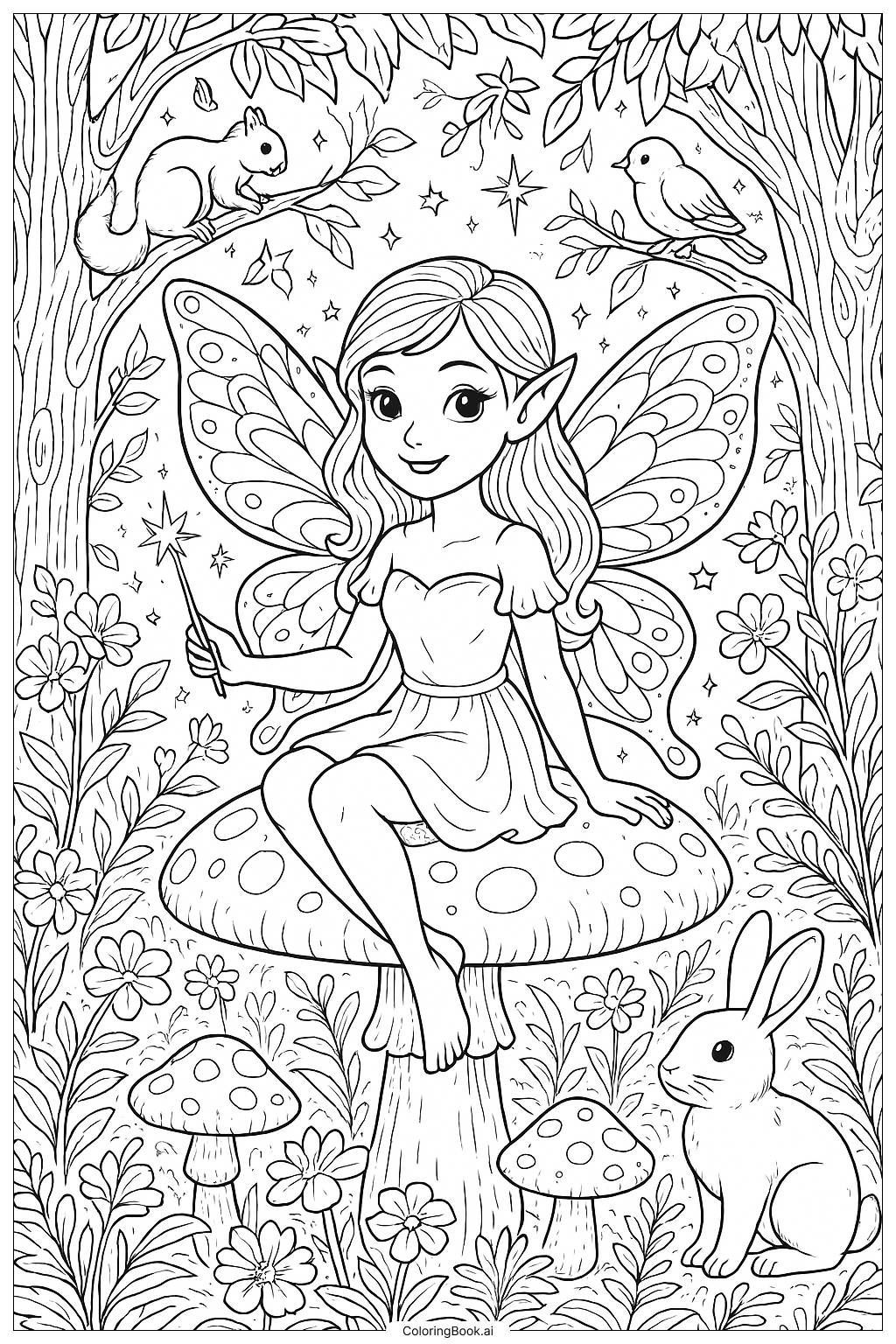
For this image, consider using soft and natural colors to bring the fairy and her environment to life. Use gentle greens and browns for the acorn and leaves to create a woodland feel. The fairy’s wings can be colored with pastel shades such as light blues, pinks, or purples to make them appear magical and delicate. For her dress, try bright but soft colors like lavender or pale pink to highlight her gentle nature. You can add pops of bright colors for the flowers like red, yellow, or orange to make the image cheerful and fun. Use light shading to show the curves of the acorn and the folds in the fairy’s dress, making the picture feel more dimensional and lively.
Coloring challenges: Which parts are difficult to color and need attention for Fairy On Acorn coloring page?
• Fine Details: The wings of the fairy have thin lines and small patterns that may be tricky to color neatly. It requires careful hand control to avoid coloring outside the lines.
• Textured Surfaces: The acorn cap has many tiny lines and uneven textures that need different color tones to look realistic.
• Overlapping Elements: The fairy’s hair, dress, and the acorn overlap in several places, requiring attention to keep colors from mixing unintentionally.
• Small Decorative Parts: The delicate flowers and leaves surrounding the fairy are small and need precise coloring to keep the details clear.
• Light and Shadow: To make the image more three-dimensional, you need to carefully add shading, especially under the fairy and around the curves of the acorn, which can be challenging for beginners.
Benefits of coloring books: Advantages of drawing Fairy On Acorn coloring page
Coloring this fairy on an acorn image helps children improve their fine motor skills as they work on small and detailed areas like wings and flowers. It encourages creativity by allowing them to choose colors for natural elements and fantastical wings. The peaceful scene promotes focus and relaxation, helping to reduce stress. Coloring the different textures teaches about light and shadow in art, enhancing visual perception. Overall, it’s a delightful and calming activity that builds patience while inspiring imagination about magical woodland worlds.