Coloring tips: How to color Singing Face Bird coloring page well?
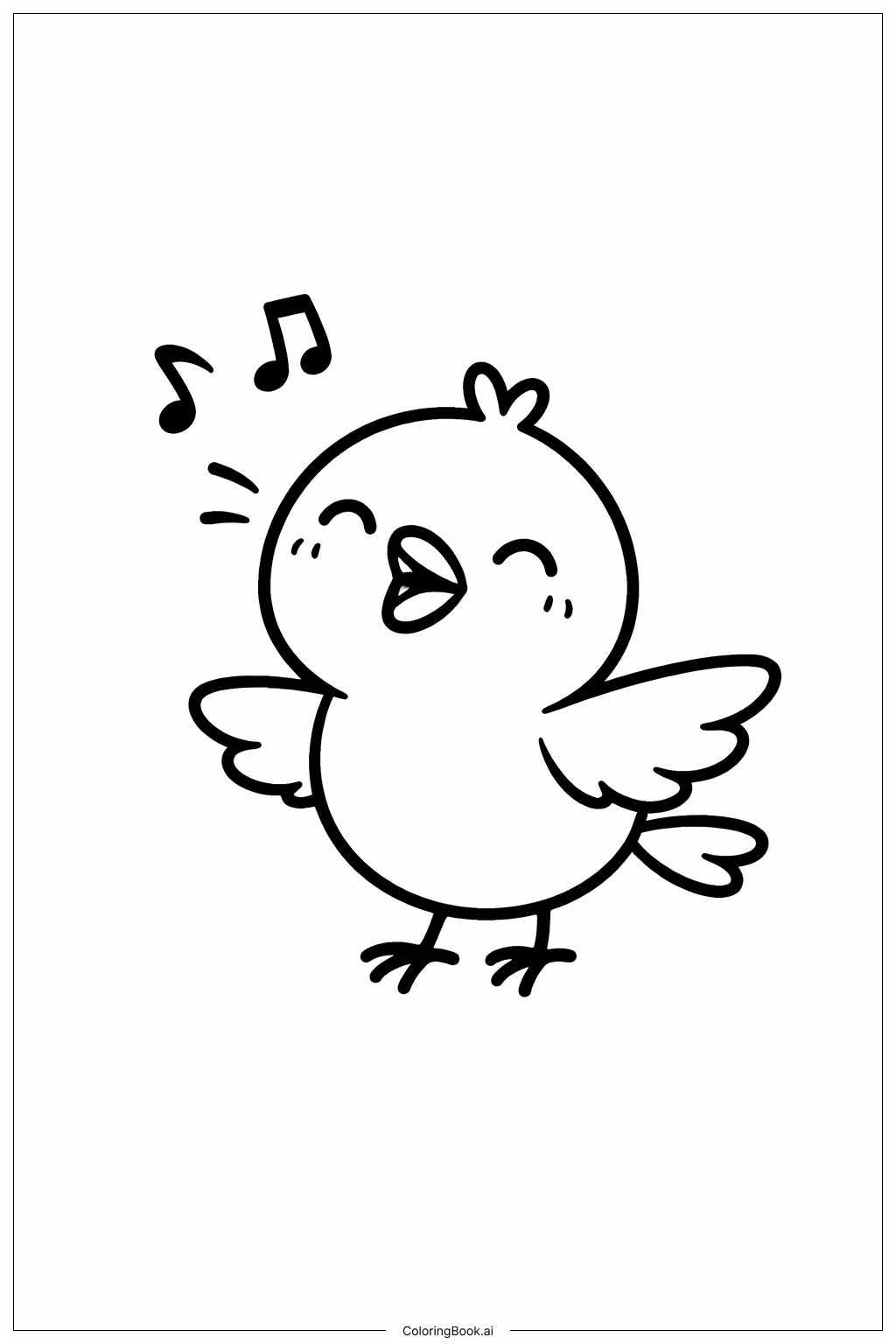
You can use bright and cheerful colors for the bird to match its happy mood. Try yellows, oranges, or light blues for the body to make it look lively. You can color the wings and tail in shades slightly different from the body for contrast. The beak can be a bright orange or yellow. For the musical notes, use black or dark blue to make them stand out. Don’t forget to add some soft pink or red on the bird’s cheeks to show its joy. Keep the legs a darker color like brown or black to give balance.
Coloring challenges: Which parts are difficult to color and need attention for Singing Face Bird coloring page?
1. Small Details: The bird’s feet and musical notes are small, requiring careful coloring without going outside the lines.
2. Wings and Tail: Coloring the wings and tail with clean lines may be tricky because of their curves and small sections.
3. Facial Expression: The smiling eyes and cheeks need gentle coloring to keep the happy feeling without losing the expression details.
4. Color Balance: Choosing colors that make the bird look natural but still bright can be a challenge for beginners.
5. Overlapping Lines: The bird’s open beak and feathers have lines close together that need careful attention to avoid mixing colors.
Benefits of coloring books: Advantages of drawing Singing Face Bird coloring page
Coloring this singing bird helps improve fine motor skills as kids carefully color small and curved areas like the wings and feet. It also encourages creativity through choosing bright colors to match the bird’s joyful mood. Coloring the face and musical notes helps practice attention to detail. Additionally, it is a fun way to relax and express happiness, just like the singing bird itself. This activity can boost confidence as children see the bird come alive with their colors.