Coloring tips: How to color Curious Face Cat coloring page well?
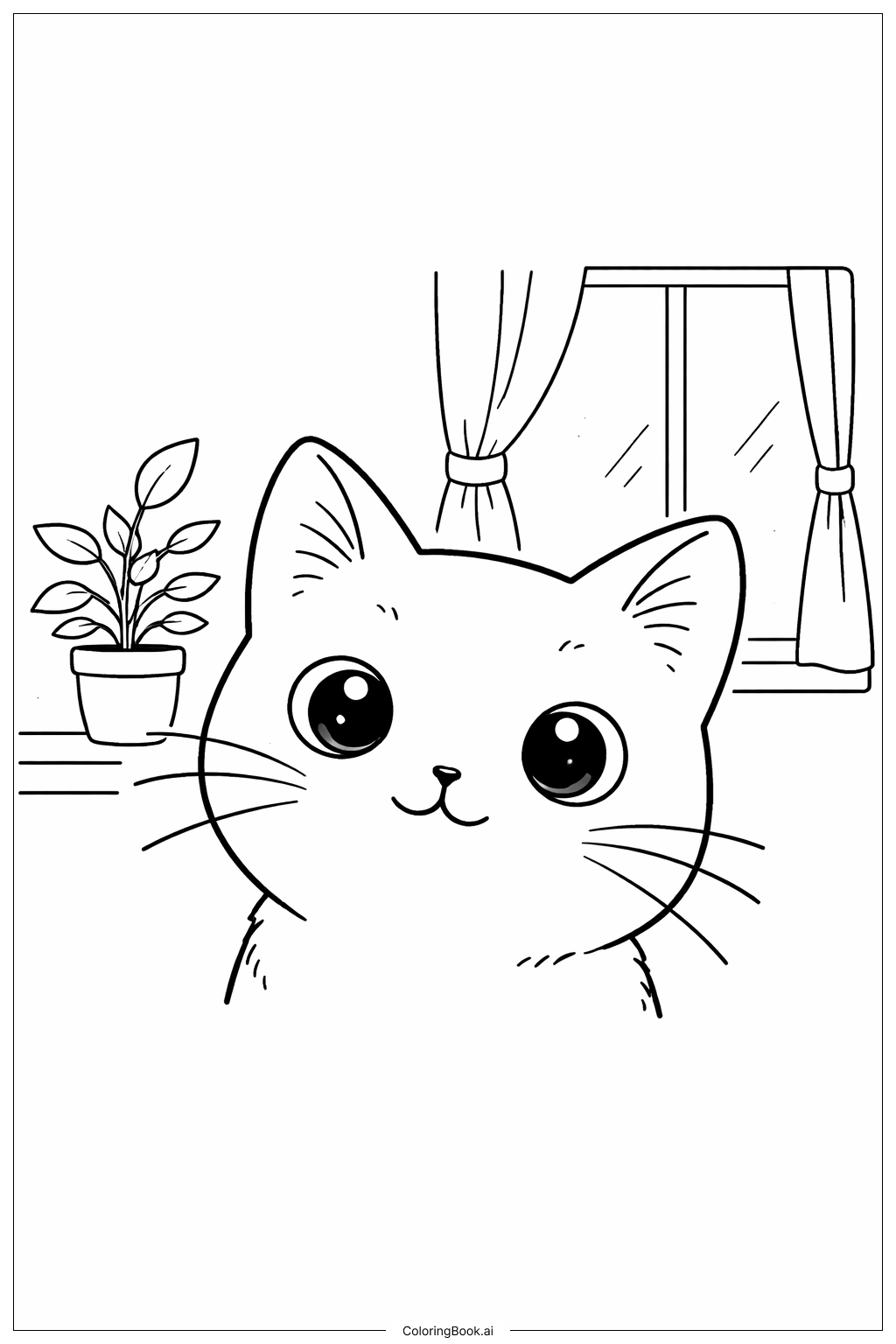
Use soft and warm colors for the cat, like light orange, cream, or gray. The eyes can be colored in shades of bright green, blue or amber to make them stand out. For the background, use calming colors like light blue or pale yellow for the curtains and window. The plant can be colored with green leaves and a brown pot to add natural touches. To add depth, use darker shades for the shadows around the cat's ears and whiskers. Remember to color inside the lines carefully to make the picture neat and pretty.
Coloring challenges: Which parts are difficult to color and need attention for Curious Face Cat coloring page?
1. Coloring the big, shiny eyes with highlights can be tricky since it requires leaving white spots to show the shine.\n2. The thin whiskers need careful coloring without going outside the lines.\n3. The small details on the ears and the cat’s fur markings require patience and fine coloring skills.\n4. Coloring the plants evenly can be hard to avoid making the leaves look flat.\n5. Keeping the background colors soft while making the cat color bright can be challenging to balance the focus between foreground and background.
Benefits of coloring books: Advantages of drawing Curious Face Cat coloring page
Coloring this picture helps improve focus and attention to detail, especially around the cat’s eyes and whiskers. It encourages creativity with choosing colors for the cat and the background. The simple shapes and big spaces make it easy for younger kids to fill in, while the smaller details provide a good challenge for older children. Coloring this scene can also foster a love for animals and nature through the plant and window setting. It helps develop hand control and fine motor skills as kids color carefully around small lines and shapes.