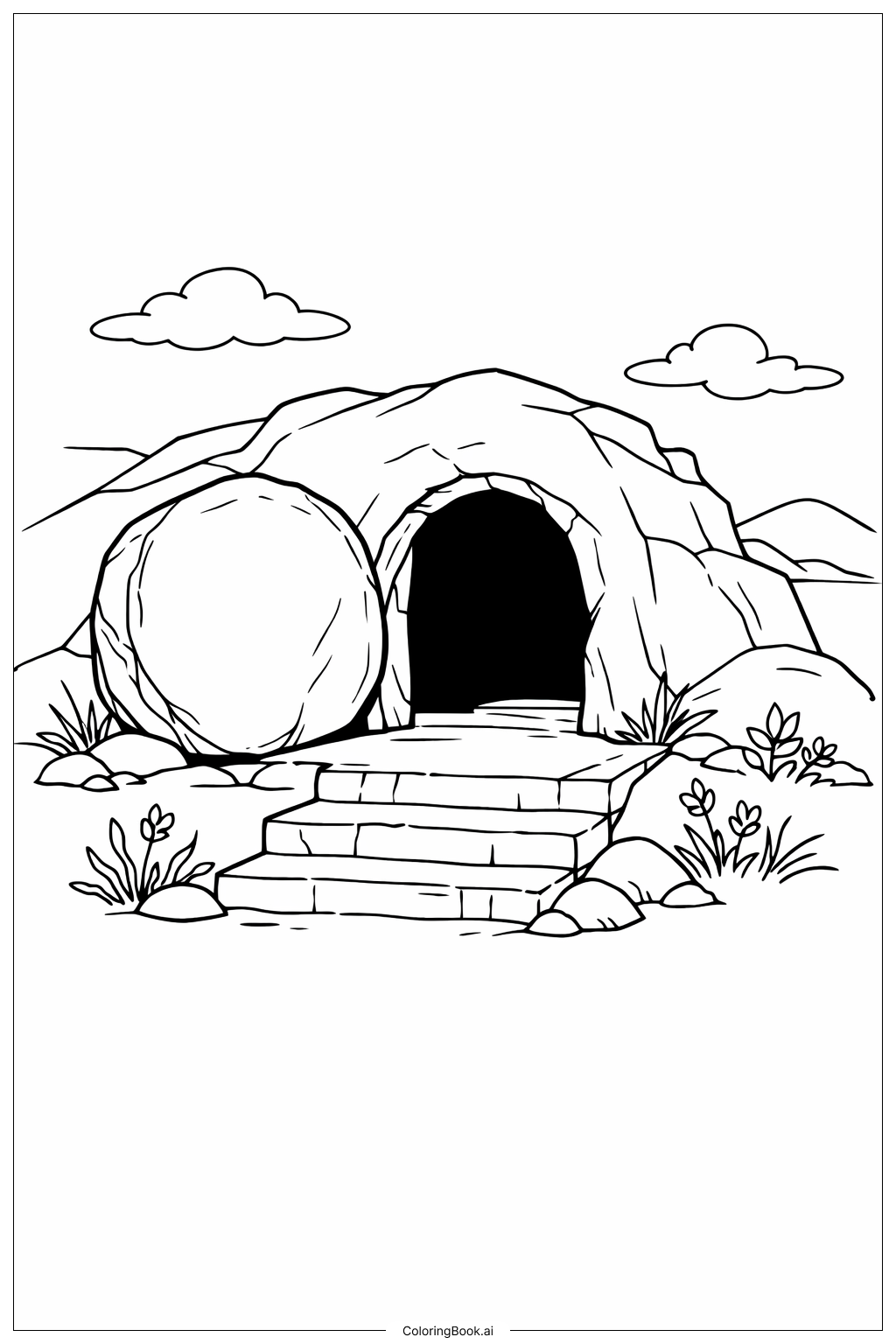
Coloring tips: How to color Empty Tomb With Stone Steps coloring page well?
For this coloring page, try using soft, natural colors like light gray, beige, and pale browns for the stone steps and tomb walls. You can add shadows with darker grays to show the roundness of the stone and depth in the entrance. Green or brown shades can be used lightly around the base to suggest grass or earth. Bright colors like yellow or orange can contrast nicely if you want to add sunlight shining on the stones. Keep the entrance darker to emphasize the emptiness inside the tomb. Children can experiment with blending colors to create stone textures and shadows, making the image more lifelike and interesting.
Coloring challenges: Which parts are difficult to color and need attention for Empty Tomb With Stone Steps coloring page?
• Stone Texture: Coloring the rough stone surfaces with realistic textures can be tricky for younger artists. Achieving the right mix of light and shadow to show uneven stones requires practice. • Round Stone: The large round stone needs shading to look three-dimensional. Coloring a curved object evenly while making it appear solid is challenging. • Depth of Entrance: Showing the dark, empty tomb entrance convincingly means careful use of darker colors without losing details around the opening. • Step Edges: The stone steps have edges and corners that need attention to avoid flat coloring. Proper shading helps create the illusion of height differences between steps. • Limited Details: With few small details, it may be hard to add variety in colors, so focusing on subtle shading and blending becomes more important to bring the image to life.
Benefits of coloring books: Advantages of drawing Empty Tomb With Stone Steps coloring page
Coloring this Empty Tomb With Stone Steps helps improve fine motor skills through careful coloring of the stone textures and steps. It encourages children to practice using light and shadow to create the illusion of depth and roundness. This image also inspires creativity by blending natural colors and experimenting with different shades. Additionally, coloring a simple but symbolic scene can enhance focus and patience as children work to carefully add detail without rushing. Overall, it is a calming and educational activity that combines artistic skills with thoughtful observation.