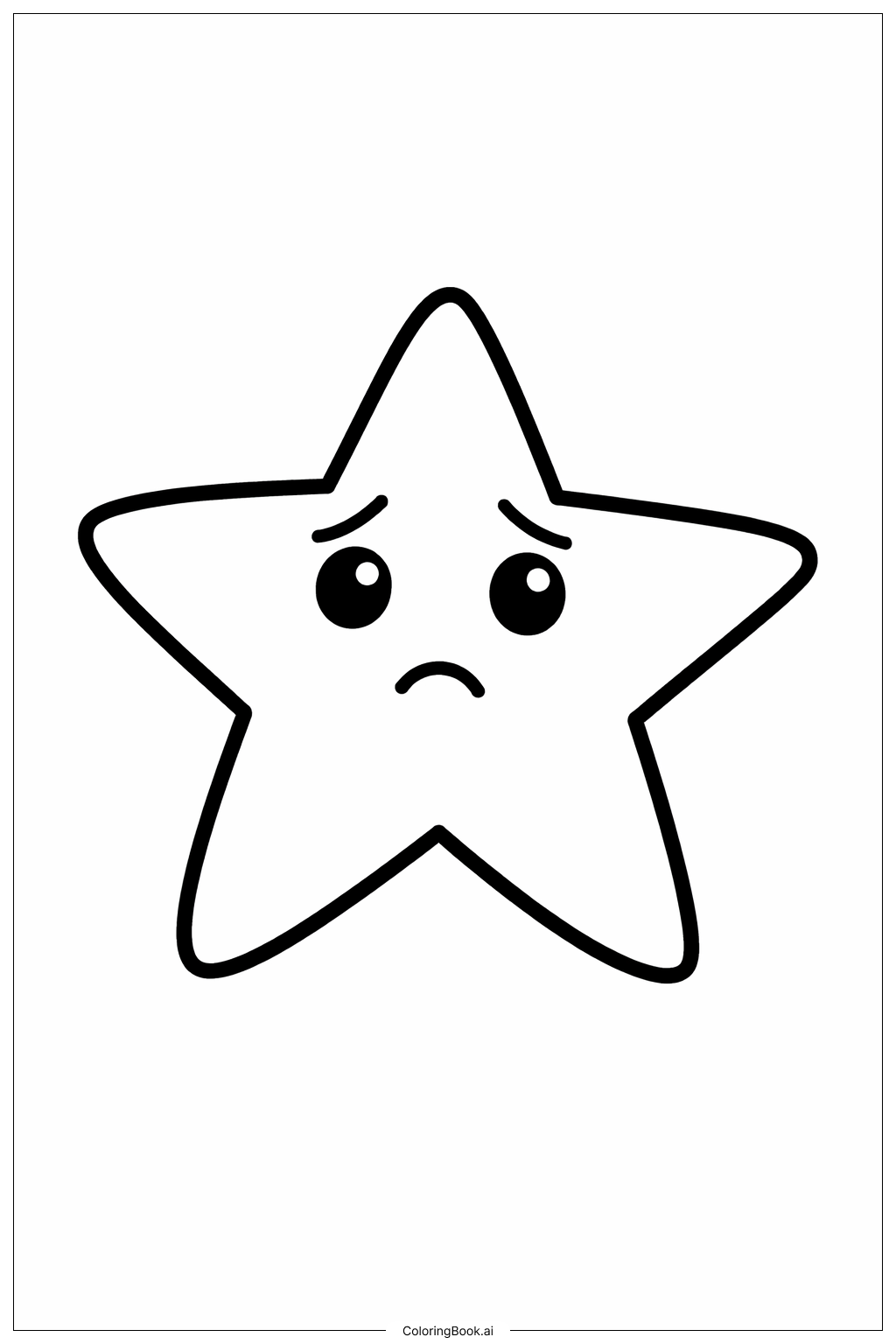
Coloring tips: How to color Worried Star coloring page well?
This cute Worried Star is a great page to color with a little creativity and emotion in mind. Here are some simple and fun suggestions to get started.
For the star body, try using a soft yellow or pale gold to keep it bright and cheerful. You can also use light blue or lavender if you want the star to look more worried and sad.
For the face, use a darker shade for the eyebrows to show the worried expression clearly. A soft pink or peach tone works well for the cheeks. If the star has teary eyes, a light blue color brings them to life nicely.
For the outline, go over the edges with a darker version of your main color to make the star pop off the page.
For the background, try a calm night sky theme with deep blue or purple. Add white dots for stars around the main star to tell a little story.
Use colored pencils for small details like the face, and crayons or markers for filling in the larger star body. Take your time and enjoy the process. There are no wrong choices. Make this star your own!
Coloring challenges: Which parts are difficult to color and need attention for Worried Star coloring page?
• Facial Expression Details: The worried face on the star includes small but important features like furrowed brows, downturned mouth corners, and possibly teary eyes. These tiny details require a steady hand and careful use of a fine-tipped coloring tool. Using the wrong color or going outside these small lines can change the emotion entirely, so young colorists need to take their time.
• Star Point Edges: The five sharp points of the star each end in a narrow tip. Coloring neatly inside these pointed areas can be tricky, especially for younger children. The narrow space means thick crayons or markers may not fit well. Using a sharpened colored pencil works best in these tight corners to avoid messy overruns.
• Smooth Color Blending on the Star Body: The large body of the star offers a good opportunity for blending warm or cool tones, but achieving an even, streak-free finish takes practice. If coloring with crayons or pencils, pressing too hard in one spot and too softly in another creates an uneven look. Layering colors slowly and gently gives a much better result.
• Choosing Emotion-Appropriate Colors: Since the star is showing worry, selecting colors that match that feeling adds depth to the artwork. Blues, grays, or muted purples can reflect a worried mood, but deciding on the right shade takes thought and creativity. Kids may need some gentle guidance to connect color choices with emotions.
• Background Space: If the image includes a background area, filling it evenly without accidentally coloring over the star outline requires patience and good brush or pencil control.
Benefits of coloring books: Advantages of drawing Worried Star coloring page
Coloring this Worried Star page offers many wonderful benefits for kids and beginners alike.
First, it helps children recognize and understand emotions. Seeing a star with a worried face opens up conversations about feelings. Kids learn that it is okay to feel worried sometimes.
Second, it builds focus and patience. Staying inside the lines and choosing colors carefully trains the mind to slow down and pay attention.
Third, it encourages creativity. There is no single right way to color this page. Children can explore different color combinations and make the star their own.
Fourth, it supports fine motor skill development. Holding crayons or colored pencils and making careful strokes strengthens the small muscles in little hands.
Fifth, coloring can be calming and therapeutic. Working on a simple, friendly image like a worried star can help children process their own anxious feelings in a safe and fun way.
Finally, completing the page gives kids a sense of pride and accomplishment. It is a small but meaningful creative win that boosts confidence and self-expression. This page is a great tool for both fun and emotional learning.