Coloring tips: How to color Emotions Playground Friends coloring page well?
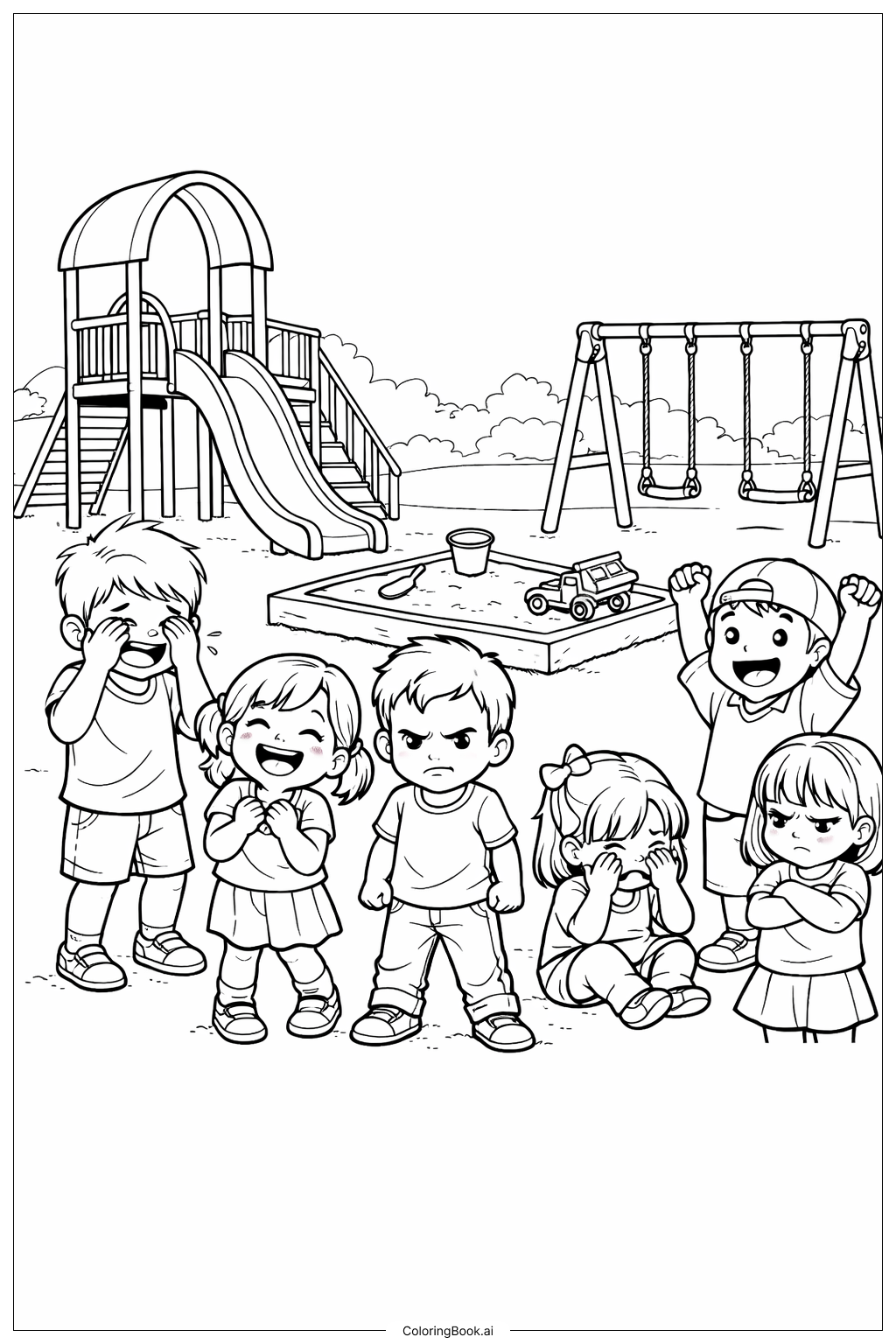
Start with the children's skin tones using peach, tan, or brown shades to represent diversity. Choose bright, cheerful colors for their clothing like red, blue, yellow, and green to reflect the playful energy of the scene. Hair can be colored in various natural tones such as brown, black, blonde, or even fun colors like purple or pink. For the playground equipment, use primary colors: red for the slide, blue for the swing chains, and yellow for accents. Color the grass a vibrant green and the sky a soft blue. Add pink or orange tones to the clouds for a sunset effect if desired. The trees can be shaded with multiple greens to add depth. Consider using warm colors for happy emotions to enhance the joyful atmosphere of this playground scene.
Coloring challenges: Which parts are difficult to color and need attention for Emotions Playground Friends coloring page?
• Multiple Characters: This image contains five separate children, each requiring individual attention to clothing, hair, and facial features. Keeping track of color choices for each character while maintaining variety and harmony can be challenging, especially for younger children who may struggle with planning a cohesive color palette across multiple figures.
• Overlapping Elements: The playground equipment and children overlap in several areas, creating sections where one element passes behind another. Distinguishing these boundaries and coloring within the correct lines requires careful observation and fine motor control, particularly where swing chains, arms, and playground structures intersect.
• Small Facial Details: Each child's face includes eyes, mouths, and expressions that convey emotions. These small features require precision and steady hand control to color without going outside the lines. Young colorists may find it difficult to add detail to these tiny areas while maintaining neatness.
• Background Complexity: The scene includes clouds, trees, grass, and playground structures that all need to be differentiated through color choices. Deciding how to layer these background elements and choosing colors that make the children stand out as the focal point requires planning and understanding of visual hierarchy.
• Clothing Patterns and Textures: Some characters wear clothing that could benefit from patterns or shading to add dimension. Deciding whether to use solid colors or attempt stripes, dots, or other patterns adds an extra layer of decision-making to the coloring process.
Benefits of coloring books: Advantages of drawing Emotions Playground Friends coloring page
Coloring this Emotions Playground Friends page helps children develop emotional intelligence by recognizing and connecting with the happy expressions shown. As kids color each character, they practice identifying positive emotions and associating them with friendly social situations. The multiple characters provide excellent practice for fine motor skills and hand-eye coordination, as children work to stay within the lines of various shapes and sizes. This scene encourages creativity through color selection for clothing, hair, and backgrounds, allowing personal expression while learning about diversity and friendship. The playground setting can spark conversations about sharing, playing together, and understanding others' feelings. Completing this detailed image builds patience, focus, and a sense of accomplishment. It also offers opportunities to discuss playground safety and social skills in a fun, engaging way that reinforces positive behavior and emotional awareness.