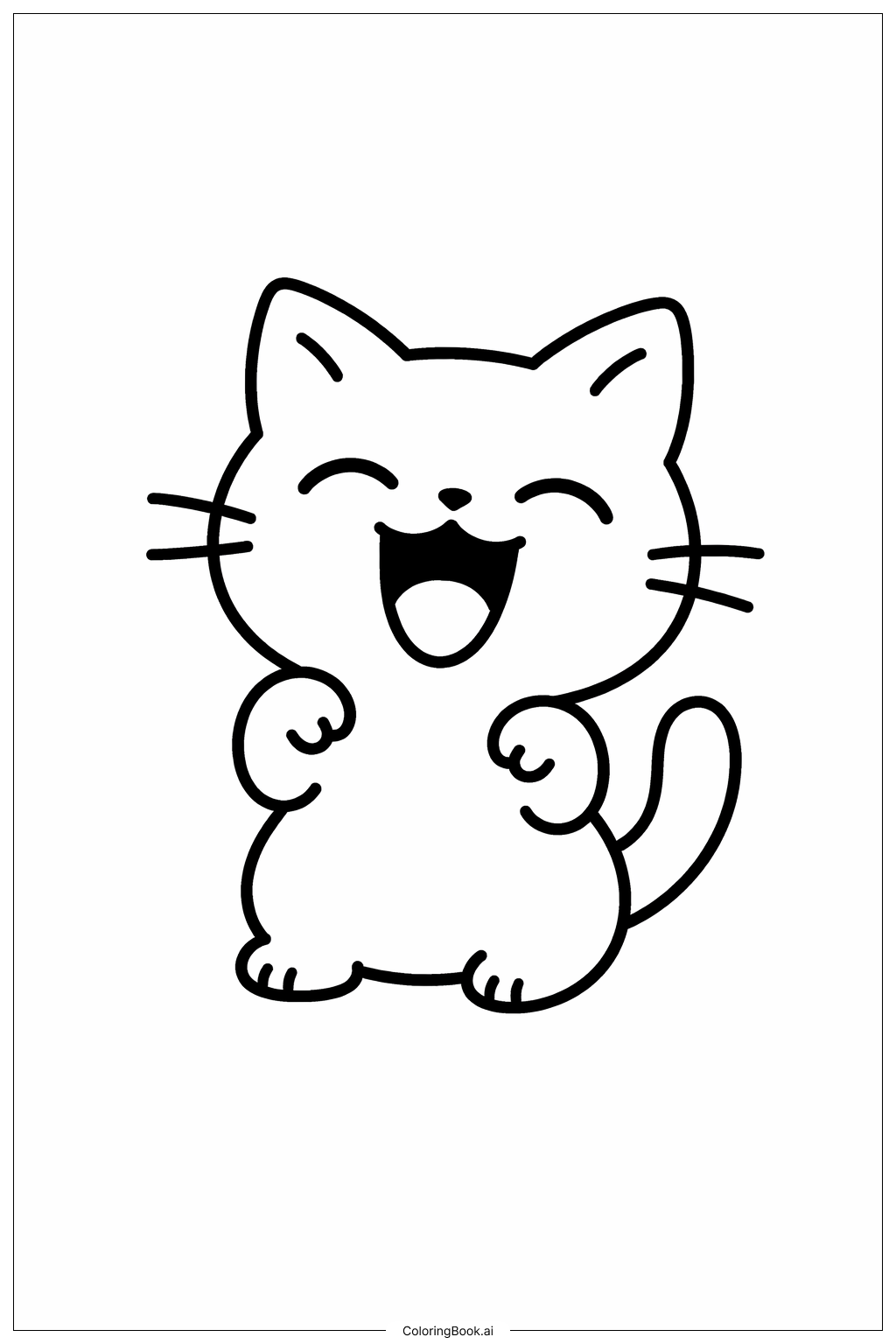
Coloring tips: How to color Emotions Laughing Cat coloring page well?
Start with the cat's body using a warm base color like orange, yellow, or light gray to give it a friendly, cozy feel. For the face, use a slightly lighter shade of the body color to help the features stand out. Color the wide-open mouth pink and add a bright red tongue inside for a fun, lively look. Use white or cream for the inner ears and the area around the muzzle. The eyes can be colored golden yellow or bright green to show energy and joy. Add soft shading along the fur lines with a darker version of your base color to create depth. For the background, try a cheerful light blue or sunny yellow to match the happy mood of the laughing cat. Kids can also add patterns or spots to the fur to make their cat extra unique and personal.
Coloring challenges: Which parts are difficult to color and need attention for Emotions Laughing Cat coloring page?
• Facial Expression Details: The laughing face has many small features packed closely together — curved eyes, puffed cheeks, an open mouth, and a tongue. Coloring these areas neatly without mixing colors is tricky, especially for younger kids. Take your time and use thin-tipped markers or sharp colored pencils for these small areas.
• Fur Texture and Shading: The cat's fur is shown with many short, curved lines across the body. Coloring along these lines to create a realistic fur effect takes patience and a steady hand. If you want a flat look, simply fill in the base color. For a more detailed look, add a darker shade following the direction of the fur lines.
• Whiskers and Fine Lines: The cat's long whiskers are very thin lines that are easy to color over by mistake. Try coloring the areas around the whiskers first, then carefully go back and leave the whisker lines in a light color or white. A white gel pen works great for touching up whiskers at the end.
• The Open Mouth Area: The inside of the laughing mouth includes teeth, a tongue, and an open throat area. Each section needs a different color — white for teeth, pink for the tongue, and a deeper pink or red for the throat. Keeping these small sections clean and separate is one of the harder parts of this image.
• Overall Color Balance: Because the cat is full of energy and emotion, it is important to choose bright, cheerful colors that match the happy mood. Avoid using dark or dull tones that might make the image feel heavy. Balance warm and cool colors across the whole page to keep the joyful feeling alive.
Benefits of coloring books: Advantages of drawing Emotions Laughing Cat coloring page
Coloring this laughing cat is a wonderfully fun activity for kids and adults alike. The happy expression of the cat naturally lifts your mood and can make coloring feel like a joyful experience rather than a task. As you focus on filling in each area, your mind gets a chance to relax and let go of stress.
For children, this image is a great way to practice fine motor skills. Coloring within the lines of the small facial features and fur details helps build hand control and pencil grip. It also encourages kids to think about colors and how different choices can change the feeling of an image.
Working on an expressive character like this laughing cat also helps children explore and understand emotions. Seeing a happy face and recreating it with color builds emotional awareness in a playful, low-pressure way.
For older kids and adults, the layered details of the fur and facial features offer a satisfying challenge. Blending colors and adding shading gives a sense of creative accomplishment. The finished artwork is something to feel proud of and display.
Overall, this coloring page combines creativity, emotional learning, and relaxation into one simple, enjoyable activity that the whole family can share.