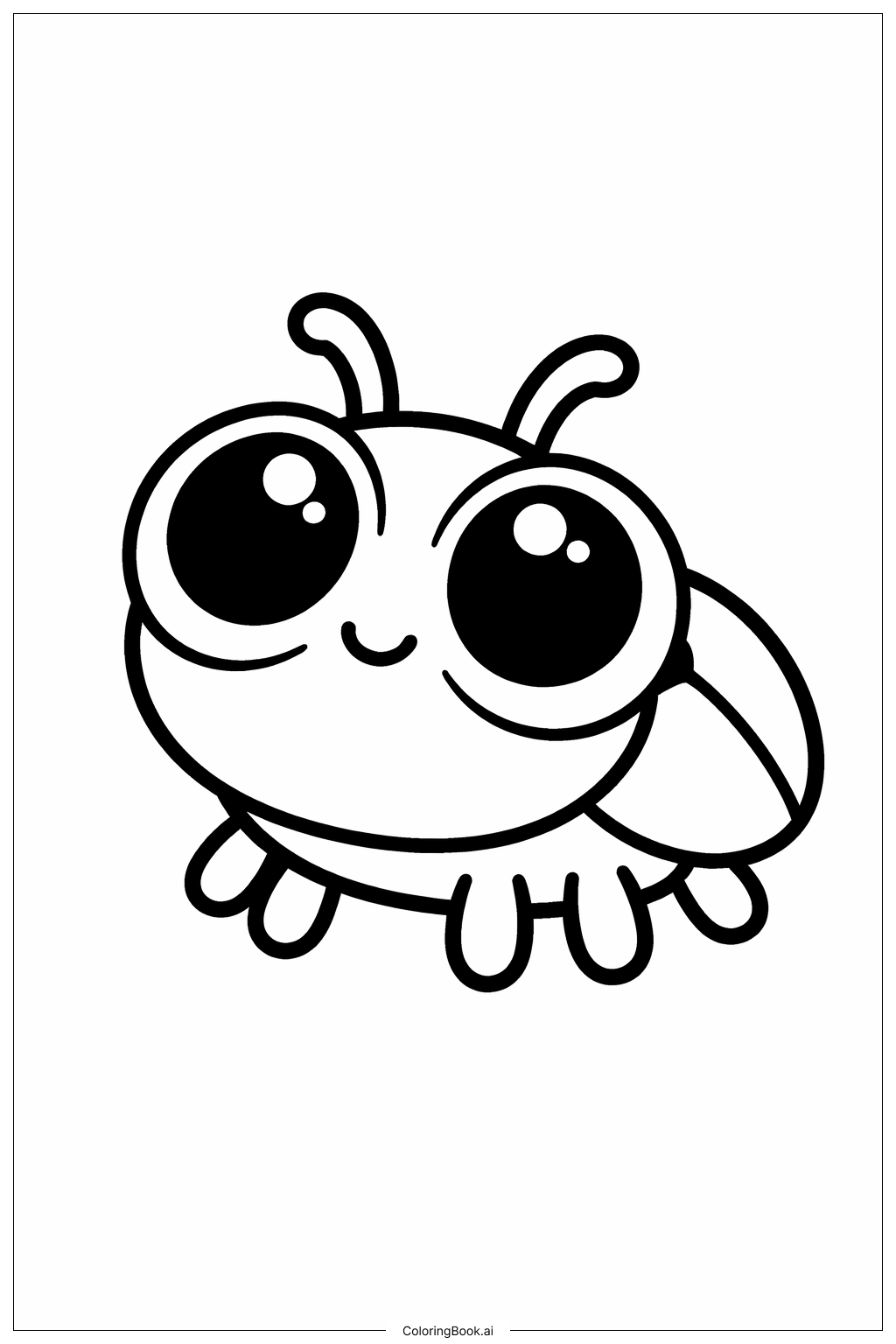
Coloring tips: How to color Curious Bug coloring page well?
Bring this curious bug to life with vibrant, cheerful colors. Consider using bright green or blue for the body segments to create a friendly appearance. The large expressive eyes could be colored with deep black pupils surrounded by white, or try fun colors like purple or teal for an imaginative twist. Add warm orange or yellow tones to the antennae to make them stand out. The legs can be darker shades of the body color for contrast. Try using light pastels for a soft, gentle look, or go bold with neon colors for a playful, modern style. Consider adding subtle shading between body segments using slightly darker versions of your base color. You might also add tiny spots or stripes on the body for extra personality and visual interest.
Coloring challenges: Which parts are difficult to color and need attention for Curious Bug coloring page?
• Large Expressive Eyes: The bug's prominent eyes are the focal point and require careful attention to create the curious expression. Children need to stay within the circular boundaries while deciding whether to add highlights or reflections to make the eyes look lively and three-dimensional. Younger colorists might find it challenging to keep the pupils centered or to create the sparkle effect that brings personality to the character.
• Body Segmentation and Symmetry: The bug's body features multiple segments that need consistent coloring to look natural and appealing. Maintaining uniform color intensity across each segment while creating subtle variations between them requires patience and control. Children may struggle with keeping colors even within each section or deciding whether to make each segment the same shade or gradually change tones for a more dynamic appearance.
• Fine Detail Work on Legs and Antennae: The six thin legs and delicate antennae present challenges for precise coloring, especially for younger children still developing fine motor skills. These narrow areas require careful hand control to stay within the lines and avoid coloring outside the boundaries. The antennae curves demand steady movements, and children might need to rotate their paper or adjust their grip for better control.
• Creating Visual Depth: While the design appears simple, adding dimension through shading and color variation can be tricky. Deciding where to place darker tones to suggest the bug's rounded form requires spatial understanding that develops with practice and age.
Benefits of coloring books: Advantages of drawing Curious Bug coloring page
Coloring this curious bug offers wonderful developmental benefits for children. The large expressive eyes help kids practice emotional recognition and connection, as they bring feelings to life through color choices. Working on the body segments builds pattern recognition skills and understanding of repetition in nature. The fine details like legs and antennae strengthen hand-eye coordination and fine motor control, essential for writing and other precise tasks. This design encourages creative decision-making as children choose color combinations and decide whether to create a realistic insect or an imaginative fantasy creature. The manageable complexity level provides a confidence boost when completed successfully, while the emotion theme opens opportunities for discussions about curiosity, exploration, and learning. This coloring page perfectly balances simplicity with engaging details, making it ideal for developing patience, focus, and artistic expression in young learners.