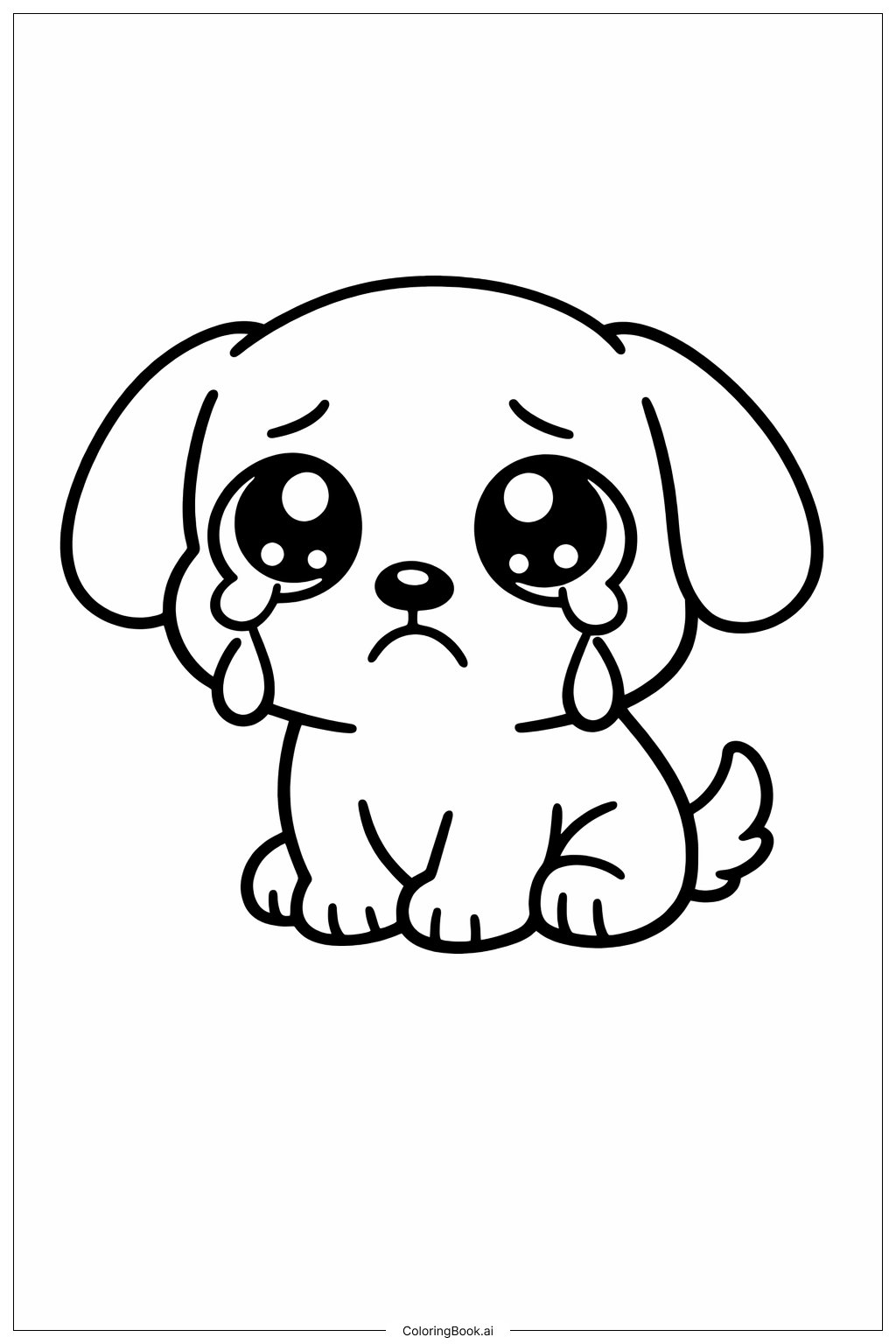
Coloring tips: How to color Emotions Crying Puppy coloring page well?
Use soft and gentle colors like light brown, cream, or gray for the puppy's fur to make it look soft and sweet. Color the eyes dark brown or black, but leave the tear drops light blue or white to make them stand out. You can use pink for the inside of the ears and a little light pink on the cheeks to add warmth. The nose can be colored black. Use light blue or pale shades around the tears to show they are watery. The background can be light soft colors like pale blue or lavender to keep the sad mood.
Coloring challenges: Which parts are difficult to color and need attention for Emotions Crying Puppy coloring page?
1. Coloring the eyes to make them look shiny and emotional can be tricky since they have large black parts with white reflections. Keeping the reflections white is very important. 2. Coloring the tears needs light, translucent colors so they look like real water drops, which can be hard to achieve. 3. Small details like the tiny nose and mouth need to be colored carefully so they stay clear and not smudged. 4. The puppy has rounded edges and soft shapes, so coloring inside the lines without overlapping can require patience. 5. Balancing warm colors for the puppy with the cool colors for the tears and background can be a challenge to keep the emotion clear.
Benefits of coloring books: Advantages of drawing Emotions Crying Puppy coloring page
Coloring this crying puppy picture helps children learn about emotions and how to express feelings like sadness. It encourages careful attention to small details such as tears and eyes, improving fine motor skills. Working on soft colors and blending teaches kids about color choice and harmony. It can be calming and helps build empathy by understanding how the puppy feels. Overall, it’s a fun and gentle way for kids to practice coloring and emotional awareness.