Coloring tips: How to color Easter Egg Garden Scene coloring page well?
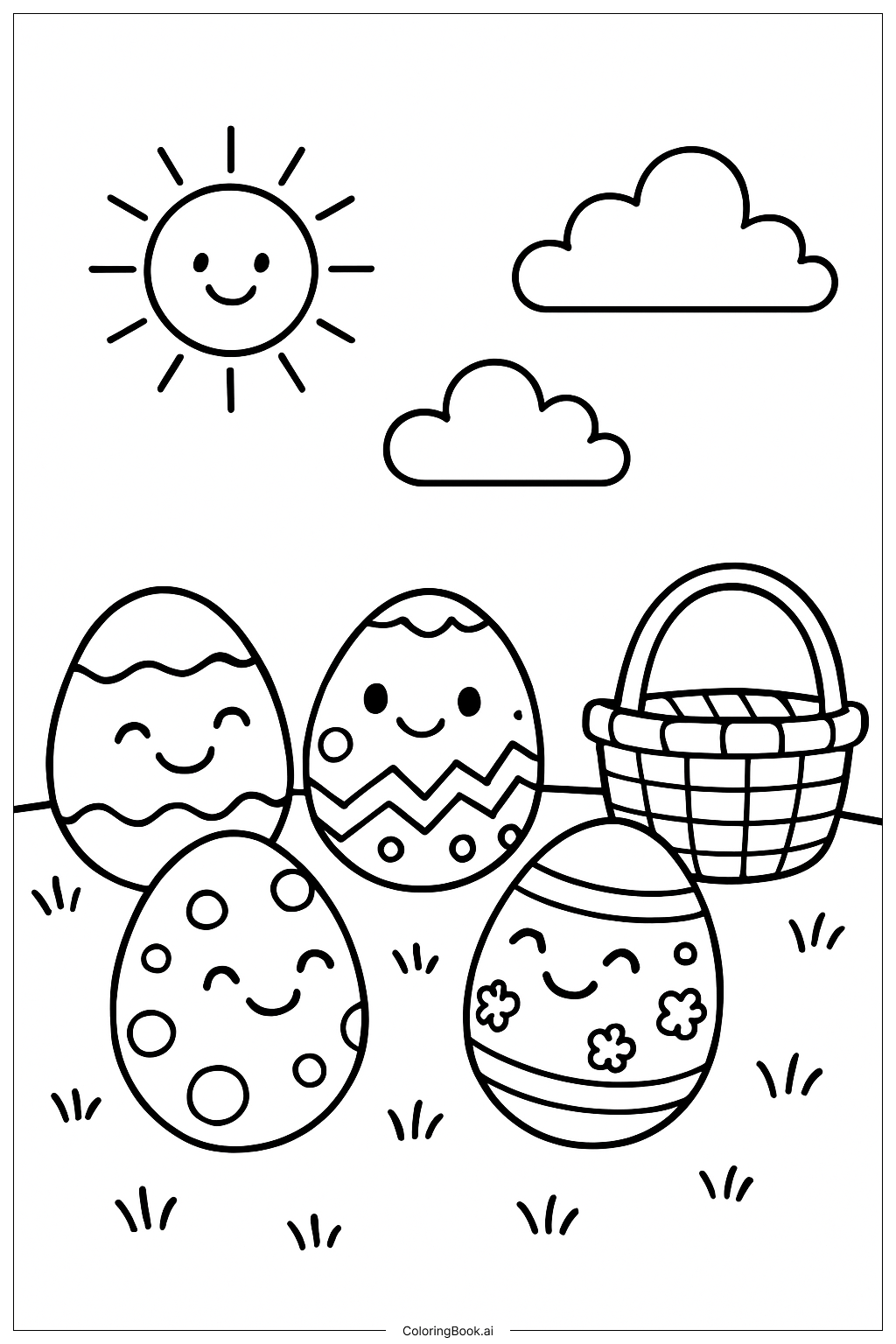
For coloring this image, use bright and cheerful colors to match the Easter and spring theme. Color the eggs with different combinations of pastel colors like pink, yellow, light blue, purple, and green. Use contrasting colors for the patterns to make them stand out. Color the grass in various shades of green to give it a natural look. The flowers can be colored with bright yellows, reds, or pinks for the petals and green for the leaves and stems. The clouds can be left white or very light blue, and the sky can be colored light blue. Feel free to add extra details like small colorful dots or lines on the eggs for more fun.
Coloring challenges: Which parts are difficult to color and need attention for Easter Egg Garden Scene coloring page?
1. Coloring the patterns on the Easter eggs can be tricky because they require staying inside the lines to keep the design clear and neat.
2. Balancing bright colors without making the scene look too crowded can be difficult. Choosing colors that complement each other helps.
3. Coloring small details like the grass and leaves requires careful attention as the lines are thin.
4. Keeping the clouds and sky light while making the rest of the picture colorful needs some color control.
5. Mixing different shades of green for grass and leaves can be challenging but it makes the picture look more realistic.
Benefits of coloring books: Advantages of drawing Easter Egg Garden Scene coloring page
Coloring this Easter egg garden page helps children develop fine motor skills by practicing precise coloring within small sections. It encourages creativity by allowing them to choose different colors and patterns for the eggs. The picture also promotes concentration and patience because of the detailed elements like grass and flower petals. Additionally, coloring bright and cheerful themes like Easter and springtime can boost positive emotions and make the activity fun and relaxing.