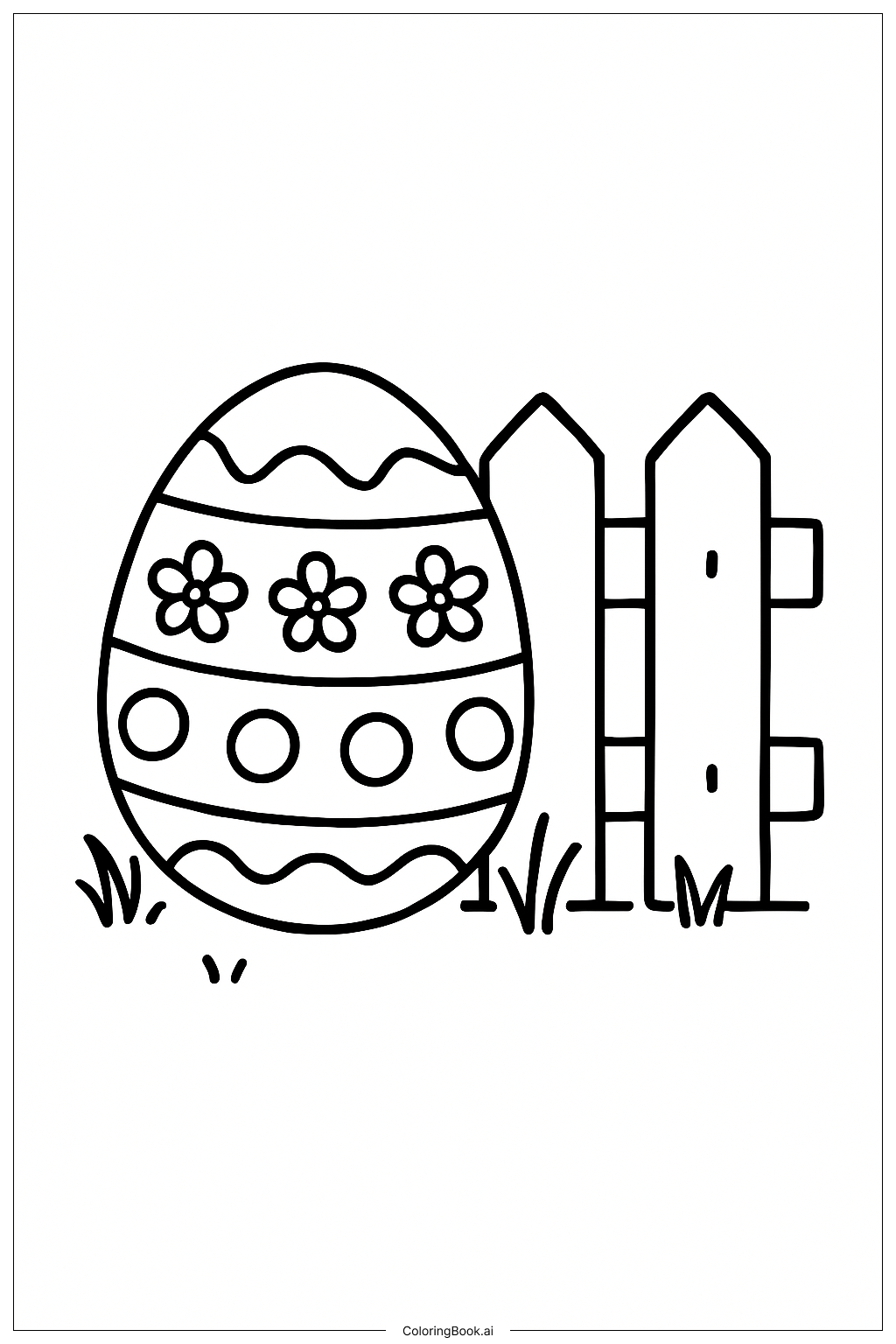
Coloring tips: How to color Easter Egg Near A Fence coloring page well?
For the Easter egg, consider using bright pastel colors like pink, green, yellow, and blue to add a cheerful feel. The flowers can be colored in shades like purple and orange to make them pop. The circles on the egg can alternate colors for a playful look. For the picket fence, a soft brown or white color would complement the egg nicely. The grass can be a vibrant green to show fresh spring growth. Encourage blending colors for shadows and highlights to enhance the overall appearance.
Coloring challenges: Which parts are difficult to color and need attention for Easter Egg Near A Fence coloring page?
1. **Detail in the Egg**: The egg features intricate patterns like flowers and circles. Coloring these small details carefully can be challenging. Children might need to focus on staying within the lines to bring out the designs effectively.
2. **Color Mixtures**: Mixing colors for shading can be tricky. Kids may need guidance on how to blend colors smoothly. Learning to create lighter or darker shades can be fun but requires practice.
3. **Layering Colors**: For a vibrant look, layering different colors on the egg and grass is essential. This technique might be unfamiliar, making it a slight obstacle for beginners.
4. **Balancing Colors**: Choosing the right combination of colors without making the image too busy can be difficult. Children should think about how their color choices work together to create harmony in the picture.
Benefits of coloring books: Advantages of drawing Easter Egg Near A Fence coloring page
Coloring helps children develop various skills. It enhances fine motor skills as they learn to control their crayons or markers. Creativity flourishes as they choose colors and design patterns. This coloring page, with its fun Easter theme, encourages imagination. Children can express their ideas about Easter using different shades and combinations. Coloring also promotes focus and concentration. As they color, kids practice patience and attention to detail, which are important skills in all learning areas. Finally, creating art can boost their mood, making it a joyful and rewarding experience.