Coloring tips: How to color Easter Bunny Painting An Egg coloring page well?
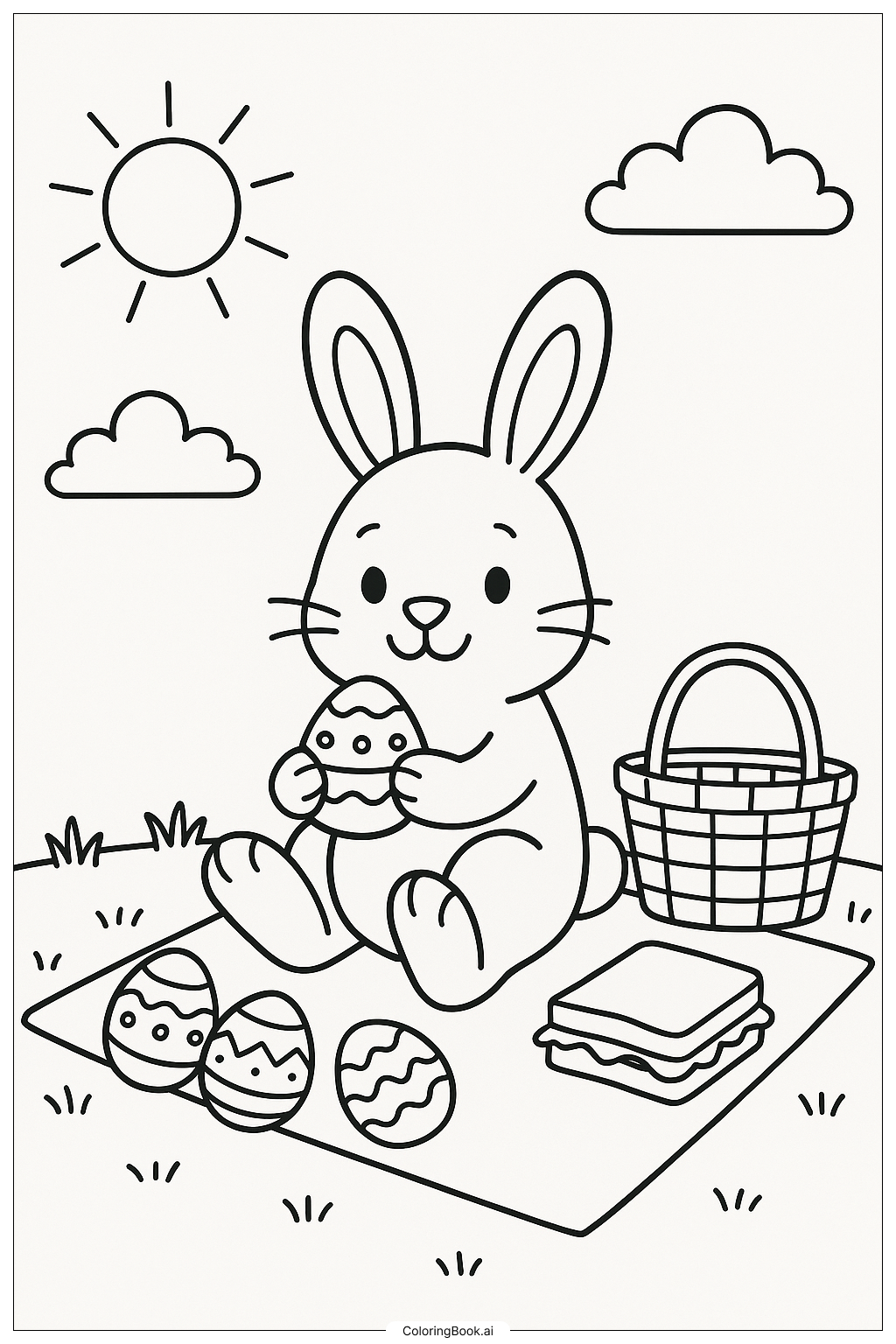
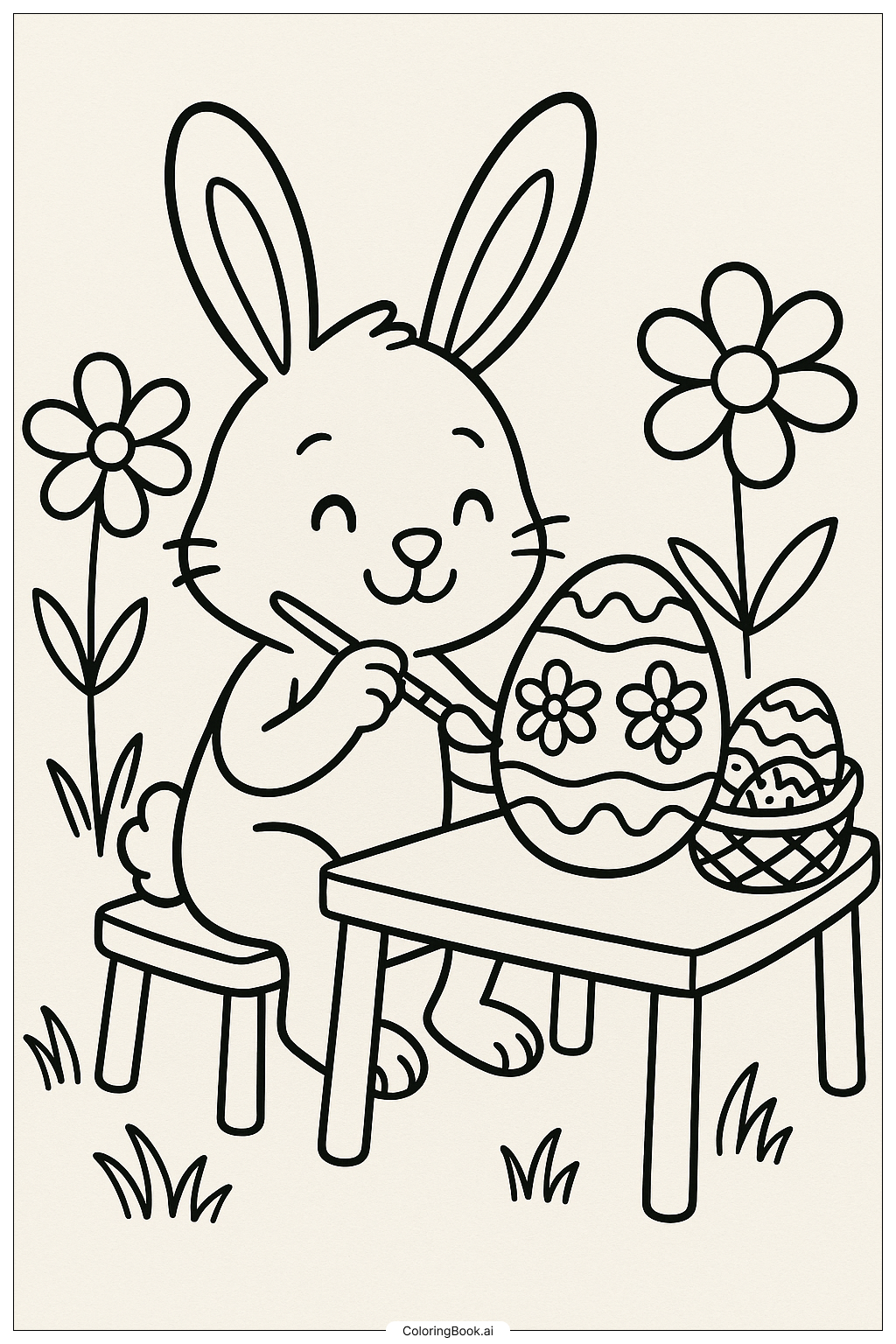
Use soft and bright colors for the bunny, like light brown, white, or gray. Make the flowers colorful by choosing different shades for the petals and leaves, such as pink, yellow, red, and green. For the big Easter egg, use bright colors like blue, purple, pink, and yellow to make the patterns stand out. The smaller eggs in the basket can have different vibrant colors to add more fun. Color the grass and leaves green and the table and stool brown or beige to create a natural look. Try to color inside the lines carefully to keep the picture neat.
Coloring challenges: Which parts are difficult to color and need attention for Easter Bunny Painting An Egg coloring page?
1. The bunny's small paws and facial expressions need careful coloring to keep them cute and clear.
2. The flower petals and leaves are quite detailed, requiring careful attention to avoid coloring outside the lines.
3. The patterns on the large Easter egg have wavy and flower designs that need steady hands to color inside precisely.
4. The basket with small eggs has a crisscross pattern that may be tricky to color without mixing colors.
5. The small spaces between the table legs and the bunny’s legs may be hard to fill without going outside the lines.
Benefits of coloring books: Advantages of drawing Easter Bunny Painting An Egg coloring page
Coloring this picture helps improve fine motor skills because of the small and detailed areas. It encourages creativity by letting children choose fun and bright colors. Coloring the bunny and Easter eggs also teaches about Easter traditions. It improves focus and patience as the child colors the detailed patterns on the eggs and flowers. Finally, it offers a relaxing activity that can boost mood and reduce stress.