Coloring tips: How to color Earth Hour Candlelight coloring page well?
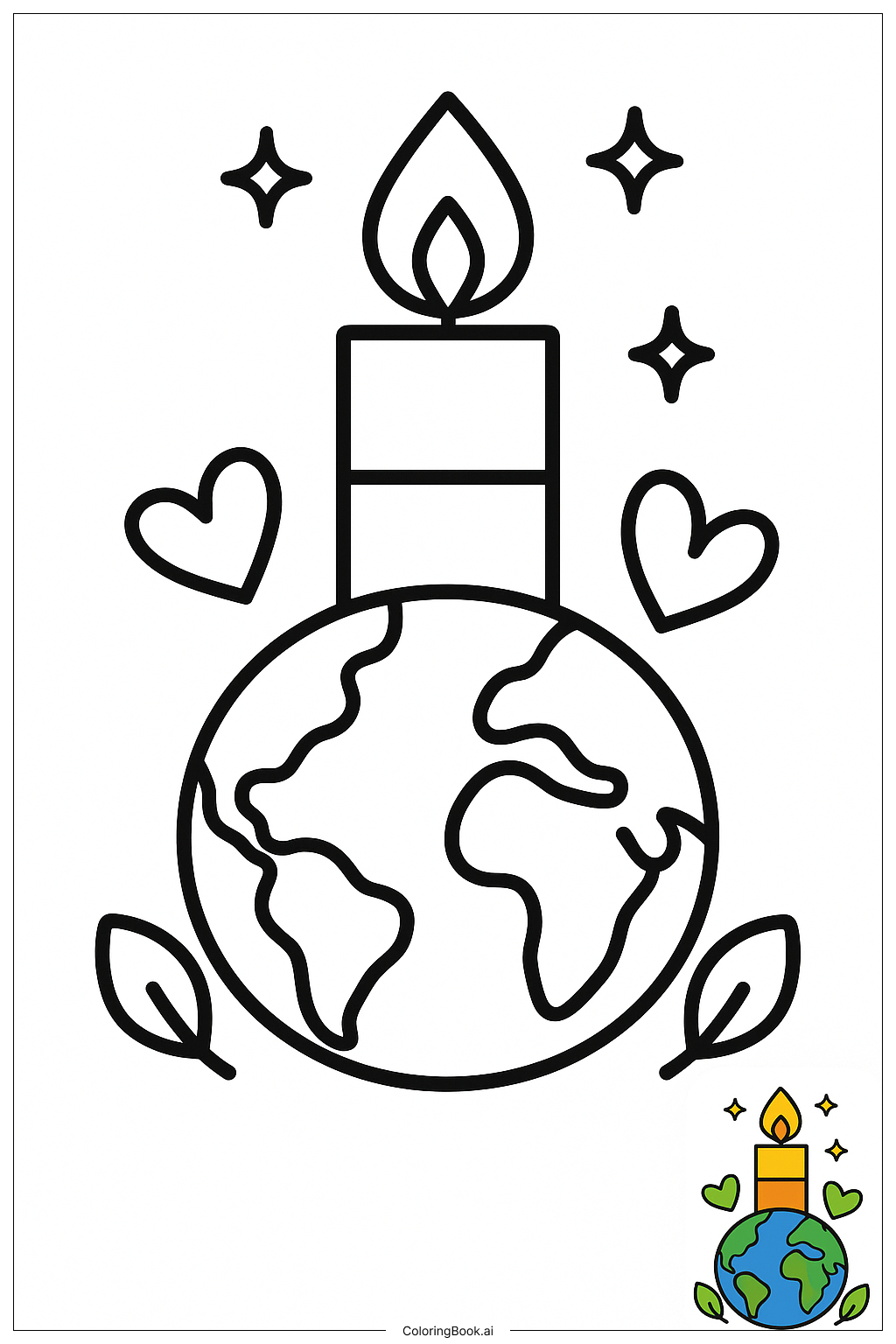
Start with the candle flame at the center. Use warm yellows and oranges for the flame, and a soft cream or white for the candle body. Add a light golden glow around the flame to show its warmth spreading outward. Color the Earth globe with blues for the oceans and greens for the land. Use deep greens for the trees and leaves around the globe. For the night sky background, try dark blues, purples, or navy tones. Add tiny white or pale yellow dots for the stars. The small hands near the candle can be colored in natural skin tones. For the floral and leaf borders, mix various shades of green, with small pops of color like soft pinks or yellows for flowers. Keep the overall mood calm and warm to reflect the spirit of Earth Hour and Earth Day.
Coloring challenges: Which parts are difficult to color and need attention for Earth Hour Candlelight coloring page?
• Candle Flame Gradients: The candle flame is the focal point of the image, and capturing its natural glow requires careful blending. You need to transition smoothly from bright white or pale yellow at the center to orange and then red or amber at the outer edges. Without good blending, the flame can look flat and lack the warm, luminous effect that makes it feel alive.
• Earth Globe Details: The globe includes both ocean areas and landmasses with curved outlines that follow the round shape of the Earth. Staying within these small curved sections while also choosing the right shades of blue and green to distinguish water from land takes patience and a steady hand, especially for younger colorists.
• Night Sky Background: Filling in a dark sky background evenly is trickier than it looks. Dark blues or purples need to be applied with consistent pressure to avoid streaks or uneven patches. Leaving tiny star shapes uncolored — or adding them with a white gel pen — requires extra care around small details.
• Leaf and Floral Border: The border is made up of many small leaves, vines, and flowers packed closely together. Each element is tiny, making it hard to color without going outside the lines. Choosing a variety of greens for the leaves while keeping the flowers distinct with lighter or brighter colors adds another layer of challenge.
• Glow Effect Around the Flame: Suggesting the soft light radiating from the candle is a subtle but rewarding challenge. Using very light yellows or leaving some areas near the flame slightly lighter than the rest of the image helps create this effect, but it takes a thoughtful approach to color pressure and layering.
Benefits of coloring books: Advantages of drawing Earth Hour Candlelight coloring page
Coloring this Earth Hour Candlelight page offers a wonderful mix of creative and educational benefits for children and adults alike. As you color, you naturally think about Earth Day and what it means to care for our planet. This quiet, mindful activity mirrors the spirit of Earth Hour itself — slowing down and being present.
For younger children, filling in the globe, flame, and leaves builds fine motor skills and hand-eye coordination. Choosing colors for the night sky and candle glow encourages color awareness and creativity. It also opens up easy conversations about why we celebrate Earth Day and why turning off lights for one hour matters.
For older children and adults, the detailed borders and small elements provide a calming, focused activity that reduces stress and helps with concentration. Blending flame colors and shading the dark sky background can be a satisfying artistic challenge.
Overall, this page connects coloring with a meaningful message — that small actions, like lighting a single candle or picking up a set of colored pencils, can make the world feel a little brighter. It is a simple, joyful way to celebrate Earth Day while nurturing creativity, awareness, and a love for our planet.