Coloring tips: How to color Eagle Perched Front View coloring page well?
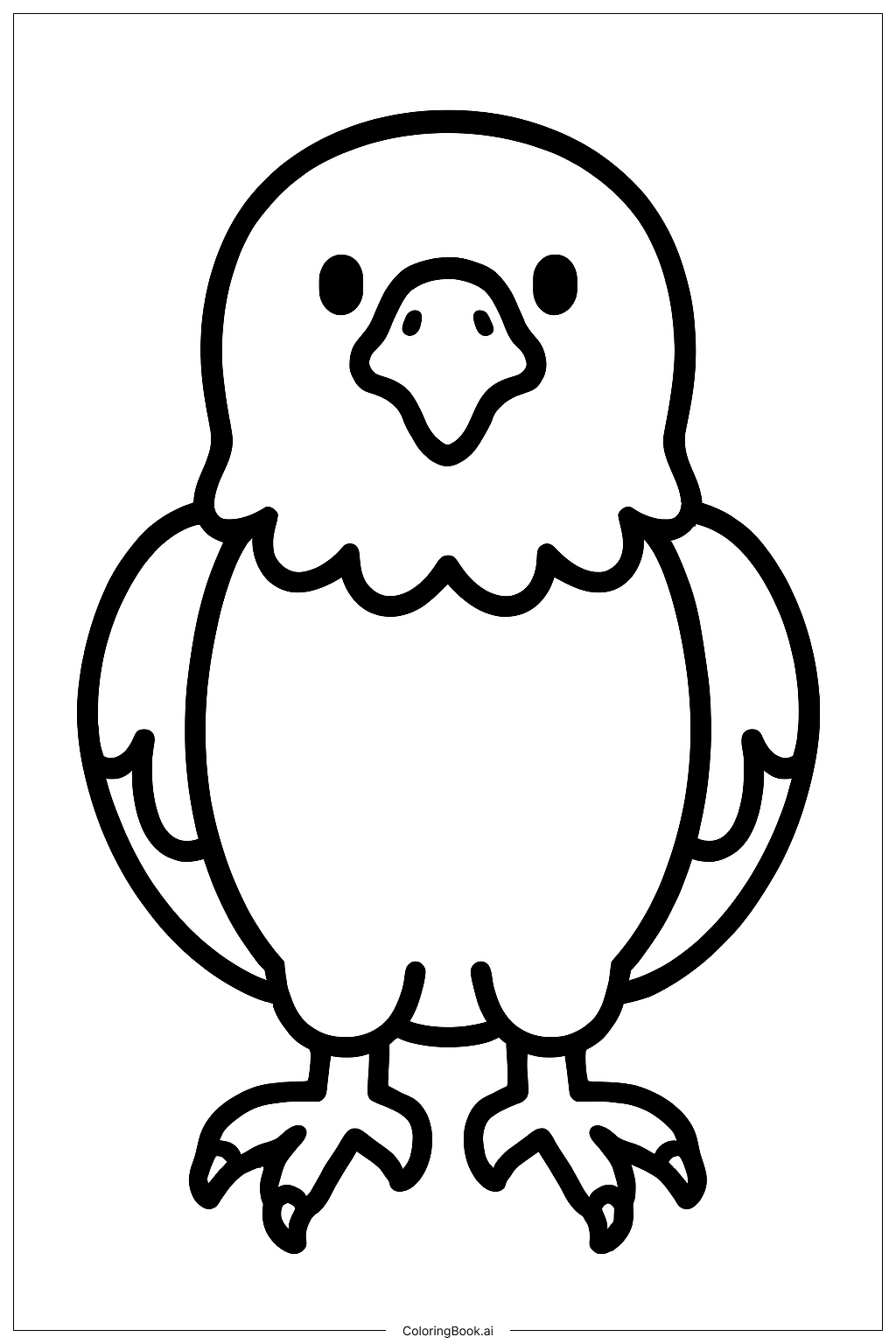
Start with the eagle's head. Bald eagles have a bright white head, so use a clean white or very light gray there. The body feathers are dark brown or dark gray — fill them in with rich, deep tones. Use a warm golden yellow for the beak and talons, since these are some of the most striking features. The eyes can be colored bright yellow with a small dark pupil at the center. For the chest feathers, try mixing light and dark browns to show depth and texture. Color the branch in earthy browns and add some green if you want to hint at lichen or moss. Work from light colors to dark so you can layer shades smoothly. Take your time on the feathers — short, overlapping strokes help them look real. This is a great page for practicing shading and making colors pop.
Coloring challenges: Which parts are difficult to color and need attention for Eagle Perched Front View coloring page?
• Layered Feather Texture: The eagle's body is covered in many overlapping feathers, each with its own shape and direction. Coloring these carefully without making the whole area look flat is tricky. You need to use slightly different shades of brown and apply strokes that follow the direction each feather points. Rushing this section will make the feathers lose their natural depth.
• Sharp Color Contrast Between Head and Body: Bald eagles have a stark contrast between their white head and very dark brown body. Keeping that boundary clean and crisp takes patience. If the colors bleed into each other, the eagle's identity gets lost. Use a fine-tipped tool or color slowly near the border to keep the line sharp.
• Beak and Talon Details: Both the beak and talons are small but highly detailed. They have curves, ridges, and pointed tips that require careful attention. Using the wrong color or going outside the lines here can make the image look messy. A sharp pencil or thin marker works best for these narrow areas.
• Intense Eye Expression: The eagle's forward-facing eyes are a focal point of the image. Getting the shading right around the eye — the bright iris, the dark pupil, and the subtle shadow above the brow — is important for capturing the eagle's fierce expression. Small mistakes here affect the whole mood of the image.
• Depth in the Wing and Chest Area: The folded wings and broad chest have many overlapping layers. Showing dimension without a complex paint set requires smart use of light and shadow using just a few shades of the same color family.
Benefits of coloring books: Advantages of drawing Eagle Perched Front View coloring page
Coloring this eagle page offers a wonderful mix of fun and learning. Kids get to explore the real colors found in nature, like deep browns, bright yellows, and crisp whites, while building their understanding of how birds look and live. The detailed feather patterns encourage focus and patience, helping children develop fine motor skills as they carefully fill in each section. Working through the different parts of the eagle — the beak, talons, eyes, and wings — also sparks curiosity about birds of prey and the natural world. For older kids and teens, this page is a great way to practice shading and color blending, turning a simple outline into a lifelike image. The eagle's strong, bold design makes it a satisfying page to complete, giving colorists a real sense of achievement when they finish. Coloring can also be calming and meditative, helping kids slow down and concentrate. Whether it is a rainy afternoon activity or a classroom project, this eagle coloring page builds creativity, attention to detail, and an appreciation for wildlife all at once.