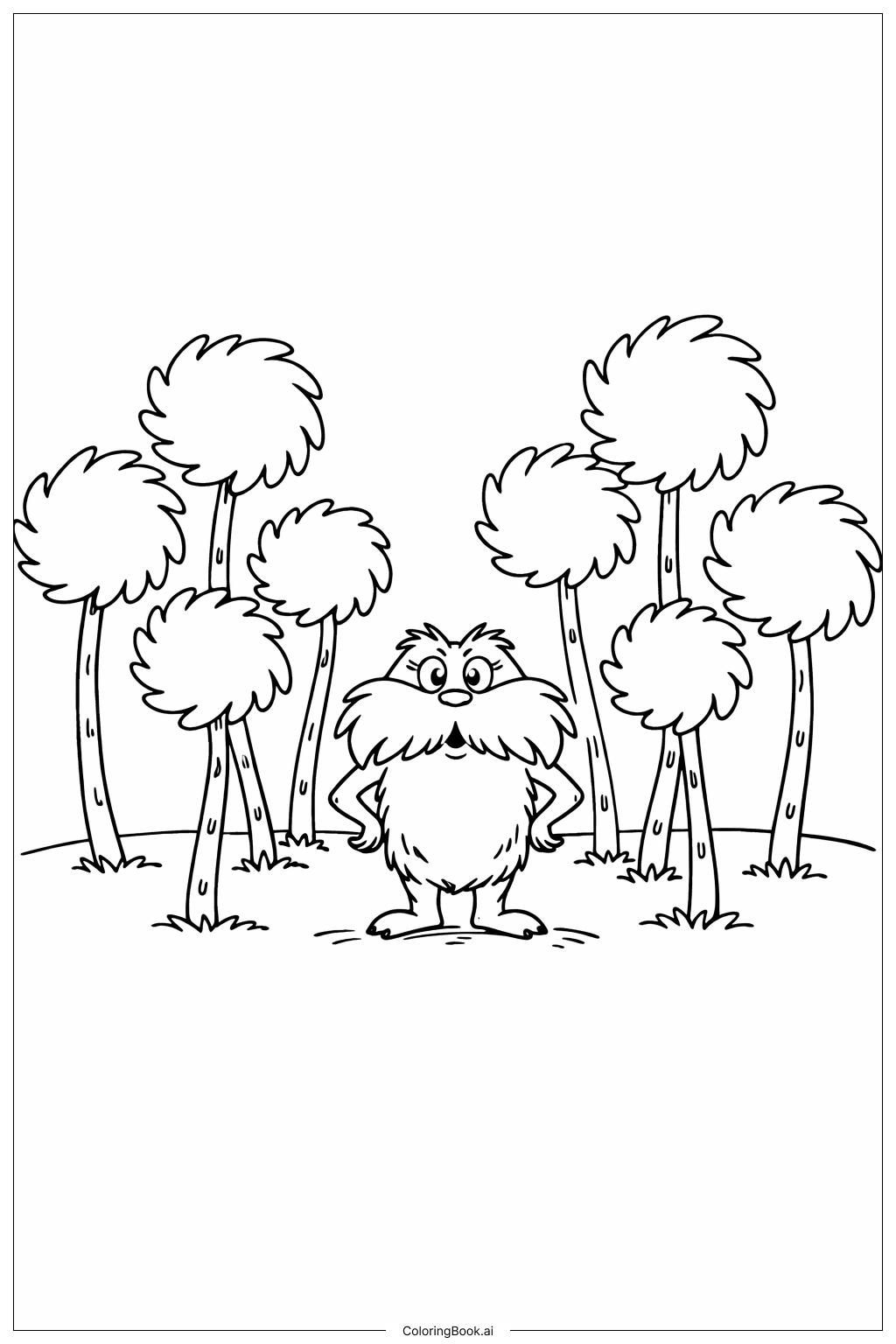
Coloring tips: How to color Dr. Seuss Lorax With Trees coloring page well?
Start with the Lorax himself. Use a warm golden yellow or orange for his fluffy body and a bright orange for his big mustache. His eyes can be a soft yellow with dark pupils to give him personality. For the Truffula Trees, go wild with color! Each tree top can be a different bright shade — pink, purple, blue, green, or orange. The long trunks look great with stripes in two contrasting colors. Use a sky blue for the background and add white for the puffy clouds. The ground can be colored in light green or soft brown. Try using lighter shades first, then add darker tones to create depth. Kids can use crayons, colored pencils, or markers — all work well here. The most important thing is to have fun and use colors that make you happy. There are no wrong choices in a Dr. Seuss world!
Coloring challenges: Which parts are difficult to color and need attention for Dr. Seuss Lorax With Trees coloring page?
• Lorax's Facial Details: The Lorax has a very expressive face with a large mustache, small eyes, and a rounded nose. Staying inside the small facial lines while keeping each feature looking distinct can be tricky, especially for younger children. Take your time and use a sharp pencil or fine-tipped marker for these areas.
• Truffula Tree Tops: The fluffy, rounded tops of the Truffula Trees have soft, cloud-like edges that can be hard to color neatly. If you want each tree top to look full and vibrant, try coloring in circular motions and blend colors gently near the edges to give them a soft, rounded look.
• Striped Tree Trunks: The Truffula trunks feature spiral or striped patterns running along their length. Keeping these stripes even and consistent as they wrap around the thin trunks requires a steady hand and careful attention. Using a ruler as a guide for straighter lines can help older kids get cleaner results.
• Background Whirls and Curves: The classic Dr. Seuss background is filled with swirling lines and curved shapes. Coloring between these curving lines without crossing over into another section takes patience and concentration. Using lighter background colors can also help these details stand out without overwhelming the main characters.
• Color Variety and Consistency: Because this image contains so many different elements — the Lorax, multiple trees, the sky, and the ground — keeping a consistent and pleasing color palette across the whole page can be a challenge. Planning your colors before you start by sketching them lightly or testing on scrap paper is a smart strategy.
Benefits of coloring books: Advantages of drawing Dr. Seuss Lorax With Trees coloring page
Coloring this Dr. Seuss Lorax With Trees page brings a wonderful mix of fun and learning. Here are some of the great benefits:
Creativity and Imagination: Dr. Seuss's world has no rules when it comes to color. Kids are free to invent their own color combinations, which builds creative thinking and self-expression.
Fine Motor Skills: Filling in the detailed lines of the Lorax's face, the striped trunks, and the fluffy tree tops helps children develop better hand control and pencil grip — skills that support writing and drawing.
Focus and Patience: Completing a detailed coloring page like this one encourages children to slow down, concentrate, and work through a task from start to finish. This builds attention span in a relaxed and enjoyable way.
Environmental Awareness: The Lorax is a symbol of caring for nature and speaking up for the environment. Coloring this page can open conversations with children about protecting trees, forests, and the planet.
Emotional Well-Being: Coloring is a calming activity that helps reduce stress and anxiety. It gives children a healthy, screen-free creative outlet that feels rewarding when finished.
Family Bonding: This page is fun for all ages. Parents and children can color together, making it a great activity for quality time and shared storytelling inspired by Dr. Seuss.