Coloring tips: How to color Dr Seuss Horton With Clovers coloring page well?
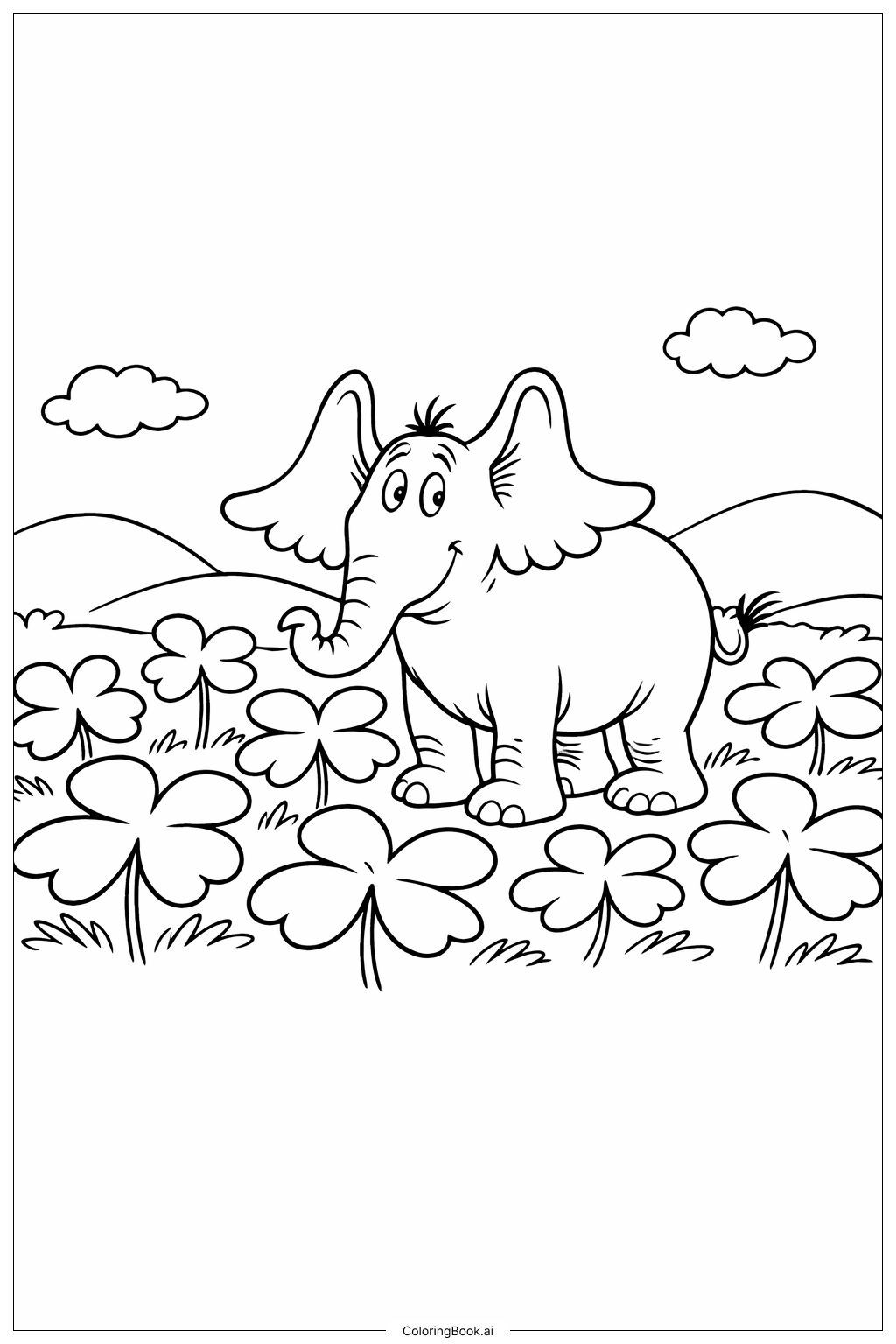
To color this page, try using light gray or soft blue for Horton's body to show his calm and friendly nature. His ears and tail tuft can be a pinkish shade to add a cute touch. The clovers can be colored in different shades of green to show variety and natural beauty. For the grass, use a fresh green tone. The hills can be light brown or green to look like distant landscapes. The sky can be light blue, and the clouds should be left white or a very light gray for a soft effect. Using bright and cheerful colors will make the picture lively.
Coloring challenges: Which parts are difficult to color and need attention for Dr Seuss Horton With Clovers coloring page?
1. Coloring Horton’s large ears evenly can be tricky because the area is big and detailed with inner lines to follow carefully.
2. The clovers are numerous and very close to each other, which requires patience to color each without mixing colors or going outside the lines.
3. The small details, like the tuft of hair on Horton’s head and tail, need careful strokes to keep the lines clean and neat.
4. Coloring the clouds softly without making them look too dark can be difficult as they should remain light and fluffy.
5. Balancing colors between the foreground clovers and the distant hills needs attention to keep the perspective and depth realistic.
Benefits of coloring books: Advantages of drawing Dr Seuss Horton With Clovers coloring page
Coloring this picture helps children improve their fine motor skills by staying inside the lines of Horton, the clovers, and other details. It also encourages creativity as kids choose which colors to use for Horton and the natural setting. The large and small areas provide a mix of easier and more challenging parts to color, which helps build confidence in handling different coloring tools. Coloring this playful scene also supports focus and patience, allowing children to relax and enjoy a calm activity inspired by Dr. Seuss’s wonderful world.